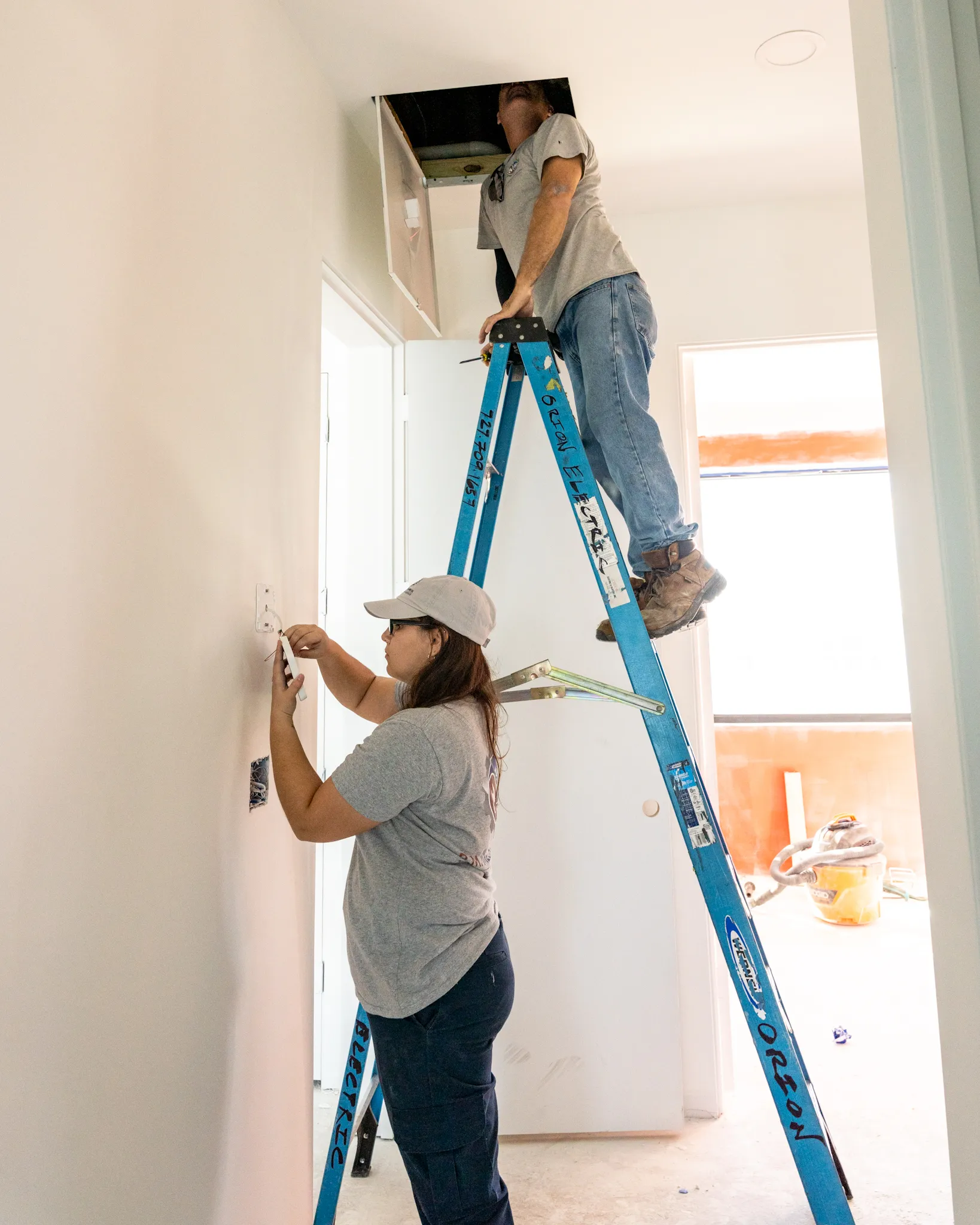
HVAC Installation Done Properly
The equipment is maybe half of what you are buying. The other half is the installation, and it is the half that decides whether the system delivers what the label promised.
Two identical systems installed in two identical houses can run ten percent apart on the electric bill and feel different to live with, purely on the quality of the install. Refrigerant charge, airflow setup, duct connections and commissioning are where that gap comes from. None of it shows in a photo of the finished job, which is exactly why it gets skipped.
This page describes what we do on an installation, so you can compare quotes on the work and not only on the price. If you are still deciding whether the old system is worth keeping at all, start with the AC replacement page and come back here for the install itself.
It starts with a load calculation, not a lookup
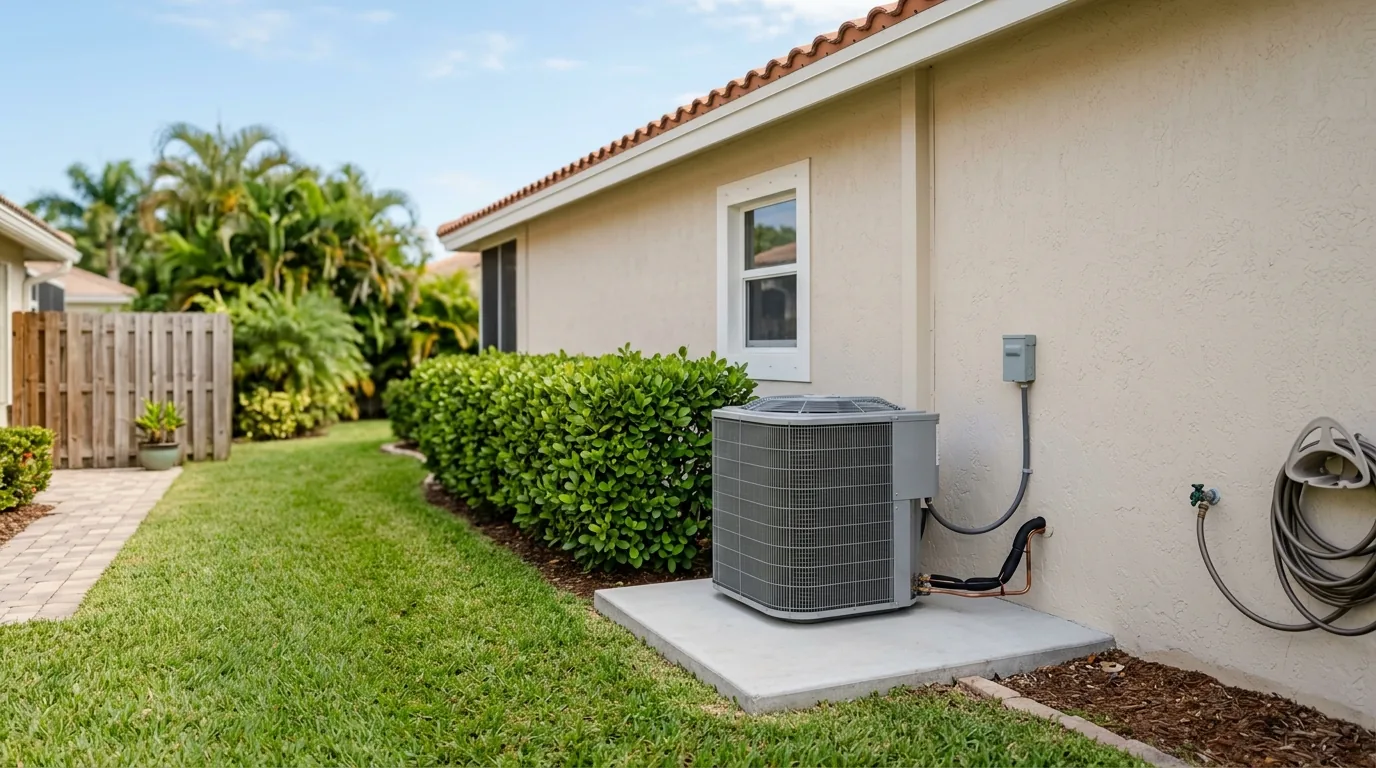
Before we quote equipment we run a Manual J load calculation on the house itself: orientation, insulation, windows, ceiling height, duct location. Square footage alone misses all of that, and the rule of thumb it feeds produces oversized systems, which in this climate means a cold, clammy house and short equipment life. If the unit on the pad now is the wrong size, matching it repeats the mistake for another fifteen years.
The calculation is the reason two competent quotes can name different tonnage. One of them measured.
The ducts get evaluated before the equipment goes in
A new system breathing through crushed, leaky or undersized ductwork will not deliver its rating, and no thermostat setting fixes that. We inspect the duct system as part of the quote. Sometimes the finding is that sealing and a larger return matter more than the equipment tier you were considering, and saying so can shrink the invoice rather than grow it.
Permits and inspection are part of the job
A replacement system in any of our four counties requires a mechanical permit, pulled by the contractor, closed by a county inspection. We handle both ends of that. An unpermitted install saves nobody money in the end: it surfaces at sale time, it can void insurance claims after a storm, and skipping the permit is the classic mark of a contractor you will not find next year. Our license is CAC1820870, and the permit gets pulled on every job.
Installation day, in order
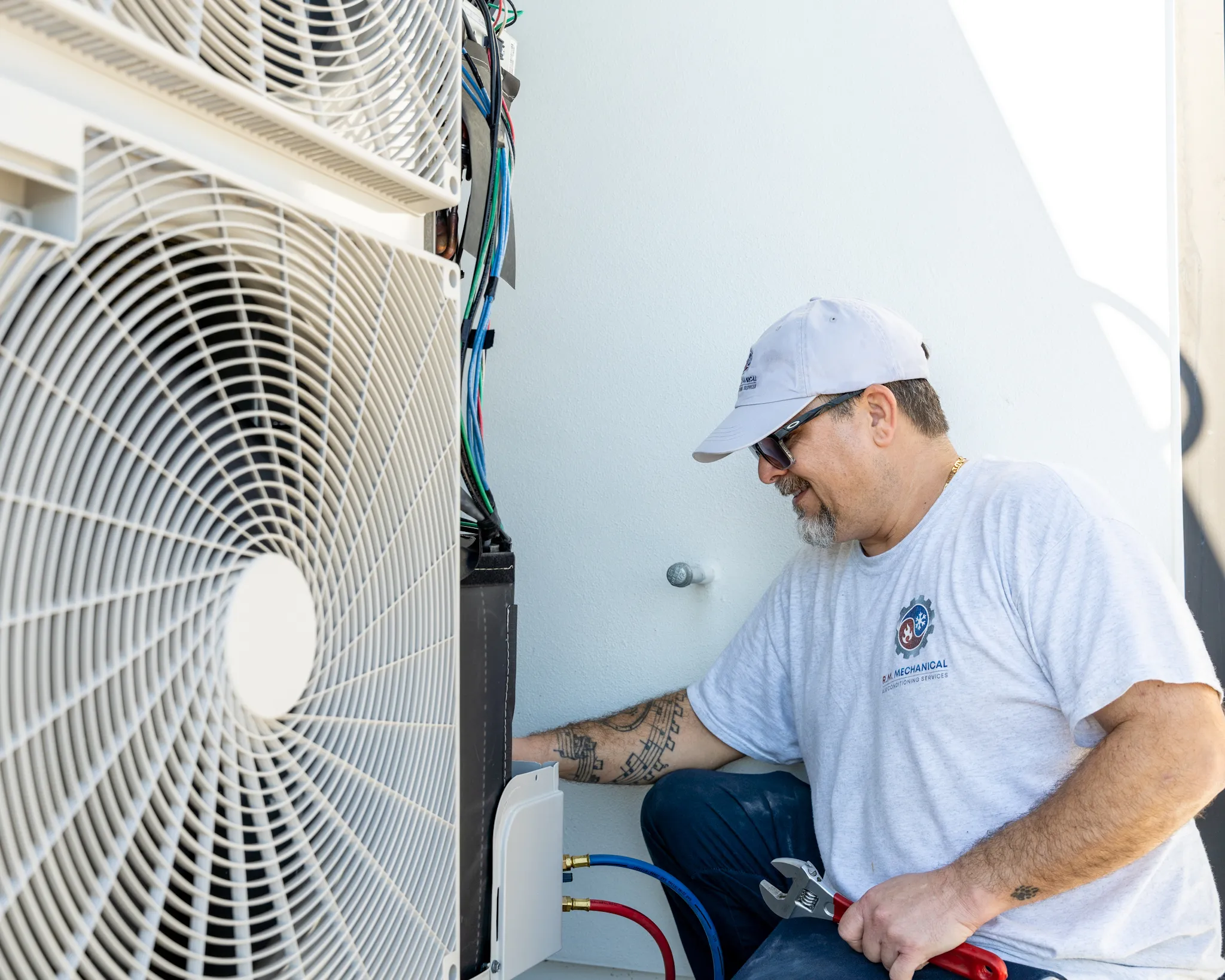
Recover the old refrigerant legally, then remove the old equipment. Set the new air handler and condenser, braze the line set with nitrogen flowing so no oxide scale forms inside the lines, pull a deep vacuum and verify it holds, then weigh in the charge to the manufacturer specification rather than guessing by pressure.
Then commissioning, the step most often skipped in this trade: measure static pressure, set blower speed to the ductwork the house actually has, verify temperature split, confirm the condensate drain runs and the float switch trips. A straightforward changeout finishes in a day. We do not leave a job before the commissioning numbers are right.
What it costs
We quote after the load calculation and duct inspection, not over the phone, because tonnage, duct condition and electrical work move the number materially. The quote is written, itemized and free. If you are comparing bids, make sure each one names the sizing method, the permit, and commissioning. A bid that is silent on all three is cheaper for a reason. Request an estimate and we will put a real number on your house.
Common questions
How long does an HVAC installation take?
One day for a straight changeout, and we schedule it so the house is never without cooling overnight. Duct modifications, moving an air handler or panel work extend it to two. The quote states which, in writing.
Do I really need a permit to replace my AC?
Yes, in Hillsborough, Pinellas, Pasco and Hernando alike. The contractor pulls it and the county inspects the work. If a bidder offers to skip the permit to save you money, that tells you how the rest of the job will go.
Can I buy the equipment myself and pay you to install it?
We install equipment we supply. The reason is warranty, not markup: manufacturers void coverage on units installed outside their certified channel, and we cannot stand behind a system with no factory support. We are factory-certified on Carrier, Goodman, Rheem, LG, Midea, Trane, Daikin, Mitsubishi and Lennox, which covers every budget tier.
Why do quotes for the same job vary so much?
Usually the quotes are not for the same job. One sized by measurement, one by square footage. One includes duct sealing, commissioning and the permit, one is equipment and labor only. Line the bids up item by item and the spread usually explains itself.
Is the middle of summer a bad time to replace a system?
It is the busiest time, which affects scheduling more than price. If your system is on its way out in spring, replacing it before June beats replacing it during the first week of 95-degree heat, when every contractor in the region is booked.
Related services
HVAC installation across Tampa Bay
R.M. Mechanical works across Hillsborough, Pinellas, Pasco and Hernando counties. Open your area for the local details that actually change the job: which building department issues the permit, what the housing stock is like, and what the climate there does to equipment.
Ask about a system installation
Tell us about the house and the system you are replacing, and we will schedule the load calculation and quote. For a failed system, call instead 727-306-1700.
Thank you! Your message is on its way.
We check messages 6am to 7pm daily and will get back to you. Need help right now? Call 727-306-1700.
Something went wrong and your message didn't go through. Please try again, or call us at 727-306-1700.