How Your HVAC System Works
Ten minutes of vocabulary changes every HVAC conversation you will ever have: you can describe a fault precisely on the phone, read a quote line by line, and notice when someone is explaining your own system to you wrongly.
Air conditioning does not make cold. It moves heat, from the air inside your house to the air outside it, using a refrigerant that absorbs heat when it evaporates and releases it when it condenses. Everything in the machine exists to run that loop. Once that clicks, the rest of this page is just naming the stations along the way.

The two boxes and what lives in each
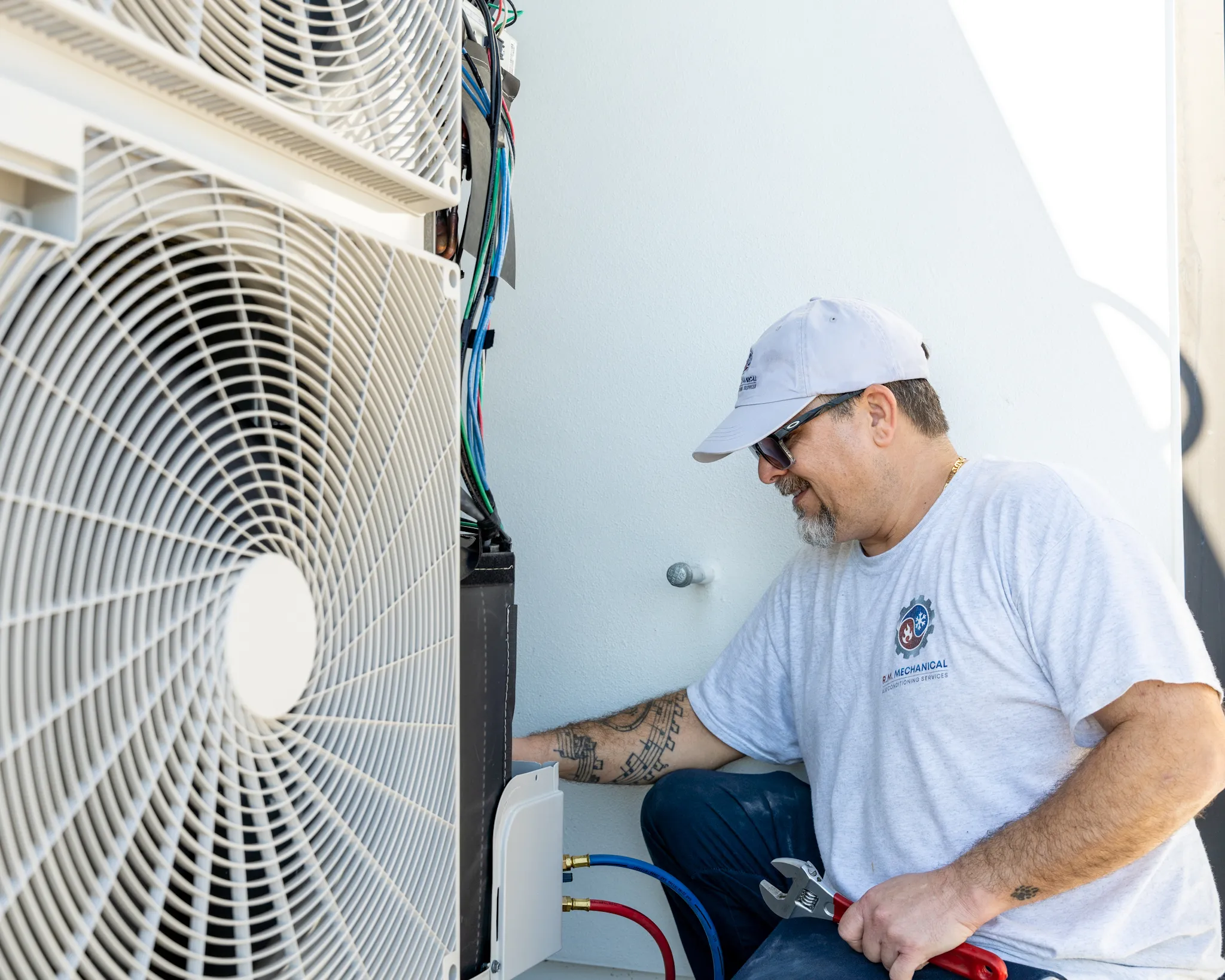
The outdoor unit, the condenser, holds the compressor that drives the whole loop, the coil that dumps your house's heat outside, and a fan. It is why the outdoor unit blows hot air, and why it needs clear space around it to breathe.
The indoor unit, the air handler, usually lives in a closet or the garage here. It holds the evaporator coil where refrigerant absorbs heat from your air, and the blower that pushes that cooled, dried air through the ducts. In a typical Florida home it also carries the electric heat strips that back up the heat pump on cold nights.
Between the boxes run two copper refrigerant lines, and beneath the indoor coil sits the condensate system, a drain pan and line carrying away the water the coil pulls out of the air. In this climate that is gallons a day, which is why the condensate drain features in so many of our service calls.
Words that appear on quotes, decoded
Tonnage is capacity, not weight: one ton moves 12,000 BTU of heat per hour, and a typical home system runs two to five tons. SEER2 is the efficiency rating, the miles per gallon of cooling. A heat pump is an air conditioner with a reversing valve, able to run the loop backwards and heat the house, which is how nearly every home here heats. Single-stage, two-stage and variable describe whether the compressor is a light switch or a dimmer, a difference that matters more in humid climates than anywhere, and one the technology page unpacks. A Manual J is the load calculation that determines what size your house actually needs; its presence or absence on a quote tells you a lot about the installer.
Why humidity keeps coming up
In Tampa Bay the system has two jobs, cooling the air and drying it, and the second one is the difference between comfort and clamminess at the same temperature. Drying happens while air moves across the cold coil, so it depends on run time. This single fact explains most local HVAC advice: why oversized systems make houses damp, why long afternoon run times are healthy, why the fan belongs on auto. The full treatment is on the air quality page.
What is yours to do, and what is not
Yours: change the filter every one to three months, keep two feet clear around the condenser, keep the condensate line treated if you are comfortable doing it, and know where the two breakers are. Not yours: anything inside the sealed refrigerant loop, anything at 240 volts, and chipping ice off a coil, which punctures fins and turns a service call into a coil replacement. The DIY-or-call guide draws the line case by case.
Describing a problem so it gets fixed faster
The four facts that sharpen a service call: what the system is doing, running but warm, dead entirely, cycling fast; where any noise or water is coming from, indoor unit or outdoor; when it started and whether anything preceded it, a storm, a power blink, a filter change; and the system's rough age. With those, the diagnosis often starts on the phone, and the truck arrives carrying the right parts.
Common questions
What is the difference between HVAC and AC?
HVAC covers heating, ventilation and air conditioning as one system, which in a Florida home it usually is: the same air handler and heat pump do all three jobs. AC refers to the cooling function alone. Around here the terms get used interchangeably, and nobody is confused for long.
How does an air conditioner dehumidify?
Water condenses out of air onto any surface colder than its dew point, which is what the indoor coil is. As the blower moves humid air across that cold coil, moisture condenses, collects in the pan and leaves through the drain. Longer run times mean more air crossing the coil, which is why run time controls how dry the house feels.
Why does my outdoor unit blow hot air?
Because that is your house's heat leaving. The condenser coil's whole job is rejecting the heat collected indoors, and the hot exhaust is the system working. The time to be concerned is when it blows air that is not hot on a summer day, which suggests the loop is not moving heat.
How long do HVAC systems last in Florida?
Ten to fifteen years is realistic here, against national figures a few years higher, because our systems run roughly double the hours. Coastal homes trend to the low end unless the coil is protected from salt. Maintenance mostly determines where in that range a given system lands.
What size system does my house need?
The only honest answer comes from a Manual J load calculation on the actual house, counting insulation, windows, orientation and ducts. Square footage rules of thumb run oversized in this climate, and oversized is the expensive mistake here, not the safe one.
Related services
HVAC guidance for homeowners across Tampa Bay
R.M. Mechanical works across Hillsborough, Pinellas, Pasco and Hernando counties. Open your area for the local details that actually change the job: which building department issues the permit, what the housing stock is like, and what the climate there does to equipment.
Ask us anything about your system
No question is too basic; the vocabulary above exists because people asked. Describe what you are wondering about and we will answer plainly. For urgent problems, call instead 727-306-1700.
Thank you! Your message is on its way.
We check messages 6am to 7pm daily and will get back to you. Need help right now? Call 727-306-1700.
Something went wrong and your message didn't go through. Please try again, or call us at 727-306-1700.