Heating in Tampa Bay: Short Season, Real Stakes
Florida heating runs a few weeks a year, which is exactly why it fails when you need it: the first cold night is the first time in ten months anyone asks it to work.
The heating season here is short and abrupt. A front comes through in December, the house drops into the fifties overnight, and a system that has not heated since February gets its annual exam at 2am. Most winters we spend the first cold snap running calls that a fall checkup would have caught. That is the honest summary of Tampa Bay heating, and everything below follows from it.
What your house almost certainly heats with
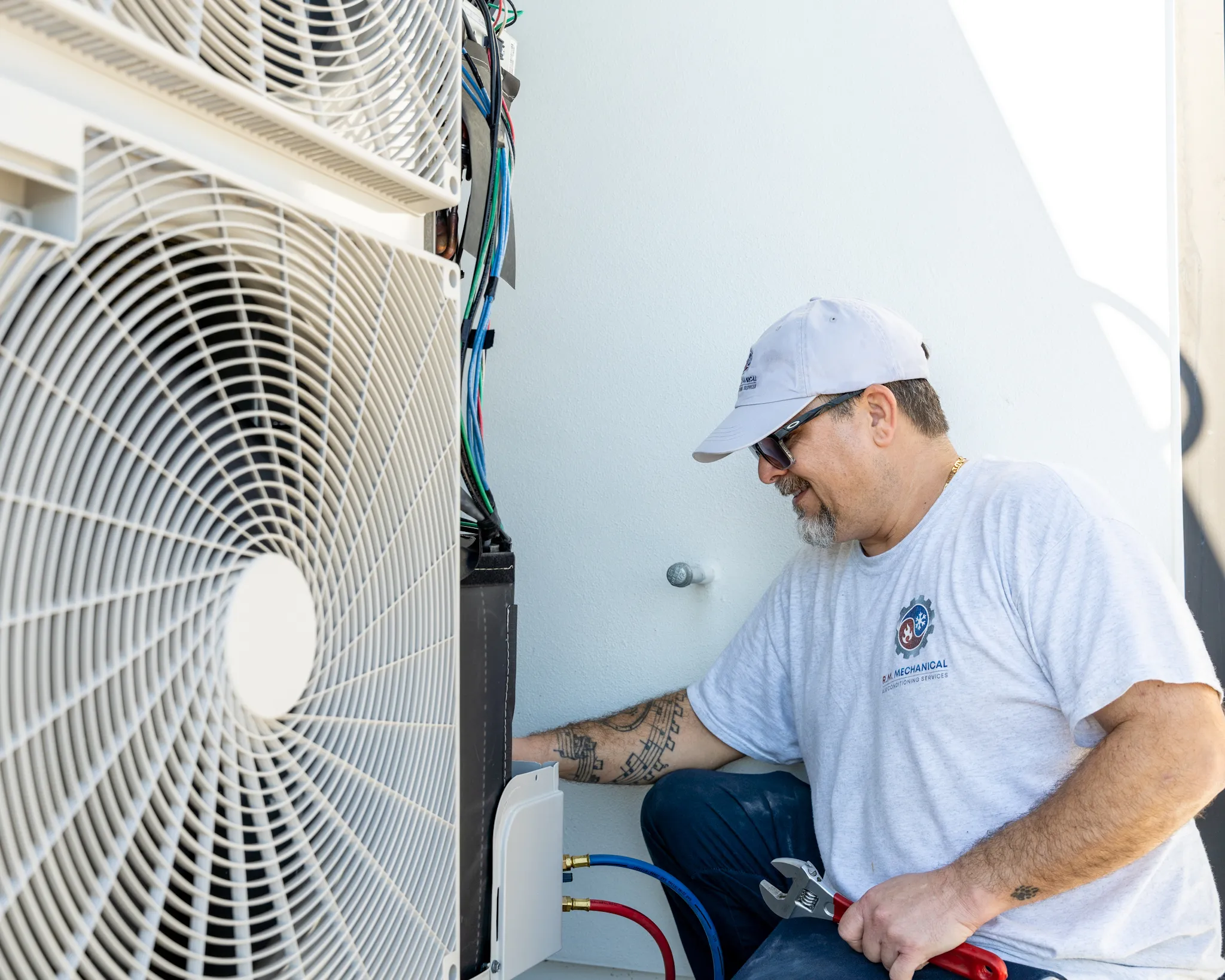
Unless you know otherwise, assume a heat pump: the same outdoor unit that cools you in August, running in reverse. It is the standard equipment here because it fits the climate perfectly, and the full story of how it works and what fails lives on its own page. Backing it up are electric resistance strips in the air handler, which exist for the coldest nights and for defrost cycles.
Gas furnaces exist in the region, mostly in older neighborhoods with gas service, and we service them, including the combustion and venting checks that are non-negotiable on any gas appliance. But if you are choosing equipment today in this climate, the heat pump wins the argument on operating cost and does both jobs with one machine.
The December bill spike, explained
Strip heat is the villain in most stories about a high heating bill we investigate. It produces heat at several times the cost of the heat pump, and it is supposed to run briefly and rarely. Three things make it run instead of the heat pump: a thermostat set to emergency heat and forgotten, a miswired or misconfigured thermostat calling for aux when it should not, and a heat pump that has quietly lost capacity so the strips cover for it. All three present the same way, a warm house and a shocking bill, which is why the bill is itself a diagnostic. Bring it to us and we will find which one you have.
What fails on the first cold night
Reversing valves that stuck over a summer of disuse, defrost boards that failed silently, contactors pitted from eight months of cooling duty, and strip heat elements that burned out unnoticed, since nothing announces their failure until the one night they are needed. The pattern in every case: the failure existed for months, and the cold snap merely revealed it.
The fix is boring and effective. Heating gets exercised during fall maintenance, on a mild afternoon, when finding a bad defrost board costs a part instead of a cold night with a young child in the house. Our fall visits check heating mode specifically because so few homeowners ever run it themselves before December.
When there is no heat right now
Check the thermostat mode and batteries, check the breakers for both the air handler and the outdoor unit, and give the system a few minutes after any power blink, since some equipment holds a protective delay. Frost on the outdoor unit that clears itself periodically is normal defrost behavior; a unit encased in ice is not. If those checks come up empty, call us. Cold nights are when emergency service earns its existence, and the winter emergencies guide covers what to do while you wait.
Common questions
Why does my heat pump run constantly on cold mornings?
Because the colder it is outside, the less heat each hour of running extracts, so the system compensates with run time. On a 35-degree Tampa Bay morning, long continuous running is the design working. The flags worth acting on are a house that cannot reach setpoint, or aux heat engaged for hours at a time.
Should I switch to emergency heat when it gets cold?
No. Emergency heat is for when the heat pump itself has failed, and it costs several times more per degree. Leave the thermostat in normal heat mode and let the system stage its own backup. The switch is the single most expensive misunderstanding in Florida heating.
Is it worth servicing heating I use three weeks a year?
Yes, precisely because it sits unused. Equipment that runs daily announces its problems gradually; equipment that sleeps ten months reveals them all at once, at night, in the one week you need it. The heating check rides along with fall maintenance rather than costing a separate visit.
Do you service gas furnaces?
Yes, including combustion analysis and venting checks, and we treat those as safety work, not tune-up filler. A gas furnace in a Florida home also needs a working carbon monoxide detector nearby, which we will verify while we are there.
My old house heats with wall units and space heaters. What should replace that?
Usually a heat pump, either central if the house has workable ductwork or mini-splits if it never did. Both cost far less to run than resistance heaters, and both replace the summer window units in the same stroke. Older Tampa neighborhoods are full of this exact retrofit and we quote it routinely.
Related services
Heating repair and installation across Tampa Bay
R.M. Mechanical works across Hillsborough, Pinellas, Pasco and Hernando counties. Open your area for the local details that actually change the job: which building department issues the permit, what the housing stock is like, and what the climate there does to equipment.
Ask about heating service
Tell us what the heating is doing, or not doing, and we will get you scheduled. For no heat on a cold night, call instead 727-306-1700.
Thank you! Your message is on its way.
We check messages 6am to 7pm daily and will get back to you. Need help right now? Call 727-306-1700.
Something went wrong and your message didn't go through. Please try again, or call us at 727-306-1700.