Green HVAC Without the Greenwashing
The green choice in Tampa Bay HVAC is mostly the competent choice: a right-sized heat pump on tight ducts, run sensibly. The industry sells it with more ceremony than that, which is where the greenwashing creeps in.
An air conditioner's environmental footprint has two parts: the electricity it consumes across fifteen years, and the refrigerant it may leak along the way. Everything that helps attacks one of those two. Everything that does not is paint. This page sorts the catalog accordingly, and it will occasionally tell you not to buy things, which we consider part of the service.
The heat pump is already the green machine
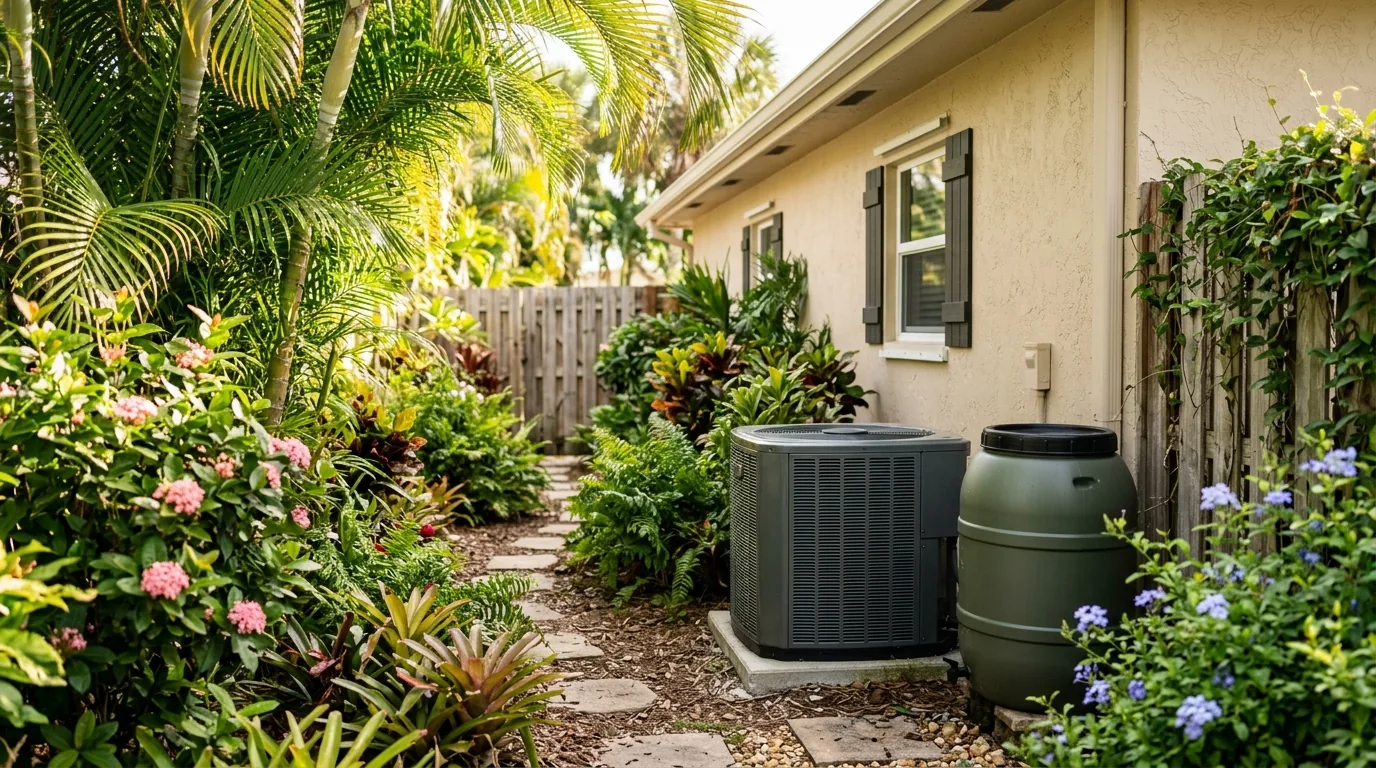
Florida quietly runs on one of the greenest heating technologies available. A heat pump moves heat rather than making it, delivering two to four units of heating or cooling per unit of electricity, and nearly every home here already owns one. Choosing it again at replacement, in an efficient tier, is the least dramatic and most effective environmental decision on this page. There is no combustion, no fuel delivery, and its footprint improves automatically as the grid does.
Consumption is cut in the boring places
The footprint of a cooling system is mostly its run-hour electricity, so the green moves are the same ones that cut the bill: seal the attic ducts leaking a fifth of the conditioned air, insulate to current code, shade the west glass, size the replacement from a load calculation instead of habit. We keep the full sequence on the efficiency page and will not repeat it here beyond the point that matters: a modest system on a tight house beats a flagship system on a leaky one, on carbon exactly as on cost.
Equipment tier does count at our run hours. Stepping up from the SEER2 floor to a mid-tier two-stage or variable unit removes real megawatt-hours over a Tampa Bay service life, and the technology page explains which features produce that and which are trim.
The refrigerant story, told straight
Refrigerants are potent greenhouse gases when they escape, and the industry has now moved from R-410A to R-454B, which carries a global warming potential roughly a fifth as high. Two things follow from that. New equipment is meaningfully better on this axis, through no virtue of any particular brand. And the greenest refrigerant practice is unglamorous: fix leaks properly instead of topping up, and recover refrigerant legally at end of life, both of which are workmanship questions, not product questions. The R-454B explainer covers what the change means at replacement time.
Where we draw the greenwashing line
Geothermal is efficient and a poor match for this market; our mild winters shrink its advantage over a good air-source heat pump to the point that the drilling rarely pays back, a case we make in full in the geothermal article. Solar-powered AC as a packaged product is mostly marketing; if you want solar, size a rooftop array for the whole house and let the utility math do the work. And any pitch that leads with the word eco but cannot name a kilowatt-hour or a GWP number is selling the paint. The savings live in physics, not adjectives.
If you want to do this properly
The green retrofit we would spec for a Tampa Bay house: duct sealing verified by test, attic insulation to code, a right-sized mid-tier heat pump on R-454B, a media filter, and settings that respect the humidity. Nothing exotic. Every line of it also shows up on the electric bill, which is how you know it is real.
Common questions
What is the most environmentally friendly AC option?
A correctly sized air-source heat pump in an efficient tier, installed on sealed ducts. It is unexciting and it outperforms every boutique option for this climate. Exotic systems mostly move the footprint somewhere else instead of shrinking it.
Is geothermal worth it in Florida?
Rarely, for a retrofit. The technology works, but mild winters mean the gap between ground-source and a good air-source heat pump is small here, while the drilling cost is not. On new construction with the right lot the math can close. We would rather tell you that than sell the drill.
Does the new refrigerant make my old system obsolete?
No. R-410A systems remain serviceable and their refrigerant remains available, at prices trending upward. What changes is repair math near end of life: a major refrigerant-circuit repair on an old system now argues harder for replacement onto the newer, lower-GWP platform.
Can I run my AC on solar panels?
Effectively yes, with a grid-tied rooftop array sized for the whole house; the AC is simply its largest customer. Products marketed as solar air conditioners bundle small panels with big claims. Buy the array and the efficient heat pump separately and each will do its job.
Do high-efficiency systems really cost less to run?
Yes, at Tampa Bay run hours the tier step shows up on the bill, typically enough to matter over the system's life. The caveat is the house around it: the rating is delivered only when ducts are tight and sizing is right, which is why we fix those first.
Related services
High-efficiency and low-impact HVAC across Tampa Bay
R.M. Mechanical works across Hillsborough, Pinellas, Pasco and Hernando counties. Open your area for the local details that actually change the job: which building department issues the permit, what the housing stock is like, and what the climate there does to equipment.
Ask about a high-efficiency setup
Tell us about the house and what you are hoping to achieve, and we will spec the version that holds up to arithmetic. For urgent repairs, call instead 727-306-1700.
Thank you! Your message is on its way.
We check messages 6am to 7pm daily and will get back to you. Need help right now? Call 727-306-1700.
Something went wrong and your message didn't go through. Please try again, or call us at 727-306-1700.