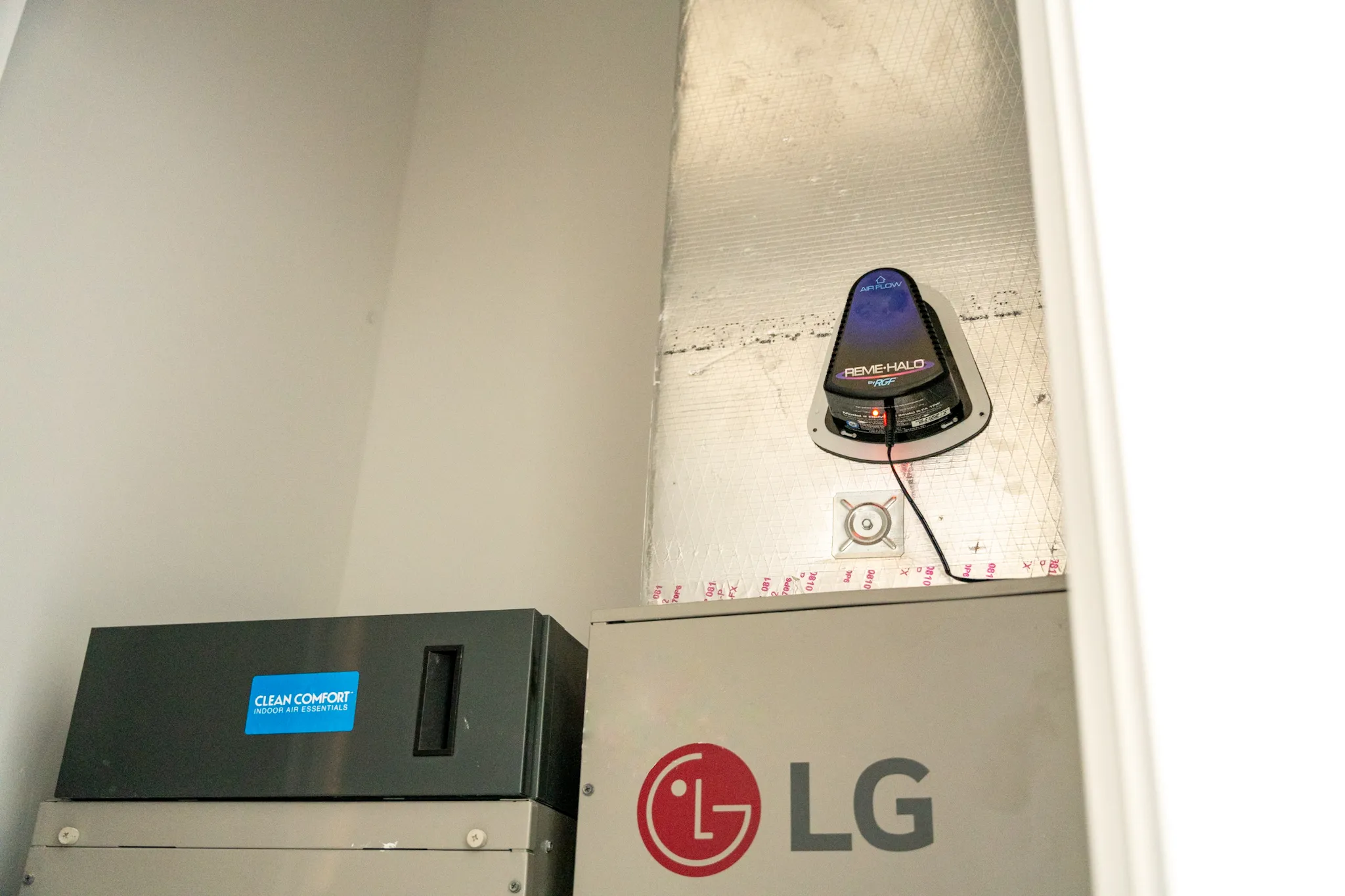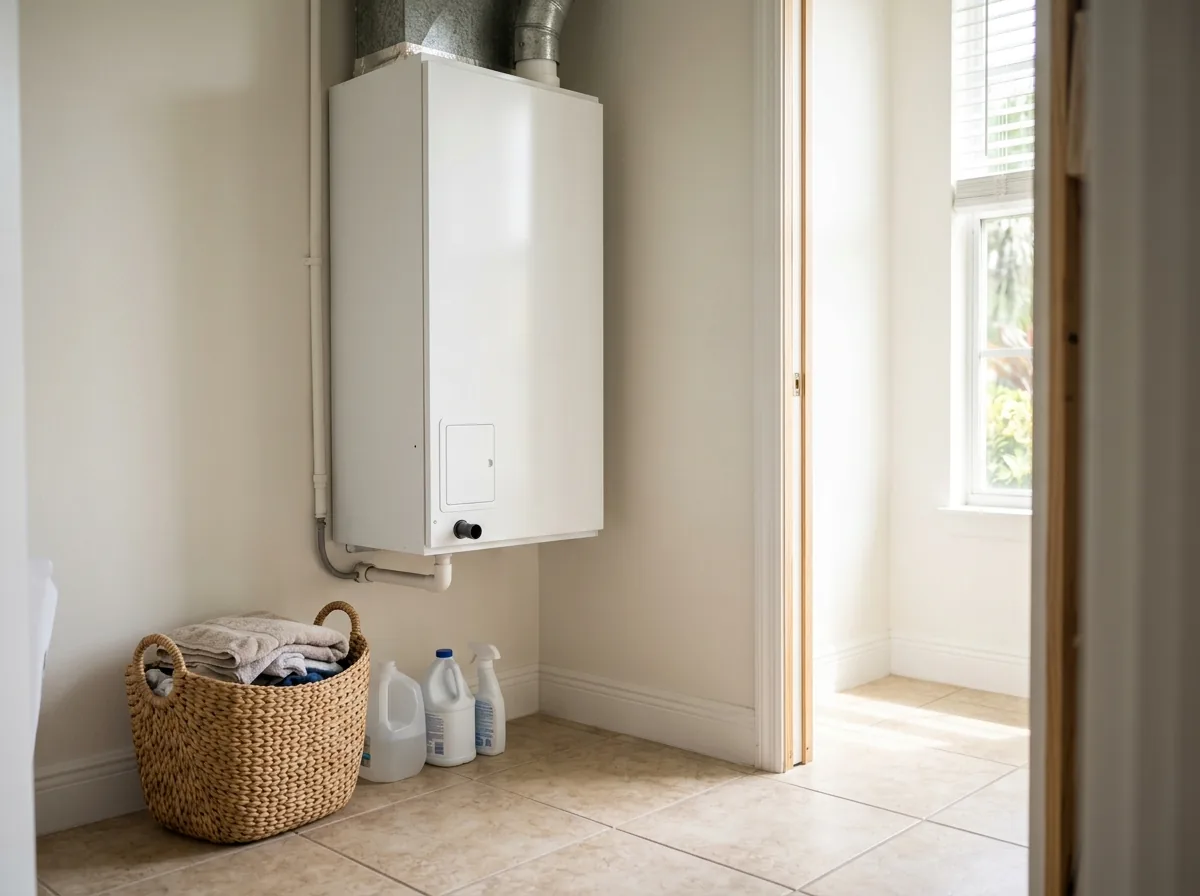
Water pooling around the indoor unit is one of the most common calls we take in July and August, and it is also one of the most fixable without a technician. More useful still: in Florida, a blocked condensate drain is the single most likely explanation for a system that appears completely dead. Before you assume the compressor is gone, go look at the drain.
Why there is water in the first place
Air conditioning dehumidifies as a byproduct of cooling. Warm, wet indoor air passes across an evaporator coil that is well below the dew point, water condenses out of that air onto the fins the same way it beads on a glass of iced tea on a porch, and it runs down into a pan underneath. On a humid Florida afternoon a normal residential system pulls several gallons of water per day out of the air in your house.
All of it has to leave the building somehow, and the condensate drain is how.
What goes wrong
Your drain line is a modest piece of PVC, usually three quarters of an inch, running from the pan under the air handler out through a wall or into a plumbing connection. It stays damp and dark for eight months a year. Algae and biological slime find that arrangement ideal, and a film establishes itself within a few weeks of the season starting. Then it thickens, catches dust and insulation fiber shedding off the coil, and eventually plugs the pipe solid.
Then the water has nowhere to go, so it backs up into the pan. Most systems installed in the last twenty years have a float switch sitting in that pan or in the line, and when the water rises, the switch opens the control circuit and shuts the system down on purpose. Design intent, not a malfunction. Without that switch, water overflows an attic pan into your bedroom ceiling, and you are looking at drywall, insulation and possibly flooring instead of a fifteen-minute service call.
Which is exactly why a clogged drain shows up disguised as a dead system. Nothing is broken. A safety did its job.
Worth knowing: some older installations have no float switch at all, or have one that was bypassed by a previous technician who found it inconvenient. Those are the houses where the first symptom is a wet ceiling. If your air handler lives in the attic and you have never seen a small plastic switch in the drain line or clipped to the pan, that is worth asking about at your next maintenance visit.
How to recognize it
Several signs point at the drain rather than at the equipment, and any one of them is enough to justify checking.
- Sudden, complete shutdown on the muggiest day of the month
- Brown-ringed water stains spreading on the ceiling below an attic air handler. These often show up days before the system itself quits, which makes them the most valuable early warning on this list. Nobody looks up.
- Standing water in the secondary pan or on the closet floor
- A musty, faintly sour smell whenever the blower runs, strongest at the supply registers nearest the air handler
- Thermostat calling for cooling, display lit and normal, and absolutely nothing happening out at the equipment
People get thrown by that last one. Silence plus a lit thermostat reads as an electrical failure, and it is usually a plumbing problem you can solve with a shop vacuum.
Clearing it yourself
This is a homeowner-level repair if you can reach the equipment safely. Skip it if the air handler is in an attic you are not comfortable moving around in, because a foot through the ceiling costs more than the service call.
- Shut the system off at the thermostat and then at the breaker.
- Find the drain line where it leaves the air handler. Look for a T-shaped vertical fitting with a removable cap, which is the access port that was installed for exactly this purpose.
- Go outside and find the other end of that line, usually near the foundation or above a flower bed. Seal a wet vacuum hose over it with a rag or your hand and run it for two or three minutes. Pulling the blockage out from the discharge end works far more reliably than pushing at it from indoors, which mostly packs the clog tighter.
- With the line flowing, pour a cup of distilled white vinegar into the access port to kill what remains. Vinegar, not bleach. Bleach degrades PVC over time and corrodes some of the metal components it contacts inside the pan.
- Sponge out any standing water, cap the port, restore power, and stay long enough to confirm water is running out of the discharge line.
If the float switch tripped, the system usually restarts on its own once the pan drains. Some models need a moment.
Keeping it clear
A cup of vinegar down the access port every couple of months through cooling season prevents the overwhelming majority of these blockages. It takes about ninety seconds and requires no tools at all. Put it on the calendar next to your filter change, because the failure it prevents always seems to arrive on a weekend.
Flushing the drain and treating the pan is on the checklist for every visit under our maintenance plans, which is a large part of why homes on scheduled service rarely make this particular emergency call. Prevention here is cheaper than the cure, and the cure is already cheap.
When it is not the drain
Sometimes the line clears and water keeps appearing, and at that point the causes get more involved. A drain pan can crack or rust through, particularly on older equipment, and the water then bypasses the drain entirely. A coil that froze and is now thawing dumps more water at once than the pan can handle, which points at an airflow restriction or a refrigerant problem rather than at the drain. Drain lines installed with insufficient pitch never fully empty and reclog constantly. Occasionally a line has come apart inside a wall cavity, and the only evidence is a damp spot appearing somewhere unexpected.
All four of those need eyes on the equipment. If the vacuum and the vinegar did not solve it within an hour, stop and call somebody, because the cheap failure mode has already been ruled out. Our diagnostic work starts by confirming which of those it is, and if the answer turns out to be a frozen coil, what low refrigerant really means covers the next question you will have.