In most of the country an air conditioner works hard for three months and rests for nine. In Tampa Bay it runs from roughly March through November, and in a warm year it barely stops at all. That is double the operating hours of a system in Ohio or Pennsylvania, and mechanical wear tracks run hours, not birthdays, which is the whole reason maintenance guidance written for a national audience undersells what Florida equipment needs. A ten-year-old system here has done what a twenty-year-old system does up north.
Salt air compounds it along the coast. So does humidity, which keeps condensate drains wet and biologically active for eight months a year.
How often should HVAC be serviced in Florida?
Once a year inland, twice a year within a mile or two of salt water. That coastal split is not a sales tactic, and we would rather explain the mechanism than ask you to take it on faith. Salt deposits on aluminum condenser fins draw moisture and keep an electrochemical reaction running continuously, so the coil loses heat transfer capacity gradually and invisibly. Nothing about the system looks wrong. Then one July afternoon it cannot keep up, and by then the corrosion is structural and no rinse will fix it. ISO 9223 assigns its corrosivity categories from measured corrosion rates, and engineers typically place the first mile or so from salt water at C4 or above, the same class assigned to industrial environments.
Book the visit between February and April. You get ahead of the cooling season, and you are not competing for a slot with everyone whose system just quit in the first real heat of May.
What a real maintenance visit covers
A visit worth paying for produces measurements, not a walk-around and a sticker. Ask any contractor what numbers they record, and if the answer is vague, keep looking. Here is what belongs on the list:
- Refrigerant charge verified against the manufacturer specification. Not adjusted by feel or by how cold the line looks. An overcharged system does as much damage as an undercharged one, and since refrigerant is not consumed in normal operation, a system that reads low has a leak, and the job is to find it, not to top up the charge.
- Capacitor tested under load. The most common failure we see, and the cheapest to prevent.
- Contactor inspected for pitted contacts. Pitting is the usual explanation for a system that works some days and not others, which is the single most frustrating symptom for a homeowner to describe over the phone.
- Coils cleaned, both condenser and evaporator. On coastal properties that means assessing corrosion, not washing off dirt.
- Condensate drain cleared and the float switch tested. A blocked drain trips that switch and shuts everything down, which is why the most common cause of an apparently dead air conditioner is a plumbing problem, not an electrical one.
- Electrical connections checked and torqued. Heat cycling loosens terminals over the years, and a loose terminal is a fire risk long before it is a fault code.
- Static pressure measured. Airflow restriction quietly costs efficiency and capacity, and it is completely invisible without a manometer.
Notice what is missing from that list: duct cleaning. Routine duct cleaning has not been shown to help a typical home, and we do not sell it as part of a maintenance visit. If there has been water intrusion, visible mold growth, or a rodent problem in the attic, that is a different conversation and we handle it through duct cleaning as its own job. Dust in the ducts of an ordinary house is not doing you harm and cleaning it will not lower your bill.
What you can do between visits
None of this replaces a technician, but it catches the obvious problems during the ten months nobody is looking at your equipment. You are looking, not servicing. You are not trying to fix anything; you are trying to spot the small change early enough that fixing it is cheap.
- Every one to three months: check the filter and change it when it looks loaded, whatever the calendar says.
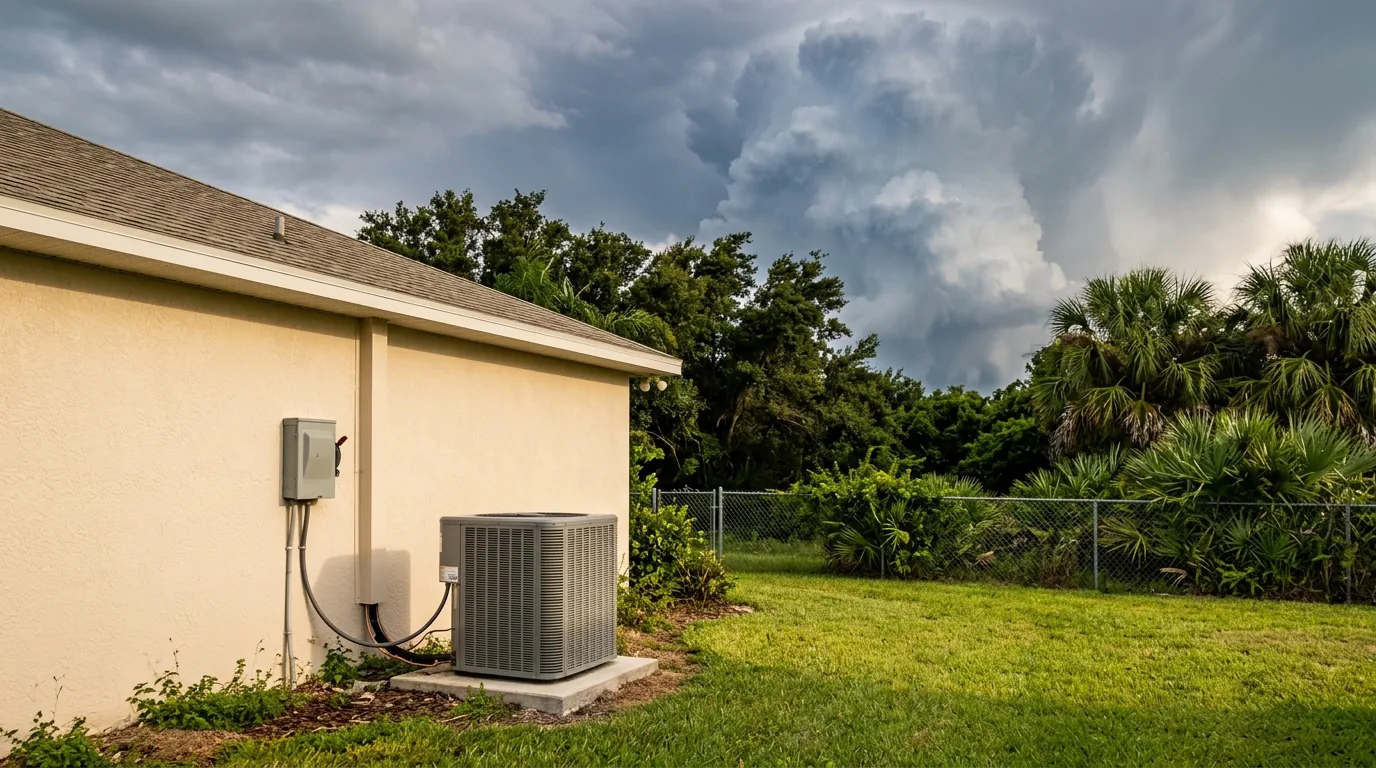
- Spring, before the season: clear leaves, mulch, and clippings from around the outdoor unit, keeping two feet of open space on every side, then rinse the condenser fins gently with a garden hose. Never a pressure washer, which folds the fins over and makes the airflow problem permanently worse.
- Monthly through summer: glance at the condensate line for water backing up, and confirm supply vents are open and not blocked by furniture.
- Autumn: run the heat once before you need it. A heat pump idle since March will find its problem on the first cold night otherwise.
- Coastal, twice yearly: rinse the condenser coil to clear salt. It is the most valuable ten minutes available to anyone living near the water, and it is free.
One geography note, since it affects how seriously to take the coastal item. Apollo Beach and Ruskin front Tampa Bay, and Bay Pines and South Pasadena front the intracoastal, so those addresses carry real salt exposure even though none of them sit on the Gulf. Timber Pines, by contrast, is a good three miles from salt water and can skip the twice-yearly rinse. Distance from salt water is what matters, not which body of water it is.
What maintenance does and does not change
Equipment in this market generally reaches somewhere between ten and fifteen years, and maintenance moves you toward the top of that band rather than past it. What it changes more reliably is the shape of those years: whether the system holds its rated capacity through August, whether it dehumidifies properly, and whether the failures that do come arrive as scheduled repairs or as surprises.
Efficiency drift is the part homeowners rarely connect. A condenser coil with a season of grass clippings packed into it, a filter left in too long, a charge that drifted slightly off spec: none of those announce themselves, and together they can add a noticeable amount to a summer bill while the house still feels fine. You do not perceive a gradual loss. You just pay for it. Current DOE minimums for our region are 14.3 SEER2 under 45,000 BTU and 13.8 SEER2 from 45,000 to 65,000 BTU, but a neglected high-efficiency system delivers less in practice than a well-kept basic one.
Is maintenance worth the money?
Maintenance does not make equipment last forever, and any contractor promising you fifteen extra years is making a sales pitch, not a forecast. What it does is convert unscheduled failures into scheduled ones.
A weakening capacitor, a coil losing capacity, a condensate drain beginning to silt up: every one of those is a routine line item on a February visit and an after-hours call in August. Same part, same technician, entirely different circumstances.
Then there is warranty. Most manufacturer warranties require documented annual professional maintenance, and claims do get denied for missing records. If your system is still covered, skipping service can quietly cost you protection you already paid for when you bought the equipment. Our maintenance plans keep that documentation on file, and warranty service covers what happens when a claim is needed.
Do not wait for the next scheduled visit if
- The house is cool but feels damp, which points at sizing or airflow rather than the thermostat
- Rooms that used to match each other now sit several degrees apart
- Your power bill jumped with no change in how you use the system
- Short cycling, meaning the system starts and stops every few minutes instead of settling into proper cycles. This is worth catching quickly, because compressors wear from starting rather than from running, and a system doing six short cycles an hour is aging far faster than one doing two long ones
- Any burning smell, or water pooling near the air handler
Any of those is worth a call now, not in six months. Related: common faults and what they mean and efficiency upgrades worth doing.