Most of what gets sold as the future of HVAC is a brochure adjective. Three changes are real, are already in the equipment being installed this month, and are worth understanding before you commit to a machine that will sit beside your house for the next twelve to fifteen years. Everything else on this page is either a modest improvement or a claim that outran its evidence.
The refrigerant change is the one that affects your purchase
R-410A held the residential market for roughly two decades. Regulators are now phasing it down in favor of refrigerants with lower global warming potential. Most ducted residential brands moved to R-454B. Daikin, Goodman and LG chose R-32 instead.
The practical consequences are narrow but they matter. Equipment is not cross-compatible: an R-454B condenser is designed, charged and rated for R-454B, and you cannot decide later to run something else through it. R-454B carries an A2L classification, meaning mildly flammable, which changes how a technician stores cylinders, how leaks are detected, and what the equipment itself is required to do when it senses a leak. None of that is a reason to be nervous about the refrigerant sitting in your yard. Care instead about whether the person installing it has been trained on it.
Own an R-410A system already? Keep it. Your system stays legal and serviceable, and scrapping working equipment over a refrigerant change makes no sense at all. We spelled out the math on repairing versus replacing in what the R-454B change means for Florida homeowners.
Inverter-driven compressors are becoming the default
A single-stage compressor knows two states: full blast and off. An inverter-driven compressor modulates, running at whatever fraction of capacity the house currently needs, sometimes for hours at a stretch. That used to be the top of a manufacturer's line. Now it is working its way down into the middle of it.
In Florida this is not a marketing distinction, it is the difference between a house that feels good at 78 and a house that feels swampy at 74. Dehumidification is a function of time spent moving air across a cold coil. A single-stage unit satisfies the thermostat fast, shuts off, and stops removing water. A modulating unit runs long and slow and pulls moisture out the entire time. Ask anyone who has lived through an August in a house with the wrong equipment and they will describe the symptom before they can name the cause.
There is a real trade-off, and it is electronics.
Inverter systems depend on control boards, and control boards dislike the kind of power quality that Tampa Bay summer storms deliver. Surge protection at the outdoor unit is inexpensive next to a replacement board, and we fit it as a matter of course rather than presenting it as an option. The wider comparison lives in variable speed versus single stage.
Smart controls, and what they are worth
It depends entirely on what you do now.
If you already program a basic thermostat sensibly, a learning thermostat is a convenience upgrade rather than an efficiency one, and you should buy it for the app and the remote access rather than for a saving that will not show up. Never touched the schedule in six years? The same device will save you real money simply by doing the thing you were not doing.
Two cautions that get skipped in the reviews:
- Communicating equipment wants its own control. Drop a generic smart thermostat onto a communicating Carrier or Rheem system and you can switch off the staging behavior the equipment was bought for. The house still cools. What stops is the expensive clever part you paid for.
- Remote diagnostics is the underrated feature. A system that reports a rising suction pressure or a fault code to your contractor before you notice anything wrong is worth more than the ability to change the setpoint from an airport. Nobody advertises it.
- Occupancy sensing earns its keep in a multi-story house, and close to pointless in the single-story ranch layouts that dominate Hudson and Largo.
More on this in smart HVAC and thermostats.
Efficiency floors keep rising, and Florida sits above the national one
The Department of Energy puts Florida in its Southeast region, which carries a higher minimum than the northern states: 14.3 SEER2 for systems under 45,000 BTU and 13.8 SEER2 for 45,000 to 65,000 BTU, in force since January 1, 2023.
Those floors ratchet upward over time. Buying at the legal minimum today means owning equipment that looks dated sooner than it otherwise would, which is worth a thought if you plan to stay in the house. That does not argue for buying at the very top of the range, where the payback period in energy savings frequently outlives the equipment. The sweet spot is generally a step or two above minimum, in a properly sized system, on ductwork that does not leak. Understanding SEER ratings covers how to read the numbers on a quote.
What to be skeptical about
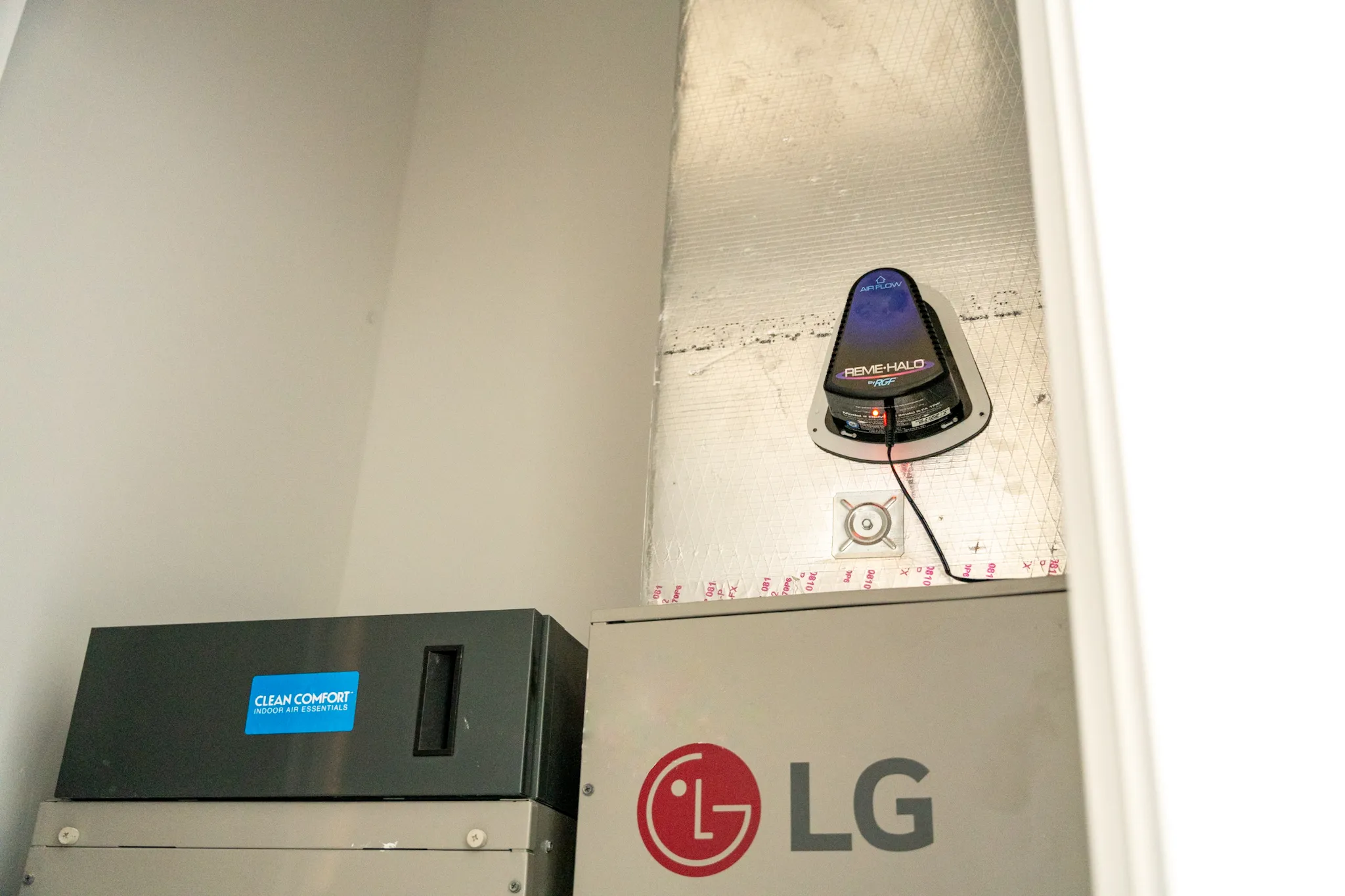
Air purification claims accelerated hard after 2020, and a fair amount of the marketing got well ahead of the testing. In-duct UV aimed at the evaporator coil does help keep that coil clean, which is a real if unglamorous benefit in a humid climate, and we install it on that basis. Claims about whole-house pathogen reduction deserve a harder look. Our take on UV systems goes through the distinction.
Geothermal is a genuinely efficient technology that rarely makes financial sense on a Florida retrofit, because the loop field is expensive and our heating season is too short to recover the cost. Routine duct cleaning has not been shown to improve efficiency or air quality in a typical home, and the money is better spent on sealing the ducts. Related reading: HVAC technology and the brands we are certified on.