Cooling is the largest single line on almost every Florida power bill, and the spread between a well-run system and a neglected one is wide enough to notice every month. The good news is that the changes with the best return cost nothing at all, and the ones that cost real money are worth knowing about before a salesperson tells you the answer is a new condenser. What follows is roughly ordered by return per dollar spent, starting with free.
One warning before the list. Nothing here overcomes a system that is broken or badly sized, so if your bill jumped suddenly with no change in how you live, that is a repair question rather than an efficiency question.
The changes that cost nothing
Raising the thermostat a degree or two is the largest free lever you have. Each degree is worth roughly 3 to 5 percent of your cooling cost across a season, which sounds small until you stretch it over the eight or nine months a Florida system runs. Seventy-eight degrees while you are home is the standard recommendation, and the gap between holding 74 and holding 78 through a Tampa Bay summer is not subtle.
Stop closing vents in unused rooms. This one feels obviously right and is obviously wrong: your blower is sized to move a specific volume of air, and blocking half the outlets does not reduce the work it does. It raises static pressure across the whole system, which reduces airflow everywhere else, strains the blower motor, and in bad cases drops evaporator coil temperature far enough to freeze it solid.
- Run ceiling fans only in rooms you are actually in. Fans cool people rather than rooms, by moving air across skin. A fan running in an empty bedroom is pure waste, but one running over your chair lets you hold a higher setpoint and feel the same.
- Close blinds on west-facing glass in the afternoon. Sun through windows is a serious heat load here.
- Move the dryer and the oven to evening use where you can. Both dump heat straight into the conditioned space, and both make the system work through the hottest part of the day to undo what you just did.
Small money, quick payback
Change the filter on a real schedule. Every 60 to 90 days for a standard one-inch filter, sooner with pets in the house, and if you cannot see light through it you have already waited too long. A loaded filter chokes airflow, which costs efficiency, strains the blower motor, and quietly reduces the system's ability to pull humidity out of the air, so the house ends up both more expensive and less comfortable at the same setpoint. Our filter guide covers the MERV question.
Clear the outdoor unit next. Two feet of open space on every side, no shrubs pressed against the cabinet, no grass clippings packed into the fins. A condenser exists to dump your home's heat into outdoor air, and one that cannot breathe runs longer for the same result.
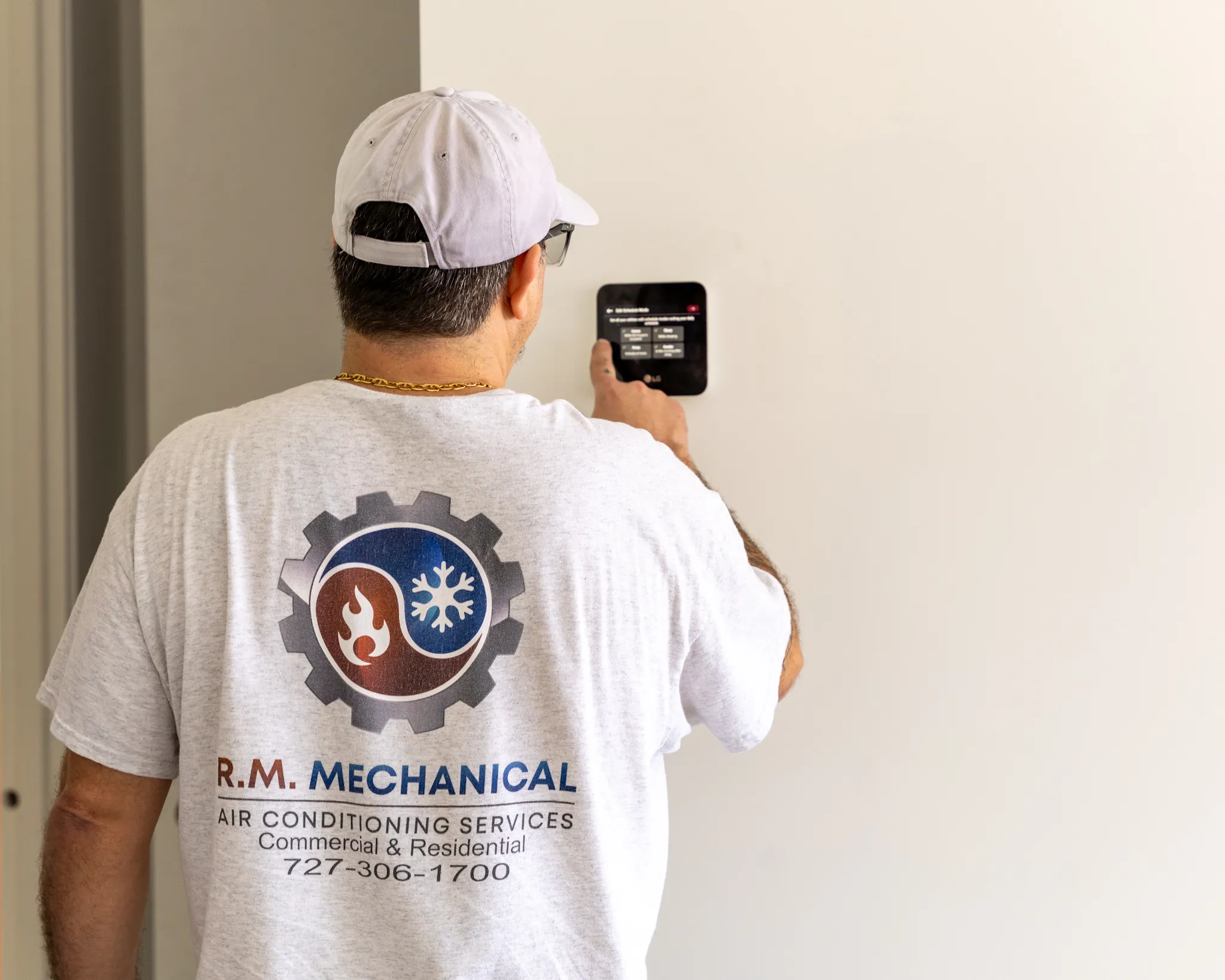
Fit a programmable or smart thermostat, and then actually program it. Setting back while the house is empty is the easiest recurring saving available to most homeowners, and the reason smart models win is simply that they remove the need to remember. Weatherstripping around doors, windows, and especially the attic hatch belongs in this tier too. It is cheap, it takes an afternoon, and the attic hatch is the leak almost everyone forgets. See our thermostat options.
Where real money is well spent
Duct leakage of 20 to 30 percent is common in older Florida homes, and every percent of that is air you paid to cool being delivered to a 120 to 130 degree attic. Sealing and insulating ductwork frequently returns more per dollar than replacing working equipment, which is not what most contractors lead with.
Attic insulation to R-38 is the other big one. Florida attics hit 120 to 130 degrees on a summer afternoon, and that heat sits directly on your ceiling for eight months of the year with nothing but insulation in between. Homes built before the current code frequently have half of what they should. It is unglamorous work, nobody notices it, and it outperforms most equipment upgrades in this climate.
Then there is maintenance, which is boring and quietly effective. Correct refrigerant charge, clean coils, and measured static pressure are each worth a few percent, and together they meaningfully change what the system draws. The visits also catch the small failures, weakening capacitors and slowly blocking condensate drains, that otherwise become after-hours calls in August. Details on what we check are in our maintenance plans.
The humidity trap
Here is the mistake that costs the most money for the least benefit. A house feels muggy, so the homeowner drops the thermostat two degrees, and the bill climbs while the muggy feeling stays. Temperature was never the problem.
Dehumidification happens during run time. Moisture condenses on a cold evaporator coil and drains away, and that process needs minutes, not seconds, so a system that satisfies the thermostat too quickly never gets far enough into a cycle to do it. Oversized equipment behaves exactly that way, which is why bigger is not better in a humid climate and why a load calculation done on the house matters more here than almost anywhere in the country. Lowering the setpoint does not fix it. You get harder cycling, a higher bill, and the same clammy air, because the machine was never running long enough in the first place.
Two notes for the short heating season
Florida winter is brief, but heat pumps have one expensive habit worth understanding. When you demand a large temperature jump quickly, the system brings on auxiliary electric strip heat, which is straightforward resistance heating and costs several times what the heat pump itself costs to run.
So recover gradually. A modest overnight setback that the system climbs out of slowly beats a deep setback and a hard morning jump, and on the coldest mornings, resisting the urge to crank the dial ten degrees is worth more than anything else you can do. Related: efficiency services and more ways to cut the bill.