North Pinellas covers a lot of ground in a small area. Tarpon Springs and downtown Dunedin have historic housing, Palm Harbor and East Lake are overwhelmingly 1980s and 1990s subdivision, and the coastal edge from Ozona through Crystal Beach fronts St. Joseph Sound, the salt water sheltered behind Honeymoon and Caladesi islands. Three different problems.
Eight miles apart, at most.
Historic Dunedin and Tarpon Springs
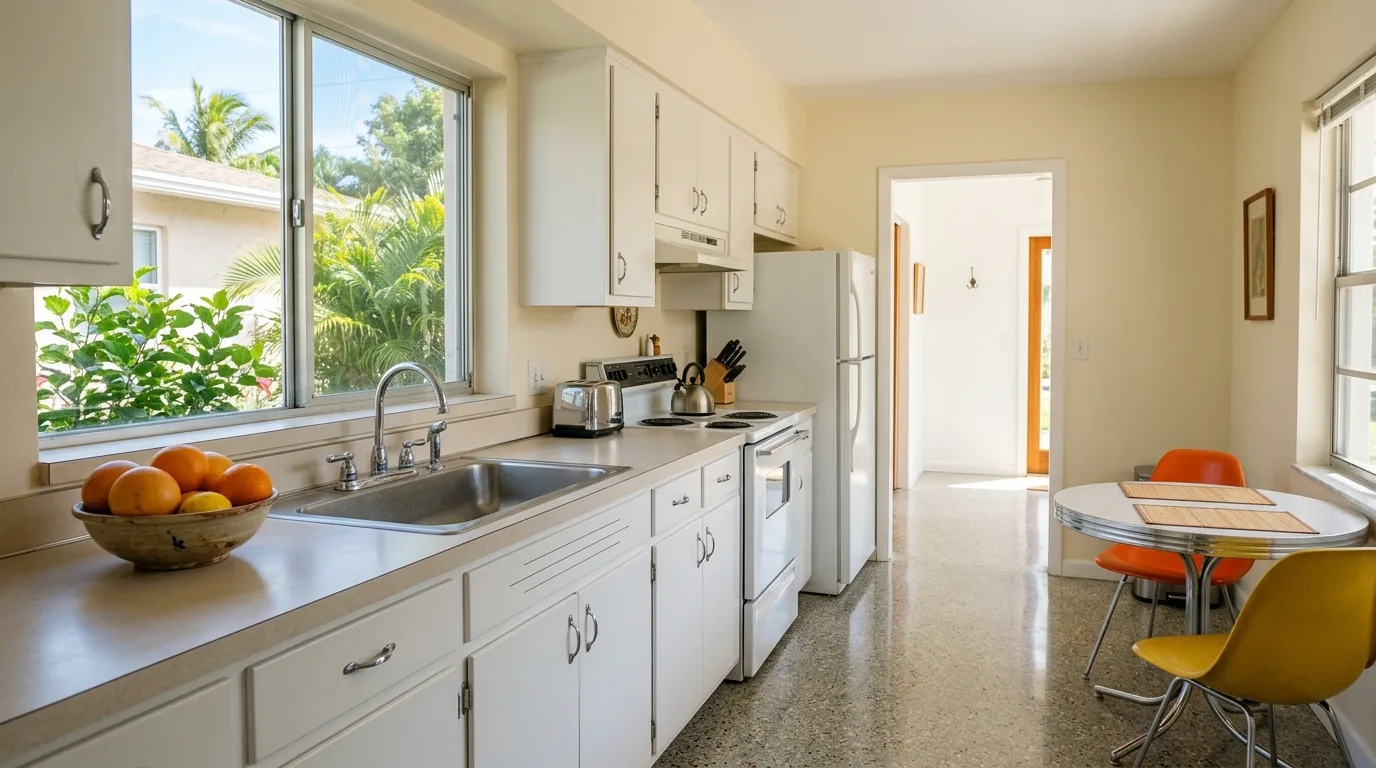
The older housing here predates central air conditioning entirely, and the same retrofit compromises appear that we see in older St. Petersburg and Tampa: a single central return serving the whole house, ductwork threaded into whatever space existed, and electrical service sized for an era with far fewer appliances in it.
Two things are specific to this area, though, and both catch people out.
Historic district review. Where it applies, anything visible from the street may need approval, which affects where an outdoor unit can sit and how it must be screened. Establish that before ordering equipment, not after it arrives on a truck.
Proximity to the water. Downtown Dunedin faces St. Joseph Sound, and the historic blocks of Tarpon Springs sit along the Anclote River and its bayous. All of that is salt water, so much of the older housing in both towns is close enough for salt to matter, which is not usually true of historic districts elsewhere. You get the retrofit problems and the corrosion problems stacked on top of each other, and the specification has to answer both.
There is a third thing nobody warns you about, and it is the one that derails projects: the air handler in a house of this vintage frequently lives in a closet or a crawl space that was never designed to hold one. Modern equipment is physically larger than what went in during the 1960s, particularly the coil section, and cabinets have grown again with the move to R-454B equipment. Measuring the opening before selecting a model is not optional here. When the space will not take a conventional replacement, a horizontal air handler, a relocated closet, or a ductless system serving part of the house are all better answers than forcing the wrong box into the wrong hole and then living with an access panel you can never remove.
Palm Harbor and the 1980s subdivisions
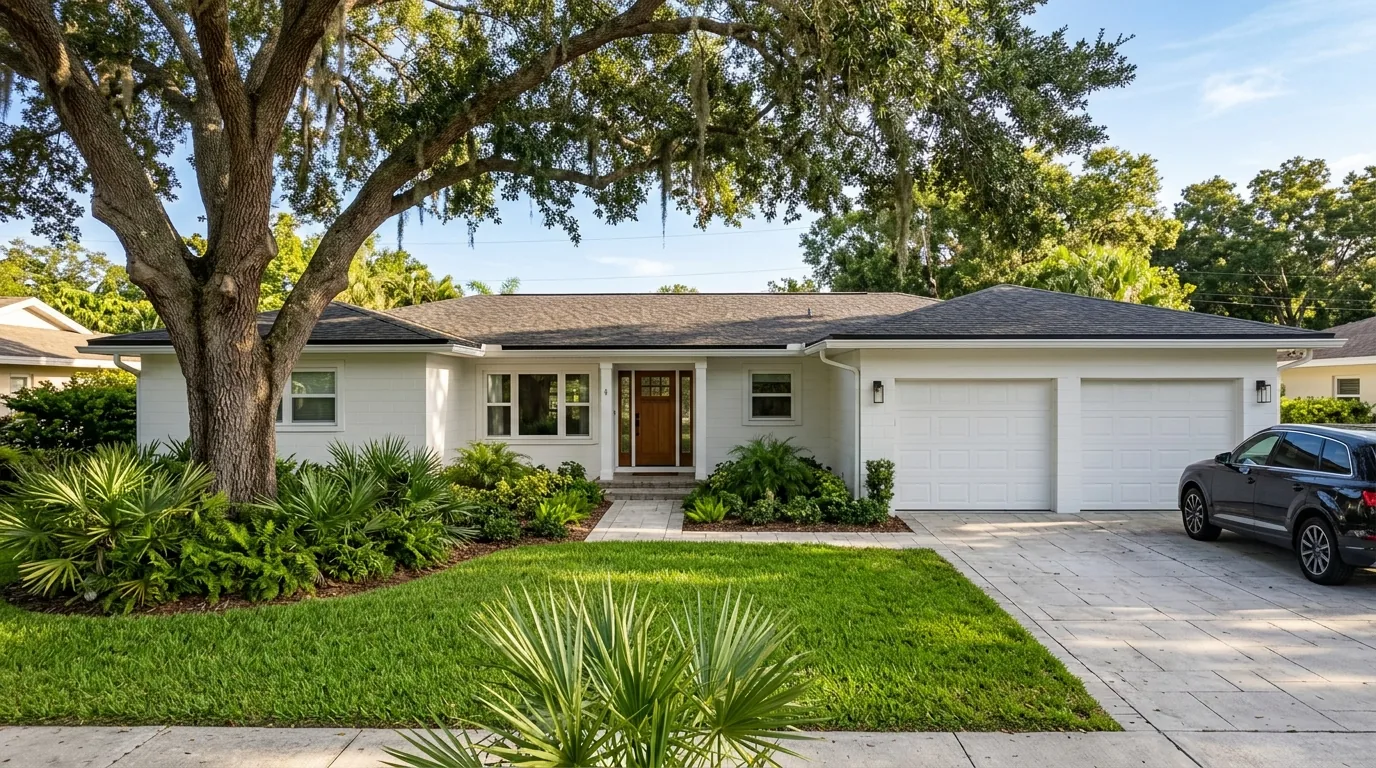
Palm Harbor and East Lake are dominated by housing built roughly between 1980 and 2000, and the pattern there is consistent enough to predict: the equipment has been replaced at least once, and the ductwork almost certainly has not.
Duct systems of that vintage sit in an awkward spot. They are old enough that the insulation has degraded and the connections have loosened, but new enough that nobody thinks of them as a problem, because the house is not old. So you end up with efficient modern equipment attached to a distribution system quietly losing a meaningful share of what it produces into a hot attic, and an owner who cannot understand why the new system did not deliver what was promised.
A duct pressure test puts a number on it.
On a house of this age it is frequently the highest-return work available, and usually cheaper than the capacity upgrade that would otherwise be proposed. Many of these communities also have associations with rules on outdoor unit placement, which narrows options at replacement time.
The specific failure to look for in this housing stock is the flex duct connection at the plenum takeoff. Original installations used a mastic and strap detail that holds well for perhaps two decades in a 130-degree attic, after which the inner liner starts to pull back from the collar. Nothing dramatic happens. The duct is still there, still attached, still delivering air to the room, just with a widening gap at the top of the run where conditioned air spills out before it ever gets going. Owners never see it, because the insulation jacket is intact from below and the register still blows. A technician in the attic with a light finds it in about ten minutes.
What you can check before calling anyone
Three things in this area are worth looking at yourself, and none of them require tools.
- Feel the air at the register furthest from the air handler on a hot afternoon, then feel the closest one. A dramatic difference between the two points at duct losses rather than at the equipment.
- Look at the attic ductwork where you can see it from the hatch. Crushed sections, sagging runs resting on joists, and disconnected boots all show up from a standing position.
- Check the outdoor coil for salt. White powder on the fins near Ozona or the Tarpon waterfront tells you corrosion is running, and it is the strongest single argument for a coated coil at replacement time. Inland, in East Lake or eastern Palm Harbor, expect the fins to look clean and dusty rather than chalky, which tells you the salt is not reaching you and the money belongs elsewhere.
The coastal edge
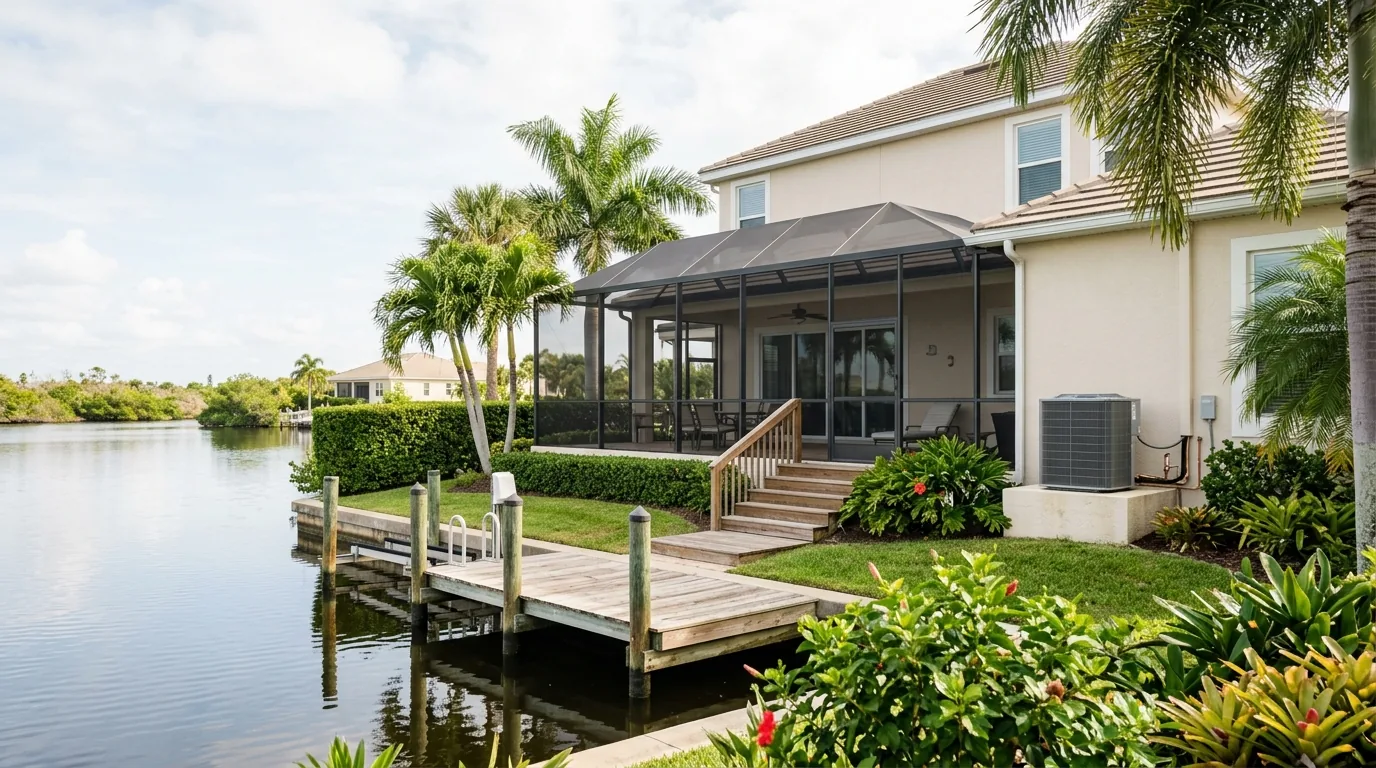
Ozona, Crystal Beach, western Palm Harbor and the Tarpon Springs waterfront all sit inside the band where salt governs equipment life. Coated coils on replacement and twice-yearly coil service apply there exactly as they do on the barrier islands.
East Lake, inland Palm Harbor and eastern Tarpon Springs largely do not. The gradient is steep enough that neighboring communities warrant different specifications, which is why we answer this from the address.
Elevation varies here
North Pinellas has more topographic variation than the rest of the county, and that produces two practical effects.
Split-level and multi-story houses are more common here than elsewhere in Pinellas, which brings the upstairs-warmer problem that mid-county single-story housing simply does not have. And drainage varies, which affects where condensate can be routed and how outdoor equipment should be sited on a sloping lot.
Sloping lots create a specific nuisance with condensate. A drain line needs continuous fall to daylight, and on a lot that rises away from the house the obvious exit point is uphill from the pan. Installers solve it with a condensate pump, which works until it does not, and a failed pump takes the system offline through the float switch on a Saturday in August. Where gravity drainage is achievable at all, take it. Where it is not, know that you have a pump, know where it is, and have it checked once a year, so a failure is not how you learn it exists.
Permits
Dunedin, Tarpon Springs, Oldsmar and Safety Harbor each run their own building departments, while Palm Harbor and East Lake are unincorporated and permit through Pinellas County. The only part that matters to you is that somebody pulls it.
What it means in practice is a short inspection after the work, usually looking at electrical disconnect and clearances, equipment mounting, and condensate termination. Historic districts add a design review step ahead of the mechanical permit, and that step runs on its own calendar, which is the single most common reason a Dunedin or Tarpon Springs replacement takes longer than the owner expected.
Working out which applies to you
Three questions settle it.
- How old is the house? Pre-1970 means retrofit issues: returns, duct routing, possibly the electrical panel. Post-1980 means the ducts are probably your constraint rather than the original design.
- How far from the water? Inside roughly a mile, corrosion governs equipment life.
- Is there an association or historic review? Both constrain placement, and both are considerably cheaper to work with than to work around after the fact.
Answer those three and the rest of the decision gets much smaller. A 1920s bungalow two blocks off the Anclote and a 1994 East Lake two-story need different specifications, different paperwork, and sometimes different equipment entirely, and the address settles most of that before anyone opens a catalog.