Riverview, Wesley Chapel, Land O' Lakes, Fish Hawk and Apollo Beach have absorbed an enormous amount of construction over two decades. The equipment in those houses is modern, efficient and usually installed correctly.
The complaints we get are almost never about the equipment.
They are about design decisions made on paper before anyone moved in, and they tend to surface around year three, which is roughly when the builder warranty stops answering the phone.
The upstairs is always warmer
This is the most common call we take in the newer subdivisions, and it is not a fault. Heat rises. The upper floor takes more roof load. A single-zone system controlled by a downstairs thermostat satisfies downstairs first and leaves upstairs behind, every time, by design.
Builders have several ways to handle it and all of them work: two separate systems, one zoned system, or a single system with the ductwork deliberately balanced to favor the upper floor. What does not work is a single unzoned system with a downstairs thermostat and no balancing, which happens to be the cheapest option, which is why it is the one you probably have.
If that is your house, the fixes run in ascending cost. Rebalance the dampers. Add a return upstairs. Retrofit zoning. Add a dedicated system for the upper floor.
Rebalancing is often enough. It is also the cheapest, which is a good reason to try it first rather than last.
Duct runs in a 130-degree attic
Almost every subdivision house here runs its ducts through the attic, which is normal and workable, but it puts your entire distribution system in the hottest part of the building. Two things then matter more than they otherwise would: how well the runs are sealed, and how well the attic is insulated and ventilated.
Flex duct is standard in this construction and it is perfectly good when installed properly. What is not good, and what we find regularly, is flex pulled tight around a corner, kinked, sagging between supports, or crushed where another trade knelt on it during the build. Any one of those chokes the run, and none of them are visible from inside the house.
A pressure test measures it instead of guessing. On a three-year-old house that has never been tested, it is a worthwhile hour.
Bedroom doors and the return path
Newer houses are built tighter than older ones, which is good for efficiency and bad for airflow the moment a door closes.
If a bedroom has a supply register and no return path, shutting the door pressurizes the room and airflow falls away. Builders usually answer this with a door undercut. It is the minimum solution and frequently not enough, whereas transfer grilles or jumper ducts do the job properly and are straightforward to retrofit years after the house was finished.
The test costs an hour. Leave the door open and see whether the room behaves. If it does, your problem is the return, not the equipment.
Builder sizing and the humidity complaint
A recurring pattern in new houses: the system hits setpoint easily and the house still feels clammy.
That is oversizing. A unit with more capacity than the load reaches temperature quickly, shuts off, and never runs long enough to remove moisture. Owners respond by dropping the setpoint, which costs more and does not fix how the house feels, because the issue was never the temperature. The underlying cause was a number chosen before the walls went up, and it is not correctable without changing equipment, which is exactly why it is worth knowing about while the house is still under warranty rather than five years later.
HOA constraints are real constraints
Most of these communities have rules about where an outdoor unit may sit, how it must be screened, and what noise is acceptable.
Those rules narrow your options at replacement time and occasionally rule out the equipment you had in mind. Worth reading before you need to.
Register the equipment, or lose half the coverage
This is the item that costs new-build owners the most money and it is entirely avoidable.
Most manufacturers grant an extended parts warranty only if the equipment is registered within a set window after installation, commonly 60 to 90 days. Registration is usually the owner's job, not the builder's. In a new house with a hundred other things happening, nobody does it, coverage quietly reverts to a much shorter base term, and the owner finds out years later when a coil fails and the claim comes back denied.
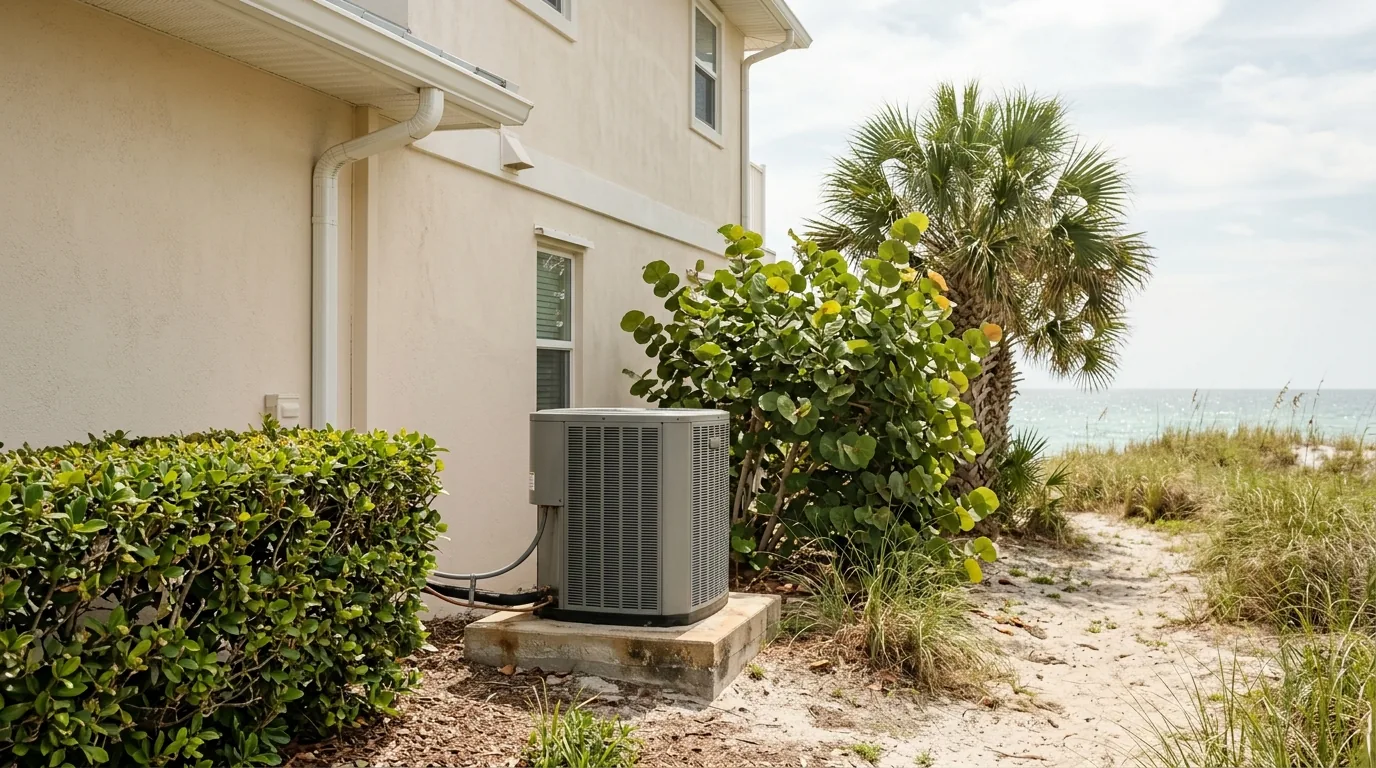
Find the model and serial numbers on the data plate of the outdoor unit. Photograph them. Check whether your equipment was ever registered, and if you are still inside the window, register it today. See how warranty coverage actually works.
Worth doing in year two or three
- Confirm the equipment was registered with the manufacturer.
- Have the ducts pressure tested while the house is young enough for the result to serve as a baseline you can compare against later.
- Check every bedroom for a return path with the door closed.
- Measure indoor humidity on a hot afternoon. Above 60% while the system is holding setpoint points at oversizing or an airflow restriction, and both are worth chasing down before the warranty lapses.
- Start documented annual maintenance, which most warranties require anyway.
See Riverview, Wesley Chapel, new construction HVAC, and what a proper installation involves.