Largo, Seminole, Pinellas Park, Bardmoor and Kenneth City occupy the middle of the Pinellas peninsula. That position is the defining fact about HVAC here.
Not the beach. Not inland either. You sit a few miles from salt water on both sides, in housing that spans sixty years of construction practice, which is exactly why the generic Florida advice fits worse here than almost anywhere else in the region.
Partial salt exposure, and where the line falls
The corrosivity gradient across Pinellas is steep. On the barrier islands salt determines equipment life outright and there is no argument about specification. In mid-county it is a real factor without being the dominant one, and how much it matters depends on how far west you are and what sits between your house and the water.
So this is the part of the county where the coil-coating decision is a judgment call. Closer to Seminole and the Boca Ciega side it is usually worth the money. Further east toward Pinellas Park it often is not, and paying for a coated coil there buys you nothing you will ever notice on the equipment or the bill.
We answer that from the address rather than from a rule.
A contractor applying coastal specification uniformly across the whole county is not looking at your situation, they are looking at a price list.
Three generations of housing on adjacent streets
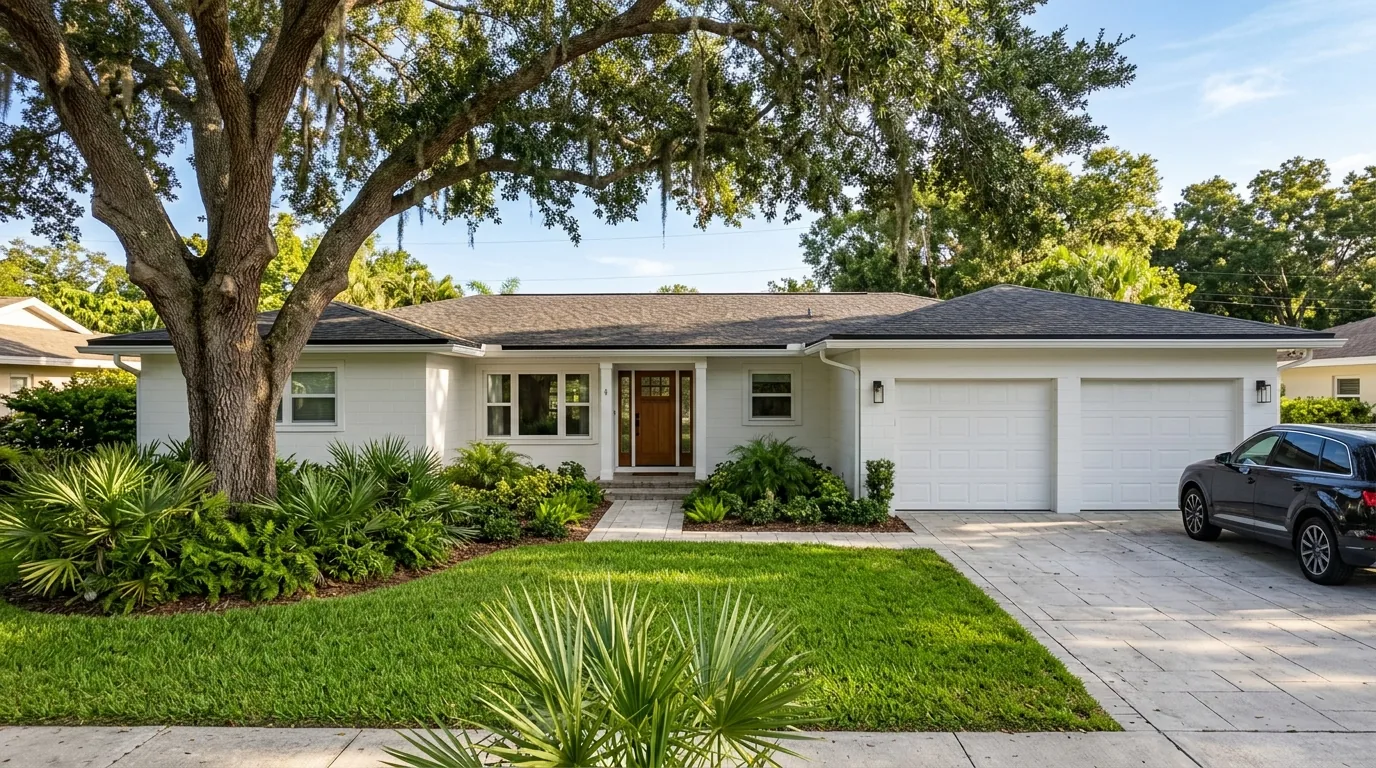
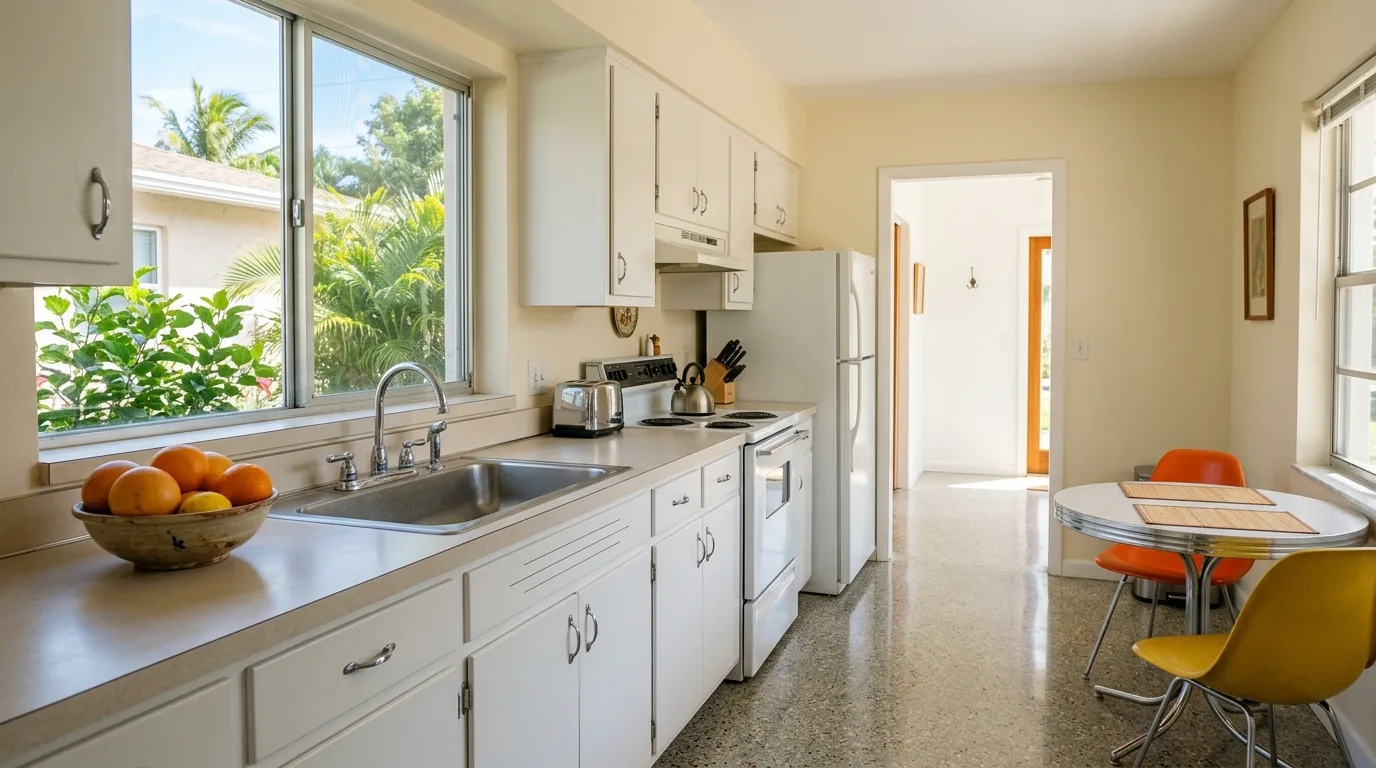
Mid-county has 1950s and 1960s block homes, 1970s and 1980s expansion, and newer infill, frequently within a block of each other. Each behaves differently enough that the same recommendation cannot serve all three.
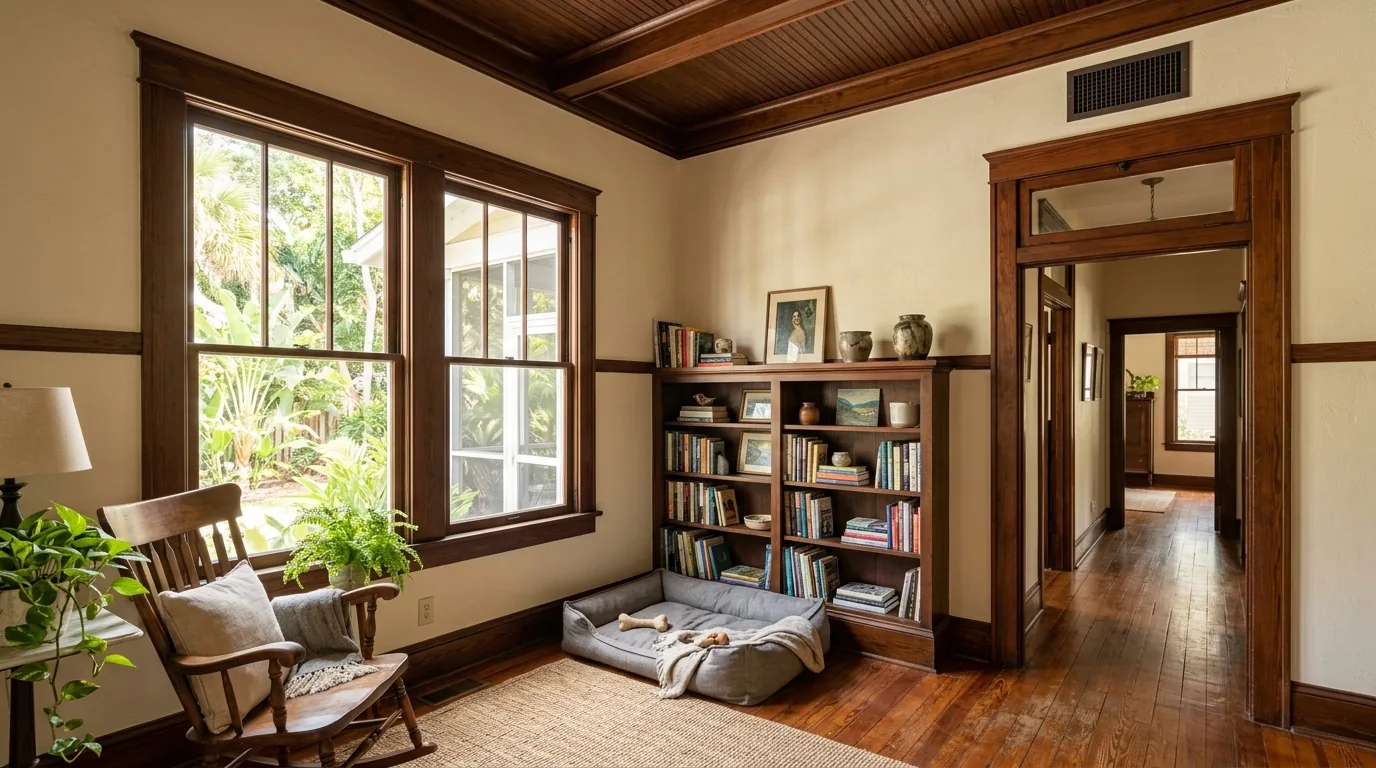
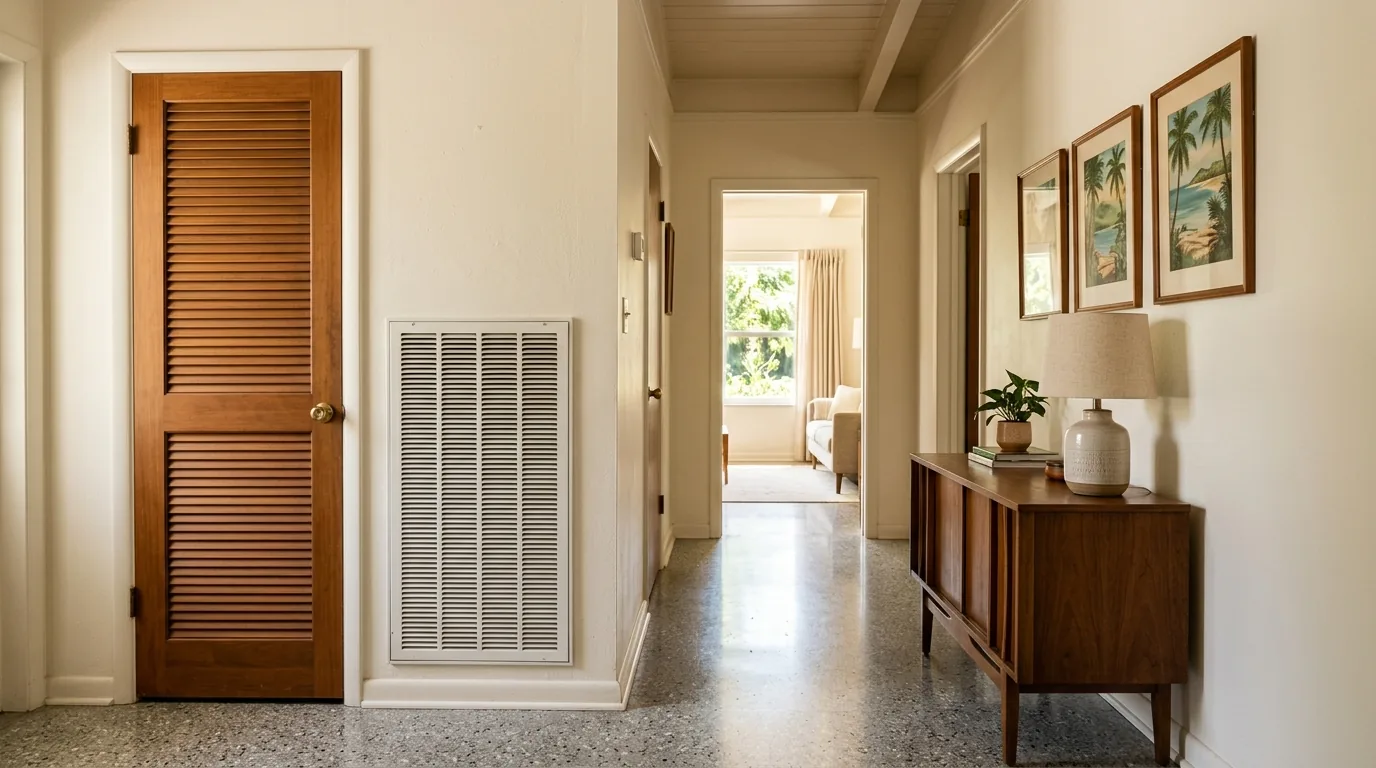
1950s and 60s block. Retrofitted for central air, usually with a single central return and ductwork threaded into whatever space existed. Panel capacity is sometimes a constraint at replacement time, and it is better to find that out during the quote than during the install.
1970s and 80s. Designed for central air from the start, which removes the retrofit compromises, but the original ductwork is now old enough that insulation has degraded and connections have worked loose after four decades of thermal cycling.
Newer infill and rebuilds. Modern construction, modern ducting. Here the questions are sizing and zoning, not distribution.
The practical point: "what should I do about my Largo house" has three different answers, and the age of the house is the first thing worth establishing.
Manufactured and mobile home communities
Mid-county has a substantial number of these, and the HVAC in them is different work, not the same work in a smaller building. Different equipment types. Different duct arrangements, often under the floor instead of in an attic. Different constraints on where an outdoor unit can sit, frequently set by the community, not the owner.
Under-floor ductwork has its own failure modes. It stays cooler than an attic, which helps, but it is exposed to ground moisture and to animals, and it is considerably harder to inspect than a run you can walk to.
If a manufactured home has airflow problems, look under it before looking at the equipment.
Humidity is the mid-county complaint
Mid-county lacks the constant breeze the beaches get and lacks the drier afternoon conditions further inland, which puts it squarely in the range where houses feel damp even when the thermostat reads exactly what it should. This is the complaint we hear most in Largo and Seminole, and it is also the one most often misdiagnosed, because the obvious response to a house that feels wrong is to make it colder. Dropping the setpoint two degrees does make a damp house marginally more bearable. It also runs the system in shorter bursts, which removes less moisture per hour, which is the opposite of what the house needs.
Three things drive that, and we find them in roughly this order:
- Oversized equipment. Short cycles never dehumidify, and this is not fixable without changing equipment, so sizing has to be right at replacement. There is no sorting it out afterwards.
- The fan set to On rather than Auto. Continuous circulation re-evaporates moisture off the wet coil straight back into the house, and this one is free to fix and takes ten seconds.
- Return-side duct leakage, pulling humid attic air into the system past the filter.
Work through those three before anyone sells you a whole-house dehumidifier. See indoor air quality.
Permits vary street by street
Largo, Seminole, Pinellas Park and Kenneth City each run their own building departments, while unincorporated pockets between them go through Pinellas County. The municipal boundaries here are intricate and neighboring houses are sometimes under different authorities.
It makes no difference to you provided your contractor establishes which applies and pulls the permit. It makes a large difference if the work goes unpermitted, because an uninspected installation resurfaces when you sell.
What to take from this
Ask a contractor which exposure band your address falls in, and why.
A good answer references your distance from water and the condition of your existing coil. A bad answer is that everyone in Pinellas needs the same thing.
See Largo, Seminole, Pinellas Park, Pinellas County, and how sizing works.