West Pasco is one of the most consistent housing markets in Tampa Bay. Holiday, Hudson, Port Richey, New Port Richey, Bayonet Point, Jasmine Estates, Elfers, Beacon Square.
Three problems come up over and over, and two of them are cheap to fix.
Retirement and workforce housing from the 1970s onward
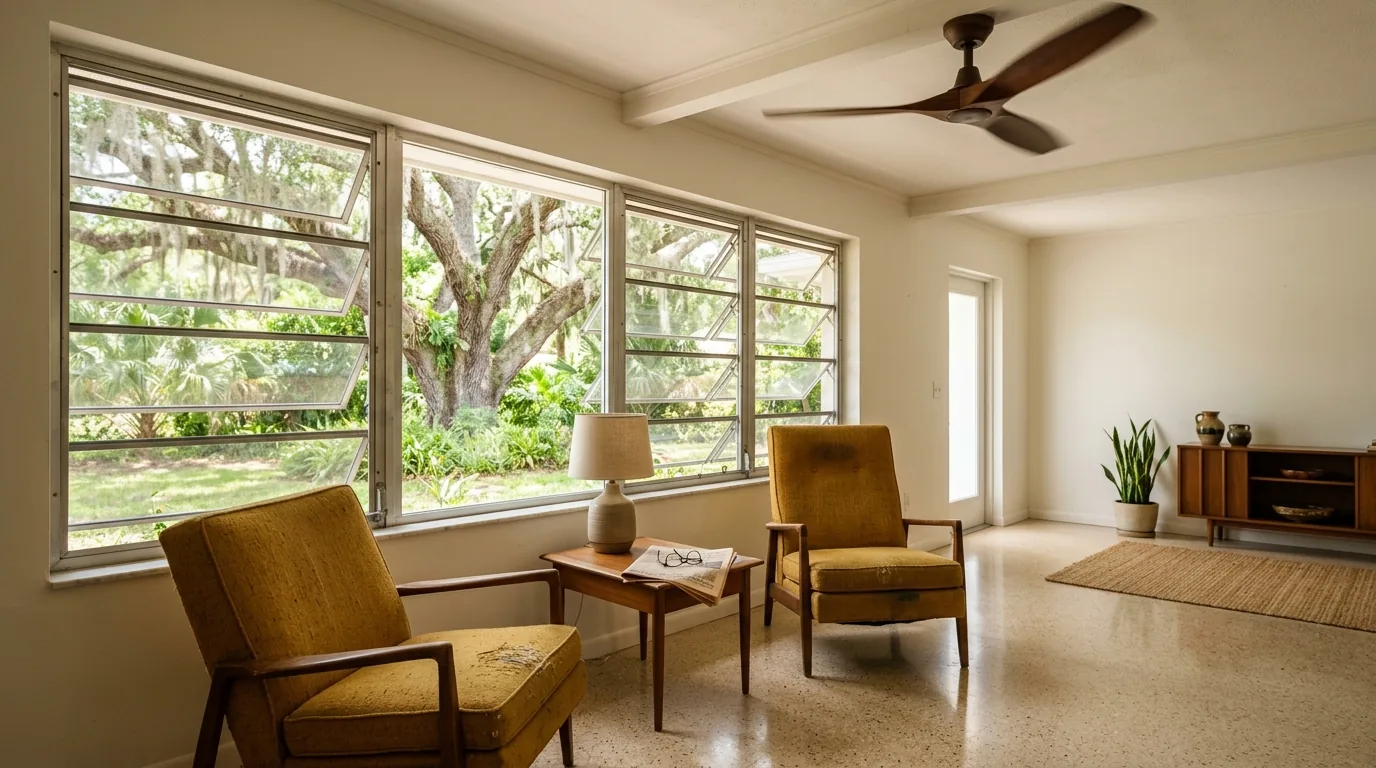
Most of west Pasco went up between the 1970s and the 1990s as retirement and workforce housing. Single story. Modest square footage, slab on grade, ductwork in the attic. Straightforward houses, and that is an advantage, because there are very few surprises hiding inside the walls once you open something up.
What they do have is age. Most are on their second or third air conditioning system while still running their first duct system, and the original returns were frequently undersized even when the house was new.
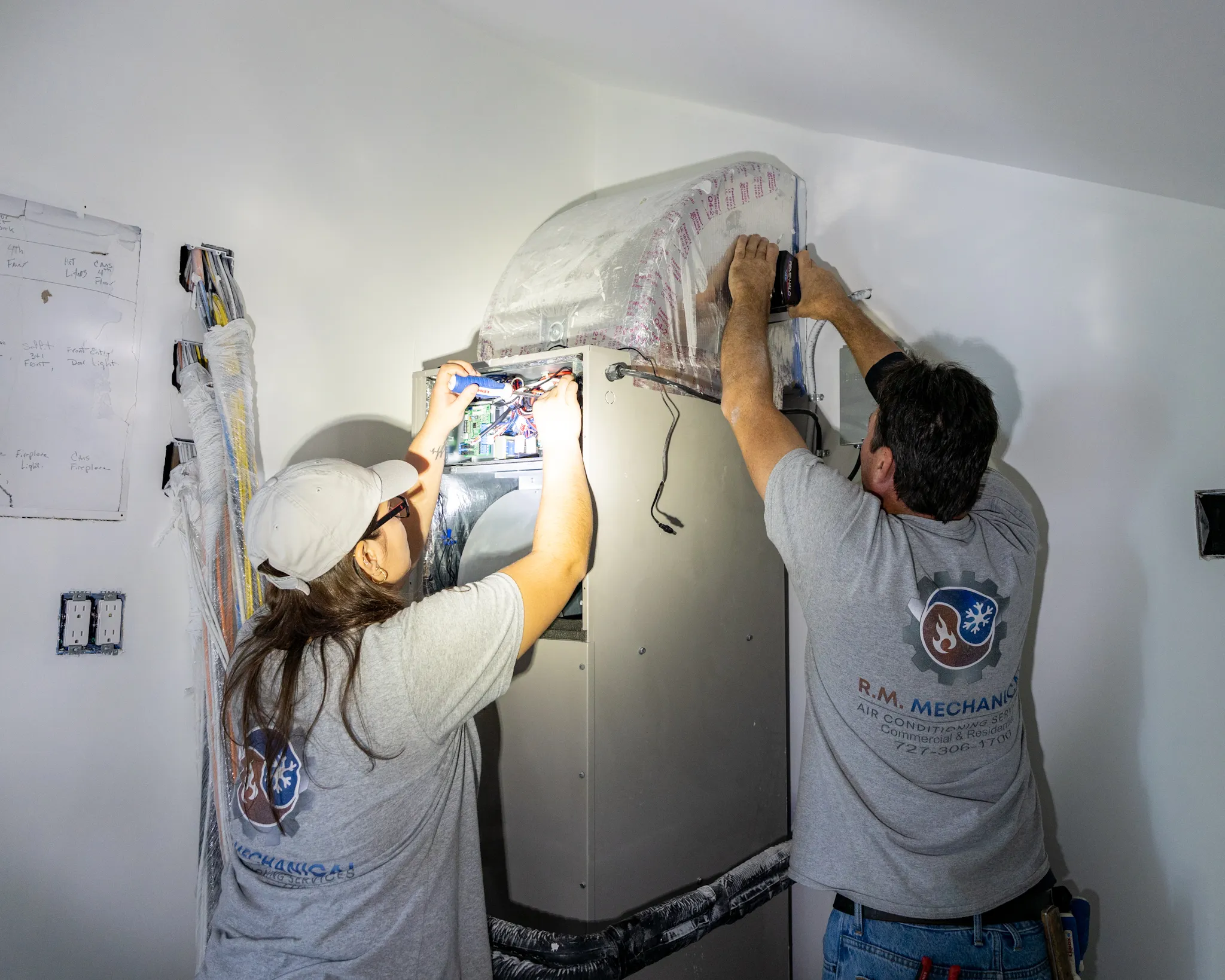
Two more things about this housing stock are worth knowing before you spend anything. The air handler usually sits in a garage closet or a hall closet built to fit the original equipment, and modern coil sections are physically larger, which occasionally means a replacement will not go where the old one came out without modification. And the electrical panel is often original. Panels of that era were sized for a house with fewer appliances in it, and a changeout sometimes turns up a breaker or a disconnect that needs attention before the new equipment can be energized. Neither is a crisis. Both are much better found during the quote than on installation day.
The undersized return is the recurring fault
If we could point at one thing limiting performance in these houses, it would be return capacity.
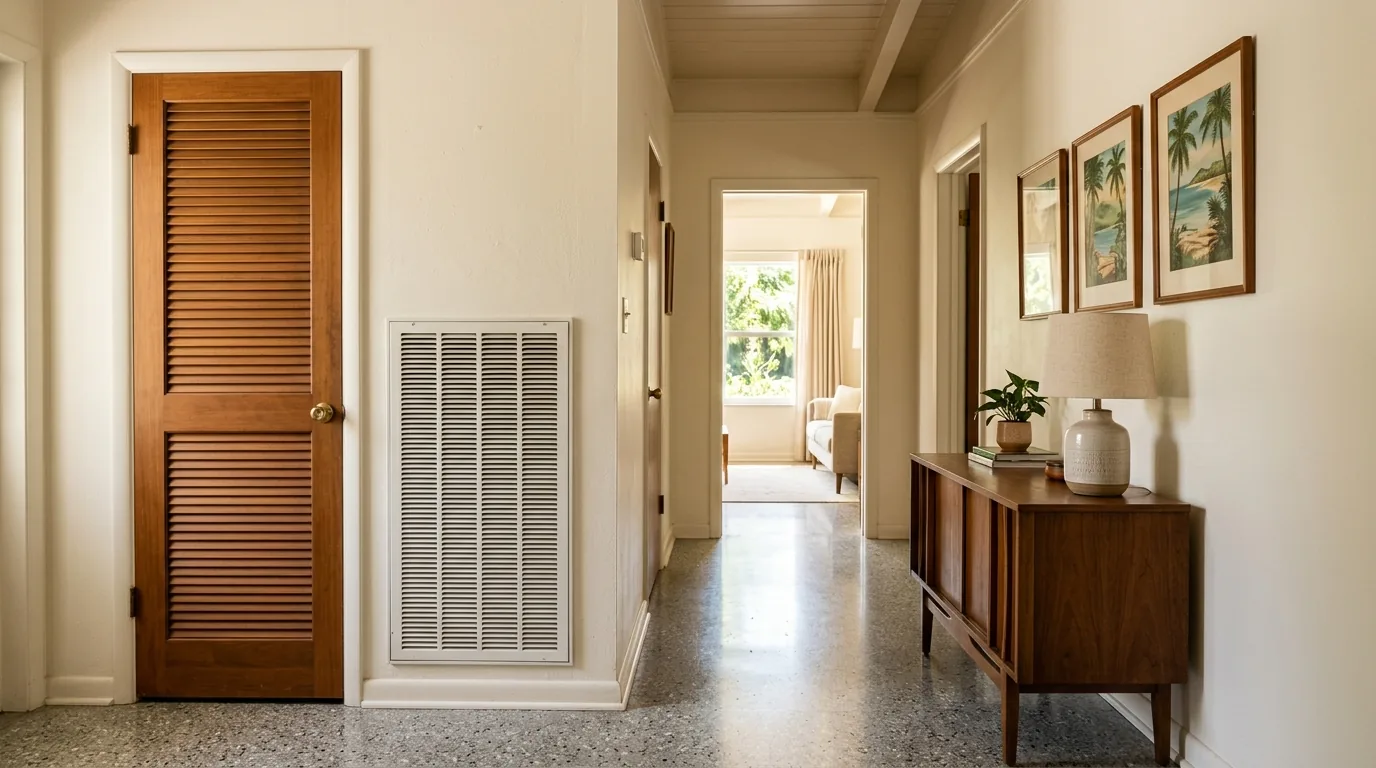
Any system can only move as much air as it can get back. A return that was marginal in 1978 is worse now that it feeds a larger or higher-efficiency unit, and the symptoms are consistent enough that we can often guess them before arriving: the system runs constantly on hot afternoons without quite catching up, rooms furthest from the air handler stay warm, and the coil ices up occasionally in a way that a filter change fixes for a week and then does not.
Owners are frequently sold more capacity to solve this.
It does not work. A bigger unit pushing through the same restriction cycles harder against it, and usually makes the humidity worse into the bargain. Enlarging the return, or adding a second one, is cheaper and addresses the actual cause.
You can get a rough read on this yourself without tools. Stand at the return grille with the system running and hold a sheet of paper flat against it. If the paper is pinned hard enough that it is difficult to pull off, and the grille whistles audibly, the system is straining to breathe through an opening that is too small for it. A properly sized return holds the paper without drama and runs quietly. Whistling at the return is the single most reliable free diagnostic in this housing stock.
The salt band is narrower than the sales pitch
The Gulf is close here, but the band where salt shortens condenser life hugs the water. Key Vista sits in it. So do the canal streets of western Port Richey west of US 19, Hudson's west-side canal district, and Holiday's western fringe around Gulf Trace and Baileys Bluff. Condensers on those streets die by corrosion, not by wear.
Step back from the water and the exposure falls off fast. Beacon Square is roughly a mile and a half to two miles from open water, Jasmine Estates a bit over two, Elfers about three, and Holiday's core sits behind its own western fringe. None of those need coastal-grade equipment, and a quote that specifies it for them is spending your money on somebody else's problem.
Inside the band, the consequences are the same as anywhere coastal: coil condition determines when the system dies, coated coils are worth specifying at replacement, and coil service belongs on a twice-yearly schedule. See salt air and your AC for the mechanism.
Further inland through Land O' Lakes, Wesley Chapel, Trinity and Odessa, none of it applies and the money belongs in the envelope instead.
Twice a year is the right interval near the water because the mid-season rinse interrupts corrosion partway through the wettest stretch of the year instead of letting eight months of salt sit on aluminum and work. Between those visits, hose the condenser down yourself: cut power at the disconnect, then run plain water through the coil until it drains clean. Pressure washers crush fins, and the caustic spray cleaners corrode the very metal you are rinsing to protect, so use neither. A monthly hose-down through summer costs ten minutes, and per dollar it beats everything else in this article.
Condensate problems are endemic here
Slab-on-grade single-story houses usually put the air handler in a garage, a closet or the attic, with the condensate drain routed outside. In an eight-month cooling season that drain runs almost continuously, and eventually it clogs.
When it does, a float switch cuts power deliberately to stop the pan overflowing into your ceiling. That is the good outcome. A completely dead system with a blank thermostat is very often a blocked drain rather than an equipment failure, and it is one of the cheapest faults there is.
Two things worth confirming: that you have a working float switch at all, and that the drain gets cleared on every maintenance visit, not only after it fails. See condensate problems explained.
What a service visit here covers
On a west Pasco house the visit splits roughly in half. Outdoors, the condenser coil gets rinsed properly, with the panels off, not sprayed through the guard, and the fin pack gets inspected and reported on, because within the salt band that number predicts the system's remaining life better than its age does. Cabinet hardware gets checked too, since corroded fasteners turn every later repair into a longer one.
Indoors, the drain line is cleared and the float switch tested, not assumed to work. Then the electrical work: capacitor measured against its rated value, contactor contacts checked for pitting, compressor and blower amp draw compared with the nameplate. Those readings are what turn an August emergency into an April repair.
Refrigerant charge gets verified against measured conditions rather than topped up on sight. A system low on refrigerant has a leak, and adding more without finding it is money poured into an attic.
Repair or replace, on a fixed budget
Many households here are on fixed incomes, which makes this conversation more consequential than it is elsewhere. How we think about it:
- A capacitor, contactor or drain clearance on a system under about twelve years old is worth doing without hesitation.
- A compressor or evaporator coil on a system past twelve, still running R-410A, is usually money put into equipment near the end of its life, because the refrigerant is being phased down and every future repair on that system gets more expensive as the refrigerant is phased down.
- A system that is mechanically fine but performing badly because of returns or duct leakage should have that fixed, not be replaced.
We will lay out both numbers rather than steering you toward one. If spreading the cost is the constraint, that is worth saying out loud early, not deciding on a doorstep.
Permits in west Pasco
New Port Richey and Port Richey issue their own mechanical permits, while Holiday, Hudson, Bayonet Point, Jasmine Estates, Elfers and Beacon Square are unincorporated and go through Pasco County instead. Either way, we pull it.
An inspection follows. On a straightforward changeout it is brief: electrical disconnect and clearances, how the equipment is mounted, where the condensate terminates. Properties close to the water may also fall under flood zone rules that set a minimum mounting height and dictate anchoring, and the standard the inspector holds the work to is today's, not whatever the old unit met. Price that in the quote, not in a phone call afterward.
Where to start
If your west Pasco system is struggling, check in this order: the condensate drain, the return capacity, the coil condition.
Two of those three cost almost nothing to look at, and between them they explain most of what we get called out for here.
See Holiday, Hudson, New Port Richey, Pasco County, and diagnosis and repair.