Drive from the south end of Town 'n' Country up through Carrollwood and out to Westchase and you cross forty years of Tampa construction in twenty minutes. Same county. Same climate, same permit office, and three different service calls.
The patterns below are not theory. They are what the trucks find, street by street, week after week.
Town 'n' Country: good bones, tired infrastructure
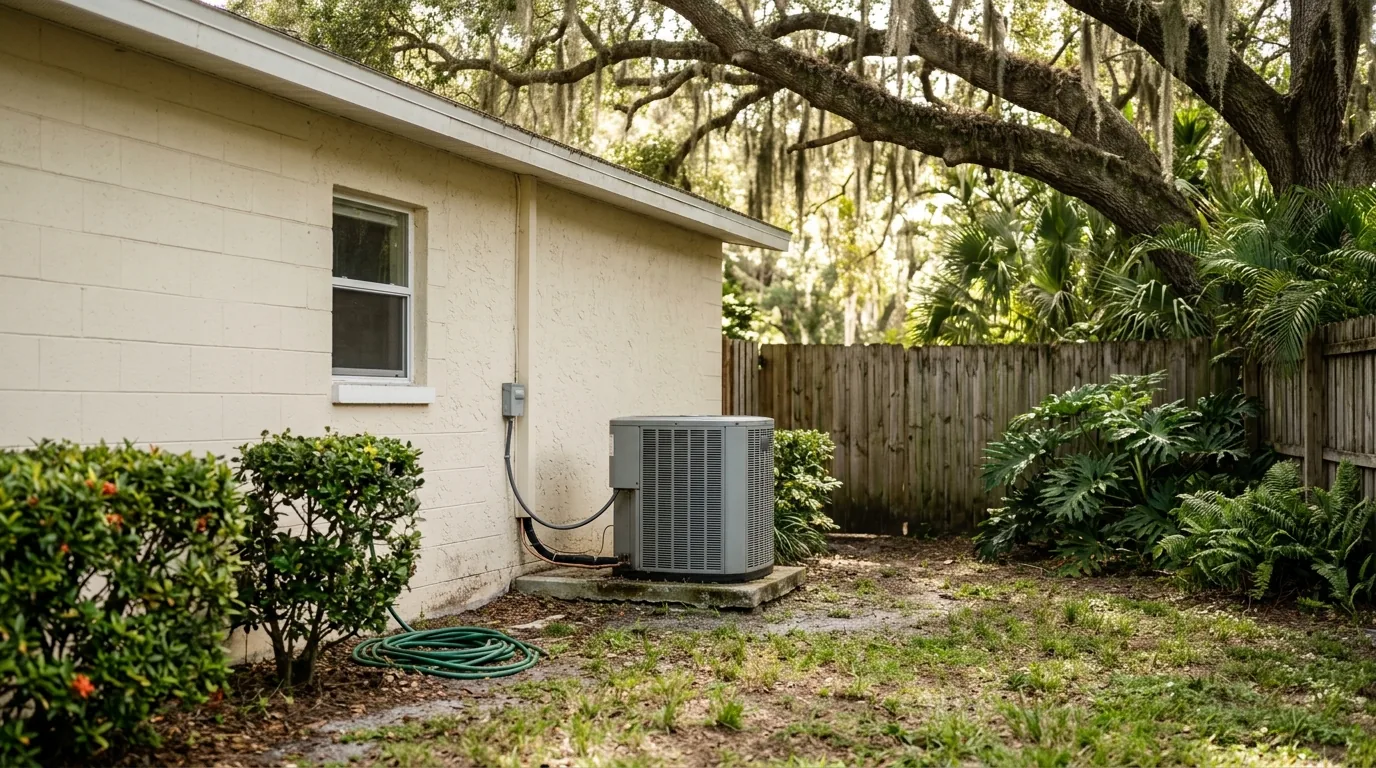
Town 'n' Country filled in through the 1960s and 1970s as a bedroom community west of the airport, with apartment and townhouse construction continuing into the 1980s. Nearly all of the single-family stock is single-story concrete block. That uniformity means the same three findings repeat house after house.
Original ductwork under a third or fourth air conditioner. Equipment gets replaced when it dies. Ducts do not, because nobody sees them. After five decades of thermal cycling the connections work loose and the insulation flattens, and every leak sits in an attic that reaches 120 to 130 degrees on a July afternoon. Testing and sealing the ducts before anyone quotes equipment is the most valuable step in these houses.
Returns cut small at construction. Grilles were sized for the modest equipment of the era. Feed a modern system through them and it strains, runs loud, and in the worst cases freezes the coil.
Electrical panels that predate modern condensers. A changeout quote that ignores the panel is a quote that grows on install day, so we scope it up front, before anything is ordered.
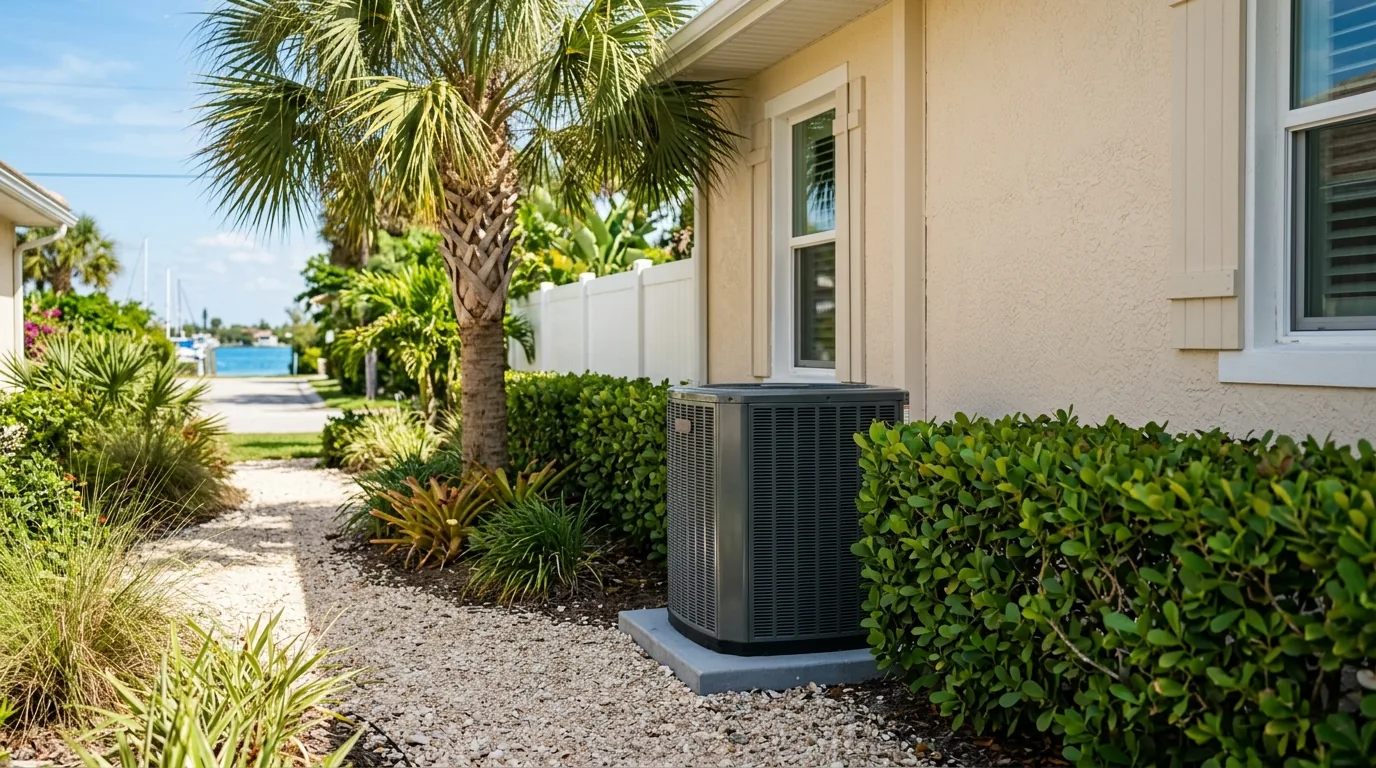
Then there is the western edge. Streets backing onto the canals that reach Old Tampa Bay carry real salt exposure, while streets half a mile east carry almost none. Coil corrosion here is a street-by-street question, not a town-wide condition, so the right move is to open the cabinet and look at your coil, not apply a coastal rule to the whole zip code. Our Town 'n' Country page covers permits and service specifics for the area.
Carrollwood: the canopy gives and takes
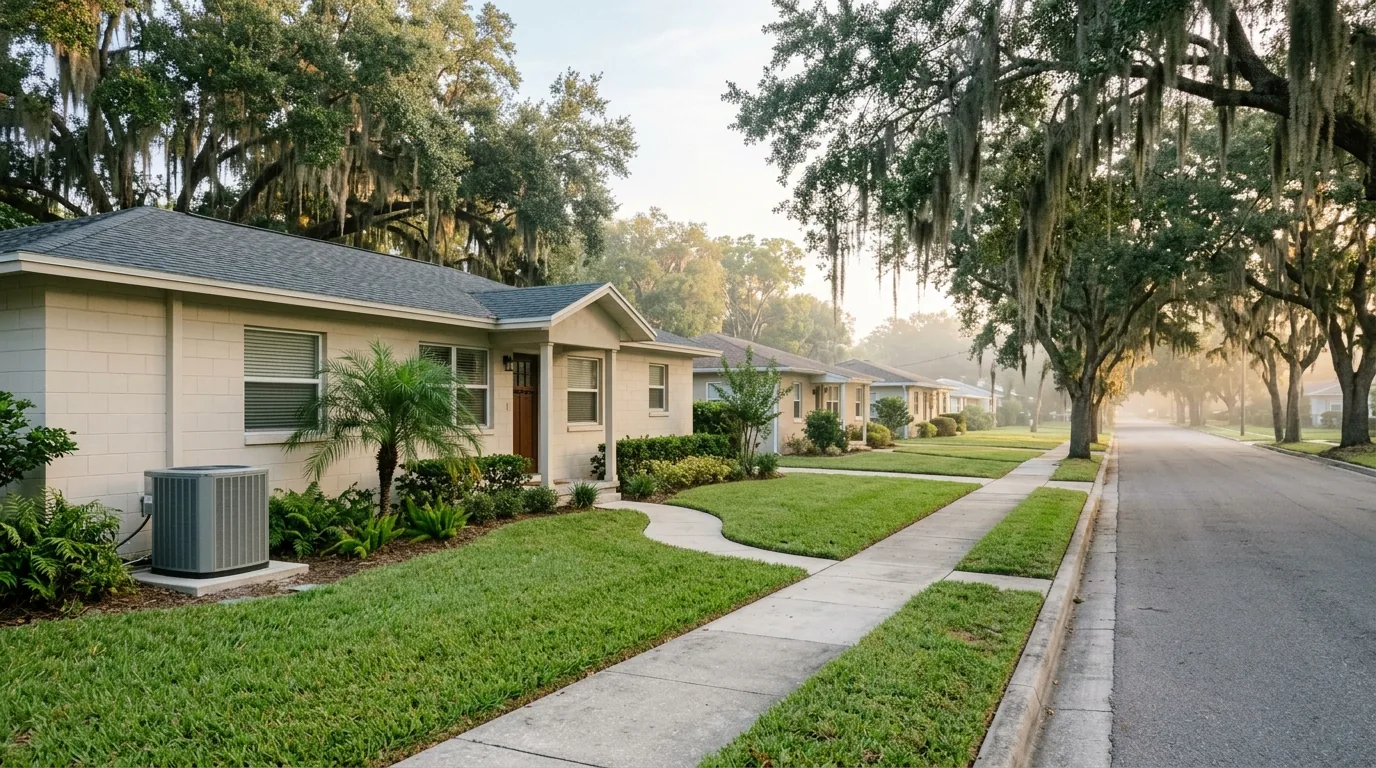
Carrollwood holds two generations on adjacent streets: the original 1959 lakefront section around Lake Carroll and the Village expansion that followed through the 1970s and 1980s. Most of the housing belongs to that second wave, and much of it is on its third or fourth air conditioner while still breathing through its first ductwork.
Mature oaks are the neighborhood's signature, and for a condenser the canopy cuts both ways. Shade earns its keep. A unit kept out of the west sun rejects heat more easily all afternoon, which shows up as shorter run times across a summer. Those same trees drop leaves, pollen strings and acorns straight into the top of the cabinet, and a coil packed with oak litter gives back everything the shade bought. If your condenser lives under trees, rinsing the coil a few times a season matters more here than anywhere else in this corridor.
Indoors, the finds are about space. Air handlers in these houses sit in hallway closets and garage corners built around the smaller equipment of a different era, so a replacement is partly a carpentry question: what fits through the door, what clearance current code requires, and whether the platform and drain arrangement are worth rebuilding while everything is already out. Local specifics live on the Carrollwood page.
Westchase: whole streets replace at once
Westchase was master-planned starting in 1991, and the housing went up mostly through the 1990s and 2000s. So did the equipment. Builder-grade systems installed within a few years of each other reach end of life within a few years of each other, which is why replacement season arrives for entire streets at a time. Second systems are going in across the community right now.
The trap is swapping in the same thing. Original equipment was picked off a chart the builder used for every plan in the subdivision, not sized to your house with its actual orientation and glass, and repeating that choice repeats its compromises for another fifteen years. A properly sized replacement, load calculation included, is the whole game in Westchase. It is the difference between a house that finally holds humidity and one that only holds temperature.
Plan for the HOA rather than fighting it. Exterior unit placement, screening and work hours are covered by community rules throughout Westchase, and the approvals are routine when they are sorted before install day rather than after a neighbor complains. Details sit on the Westchase page.
The thread that runs through all three
Attic ductwork in Florida heat. Whatever decade built your house, the ducts occupy the hottest space on the property, and their condition decides how much of the equipment's output reaches the rooms. Test that first. It is the first thing worth measuring in every one of these neighborhoods and the last thing most quotes mention.
For the older, closer-in version of these problems, retrofitted bungalows and masonry blocks, see HVAC in Tampa's older neighborhoods.