Most air conditioner replacements are a clean swap: old equipment out, new equipment in, existing circuit reused. Occasionally, and most often in the pre-1980 housing that runs through St. Petersburg, Gulfport, Lealman and the older streets of Tampa, the electrical service turns out to be the thing standing in the way rather than the mechanical work.
Before anything else, a boundary worth stating plainly. Panels, breakers, disconnects and branch wiring are licensed electrical work. Not homeowner work, not handyman work, and not something a mechanical contractor should improvise on the day of an installation. We are a licensed mechanical contractor, so our job is to identify the electrical constraint while we are still quoting, not to discover it with your ceiling open. Where licensed electrical work is required, we coordinate it.
Why it comes up at all
Houses built for a 1968 set of loads have quietly absorbed forty years of additions. The same panel that once fed a range, a water heater and a window unit now carries a pool pump, a larger electric range, a second refrigerator in the garage, circuits added during a kitchen remodel, sometimes an EV charger, and a central air conditioner considerably larger than anything the original builder contemplated.
None of that announces itself. A panel does not complain about being near capacity until something asks it for headroom that is not there.
New equipment is also not automatically the same electrical load as what it replaces. Higher efficiency has generally lowered running current, which helps. But inverter-driven and variable-speed systems present different characteristics than an old single-stage unit, and a heat pump carrying electric strip backup can be a substantially larger connected load than the cooling-only system it replaced. Assumptions do not survive contact with a real panel.
Panels that are a problem regardless of your HVAC job
Two brands turn up often enough in older Florida housing to name specifically.
Federal Pacific Stab-Lok panels carry a documented history of breakers that fail to trip on an overload or a short. Think about what that means. A breaker that will not trip has not become a nuisance, it has quietly removed the protection every circuit in the house depends on, and it looks completely normal while doing so. Zinsco panels, sometimes badged Sylvania-Zinsco, have their own well-known failure pattern involving bus bar deterioration and breakers that can stay energized after they appear to have tripped.
If you have either, that is a conversation with a licensed electrician on its own merits, entirely separate from whether you are replacing an air conditioner. We flag them when we see them, every time, because it would be strange not to.
Aluminum branch circuit wiring belongs on the same list. Builders used it widely in homes constructed roughly between the mid-1960s and the mid-1970s, and it behaves differently from copper: it expands and contracts more with heat, so connections at outlets, switches and breaker lugs can work loose across decades and then run hot at exactly the point where you cannot see them. Not automatically a crisis. Not something to shrug at, either. Accepted remediation methods exist, they are specific, and choosing among them is an electrician's call.
What we look at when quoting
This is the electrical portion of a replacement quote, in the order we work through it:
- Panel capacity and physical spaces. Whether there is both electrical headroom and literal room for the breaker the new equipment requires.
- Breaker sizing against the nameplate. Every piece of equipment specifies a minimum circuit ampacity and a maximum overcurrent protection device. Those are not suggestions, and equipment installed on the wrong breaker is both a safety issue and a warranty problem.
- Conductor gauge and condition. Undersized or degraded wire is a real hazard.
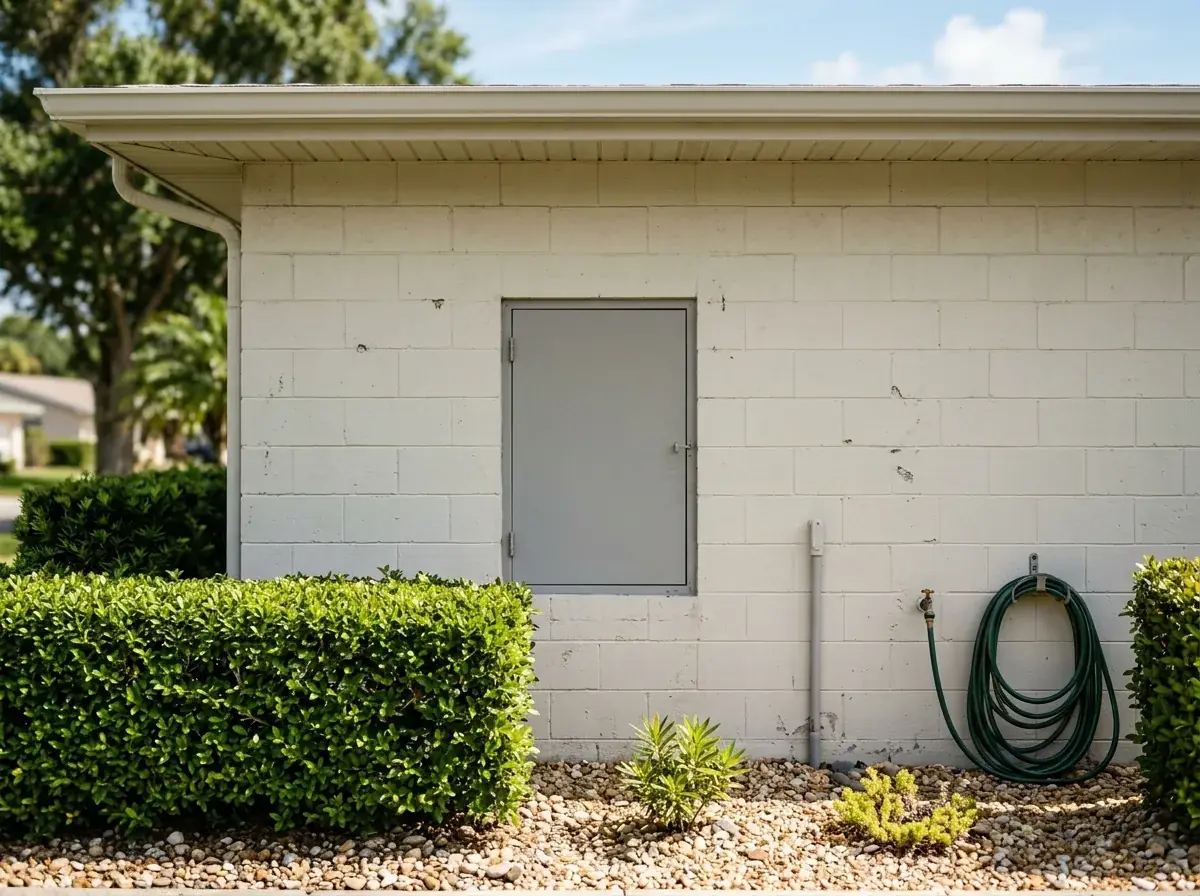
- The outdoor disconnect. Required within sight of the condenser, and missing or non-compliant on a surprising number of older installations.
- Grounding and bonding. Frequently incomplete in older work. In a region that gets this much lightning, that is not a paperwork detail.
- Signs of past trouble. Scorching, corrosion in a coastal panel, double-tapped breakers, aftermarket work that does not look like an electrician did it.
Surge protection deserves its own paragraph
Tampa Bay gets an extraordinary amount of lightning, and modern HVAC equipment is packed with electronics that hate it. Variable-speed and communicating systems run on control boards, and a control board is precisely the component a strike two streets over takes out. Surge protection at the outdoor unit, ideally paired with a device at the panel, costs a small fraction of what replacing that board costs. Cheap insurance.
We treat it as part of the installation on newer inverter-driven equipment rather than presenting it as an upsell at the end.
Answer the electrical question once, not four times
If you are contemplating several projects, say a system replacement this year, an EV charger next spring, a pool heater eventually and a kitchen remodel somewhere in there, get the load calculation done once for all of it. Finding out midway through the second project that a service upgrade was always going to be necessary is the expensive version of the same discovery.
The same logic applies to new construction and additions, where the load is being designed from scratch instead of inherited. It is far cheaper to size a panel correctly on paper than to open a wall.
How we handle it
We assess the electrical situation as part of quoting an installation, and we tell you plainly when there is a constraint, including the times that means the job is bigger and more expensive than you were hoping to hear. Costs are quoted before any work starts.
What we will not do is hang new equipment on a supply that cannot properly carry it and let you discover the consequences later. More on our approach to HVAC safety.