Hurricane season runs from June 1 to November 30, and for six months of that stretch your air conditioner is both the thing most exposed to storm damage and the thing you will want back first. What we see after a named storm is rarely wind damage to the equipment itself. It is electrical damage from the outage and the restoration, plus a smaller number of systems destroyed by owners who flipped the breaker back on too soon. Both categories are largely preventable, and the prevention is cheap compared to the repair.
Work through this before the first advisory, not during it.
Before the season starts
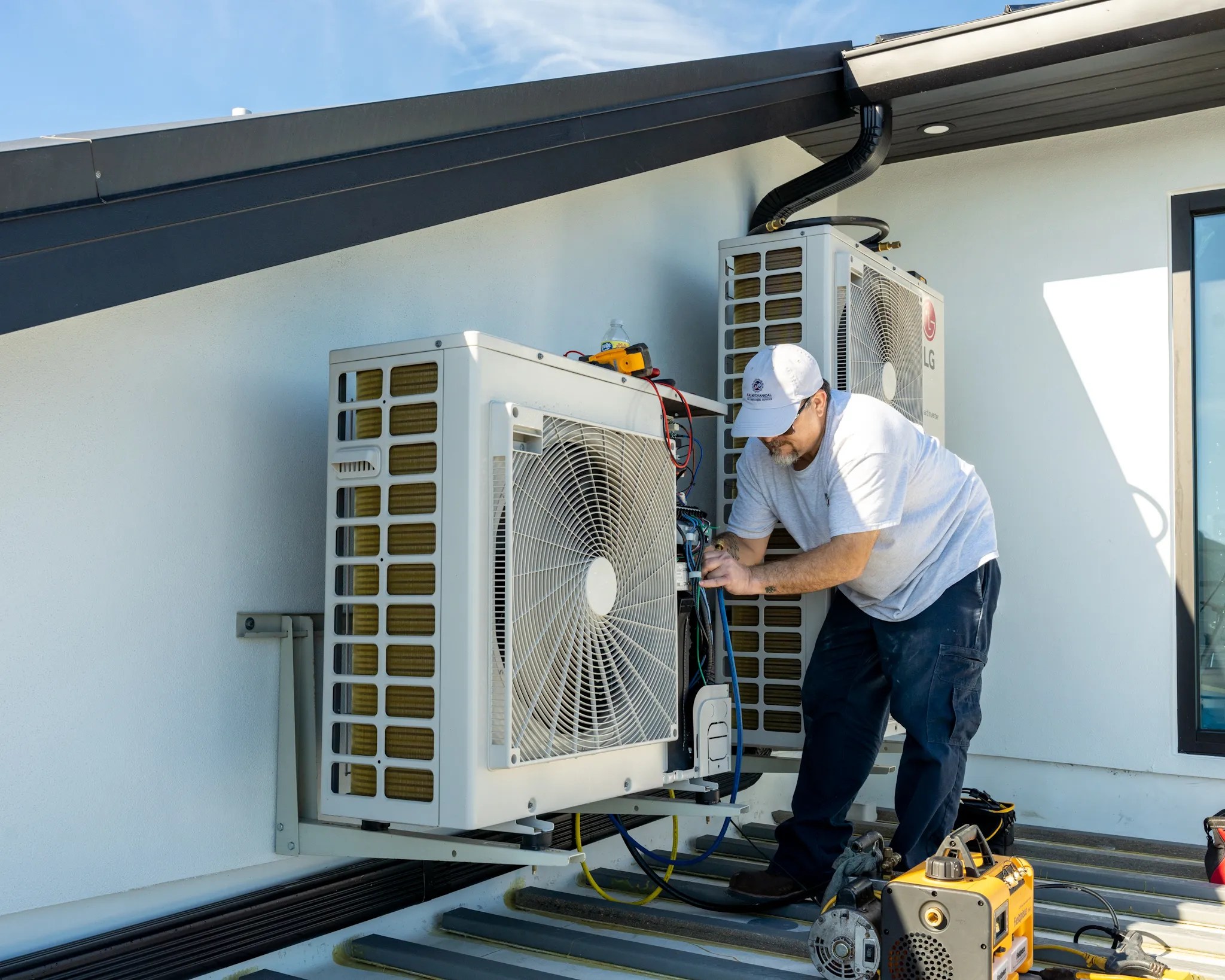
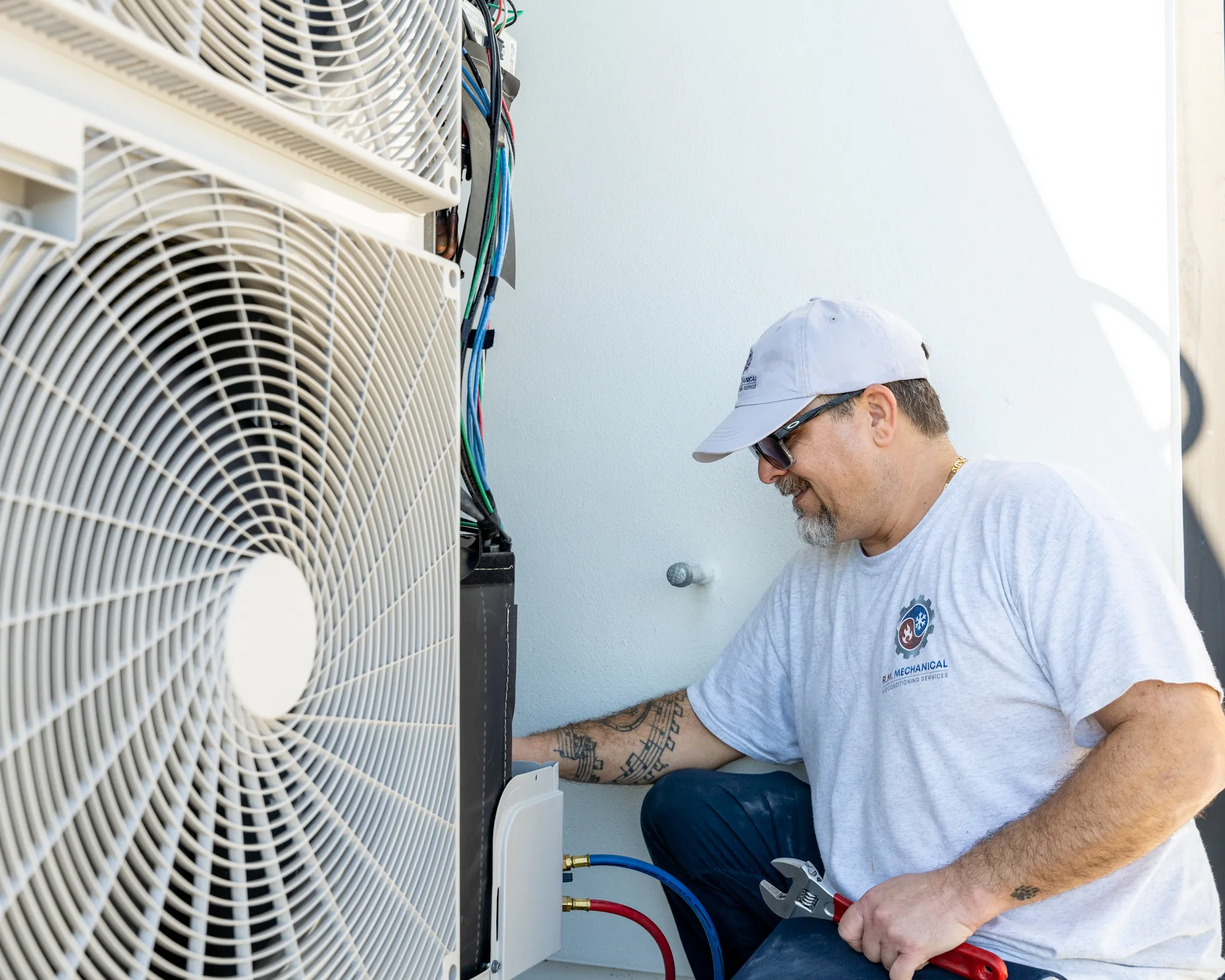
Fit a surge protector at the outdoor unit. If you do one thing on this page, do that one. Modern inverter-driven equipment runs on control boards that are far less tolerant of dirty power than the simple contactors and relays of twenty years ago, and the voltage spike that arrives when the utility restores power to a neighborhood kills more condensers around Tampa Bay than wind ever has. A whole-home surge device at the panel plus a dedicated unit at the condenser covers both paths.
- Confirm the condenser is secured to its pad. Hurricane straps or hold-down bolts have been Florida code for years, but installations that predate the requirement are still out there, and a unit that shifts on its pad can shear a refrigerant line.
- Photograph everything, including the data plate. Model number, serial number, the pad, the disconnect, the general condition. Insurance adjusters work from evidence, and pre-storm photographs turn a disputed claim into a straightforward one. It takes two minutes and costs nothing at all.
- Clear the projectiles. Loose pavers, garden furniture, and overhanging branches all end up somewhere, and condenser fins are a common destination.
This is also the right time to book pre-season maintenance if you have not. A system entering hurricane season with a weak capacitor is a system that will fail during the recovery week when every contractor in the county is already booked.
When a storm is coming
Cool the house down hard in the twelve hours before landfall. Thermal mass is genuinely useful: a house that starts an outage at 72 degrees stays livable for hours longer than one that starts at 78, and those hours matter when restoration takes days.
Then shut the system down. Off at the thermostat, off at the breaker, before the worst of the weather arrives. That sequence protects the equipment two ways, from the surge during and after the outage, and from the compressor trying to restart into the unstable brownout voltage that precedes a full failure. Restarting under low voltage is one of the harder things you can do to a compressor.
Do not cover the outdoor unit. Tarps and plastic wrap trap moisture against metal, which is corrosion you invited, and in high wind the cover becomes a sail attached to your equipment. The unit was engineered to sit outdoors in driving rain.
Coastal homeowners have one extra consideration. Storm surge carries salt water well past the shoreline, and salt spray gets driven inland by wind far beyond where anyone expects it. Corrosion engineers usually treat the first mile inland from salt water as C4 territory or worse on the ISO 9223 scale, meaning high atmospheric corrosivity, and a storm effectively extends that zone for a few days. Rinsing the condenser coil with fresh water once the weather clears is worth doing anywhere in Pinellas or along the bay, even if your house never took on water. It takes ten minutes with a garden hose, never a pressure washer, and it interrupts corrosion before it starts.
Finally, secure attic and crawlspace access points where wind-driven rain could reach ductwork. Wet insulation on flex duct does not dry out on its own in a Florida summer, and what grows in it afterward becomes an indoor air quality problem long after the storm is forgotten.
After the storm, before you touch the breaker
This section is where the expensive mistakes happen. Every year we replace equipment that survived the storm and did not survive the restart.
- Did water reach the electrical components? If flooding got up to the disconnect, the contactor, or the control board, leave the breaker off. Water inside a compressor or a board means an inspection first, no exceptions.
- Is there debris packed into the condenser fins, or damage to the fan blade or cabinet? A bent blade that spins out of balance destroys its own motor bearings within days.
- Are the refrigerant lines intact, still connected, and still insulated?
- Is grid power steady? Flickering lights mean wait. Restarting a compressor repeatedly during brownout conditions does cumulative damage that shows up as a failure weeks later, long after anyone connects it to the storm.
If all four check out, restore the breaker first and leave the thermostat off for a few minutes. Compressors with crankcase heaters need that time to boil refrigerant out of the oil before starting. Then bring the thermostat on and listen. Any loud noise, any burning smell, and you shut it down and call emergency service.
If the unit went under
Submerged equipment is frequently not economically repairable, and running it briefly to "see if it works" can complicate an insurance claim rather than resolve it. Salt water is the worse case by a wide margin, because the corrosion process continues quietly after the water recedes and keeps eating at terminals and windings for months.
Document it, get it inspected, and decide with the adjuster involved.
Worth knowing before that conversation: most replacement equipment now ships with R-454B rather than R-410A, a few brands use R-32, and the older refrigerant is being phased down, and current DOE minimums for our region are 14.3 SEER2 for systems under 45,000 BTU and 13.8 SEER2 from 45,000 to 65,000 BTU. A storm replacement is not a straight swap of what you had in 2015, and knowing that going in makes the estimate less of a surprise. We quote every job before any work begins.
The generator question
Most portable generators will not start a central air conditioner, and homeowners find this out at the worst possible moment. Starting current on a compressor runs several times its running current for a fraction of a second, and an undersized generator either trips, stalls, or sags the voltage low enough to cook the compressor windings while it tries.
Running AC on backup power has to be designed for. That usually means a properly sized standby unit and a soft starter fitted to the condenser to flatten the inrush, and it is a conversation worth having in April rather than in the middle of a cone. Talk to us through our contact page or read more in our spring checklist.