Two quotes for the same house can differ by thousands, and the gap is almost never the equipment. Both contractors are pricing similar boxes from similar suppliers. What separates them is what each one plans to actually do: whether a load calculation gets run, whether a permit gets pulled, whether the ductwork gets tested or ignored. Those decisions are invisible in a total, which is why comparing totals is the wrong way to read a stack of bids. You are not shopping for a condenser. You are hiring a crew to make a set of choices inside your walls that you will live with for the next twelve to fifteen years.
So read the quotes for what is in them, not what they add up to.
Verify the license yourself
Florida HVAC contractors hold a state certification or registration, and the license attaches to a person rather than to a company name. That distinction does more work than people expect. A company can change names, dissolve, and reopen under new branding while the qualifying license holder stays the same, or worse, while a company operates under someone else's license with no real involvement from the person whose number is on the permit.
Ask two questions. Whose license will this job be permitted under, and what is the number? Then check that number against the state's licensing records, which are public and free to search. You are confirming that it is current, that it covers the class of work being done, and that there is no disciplinary history sitting behind it.
Vagueness in response to that question tells you something.
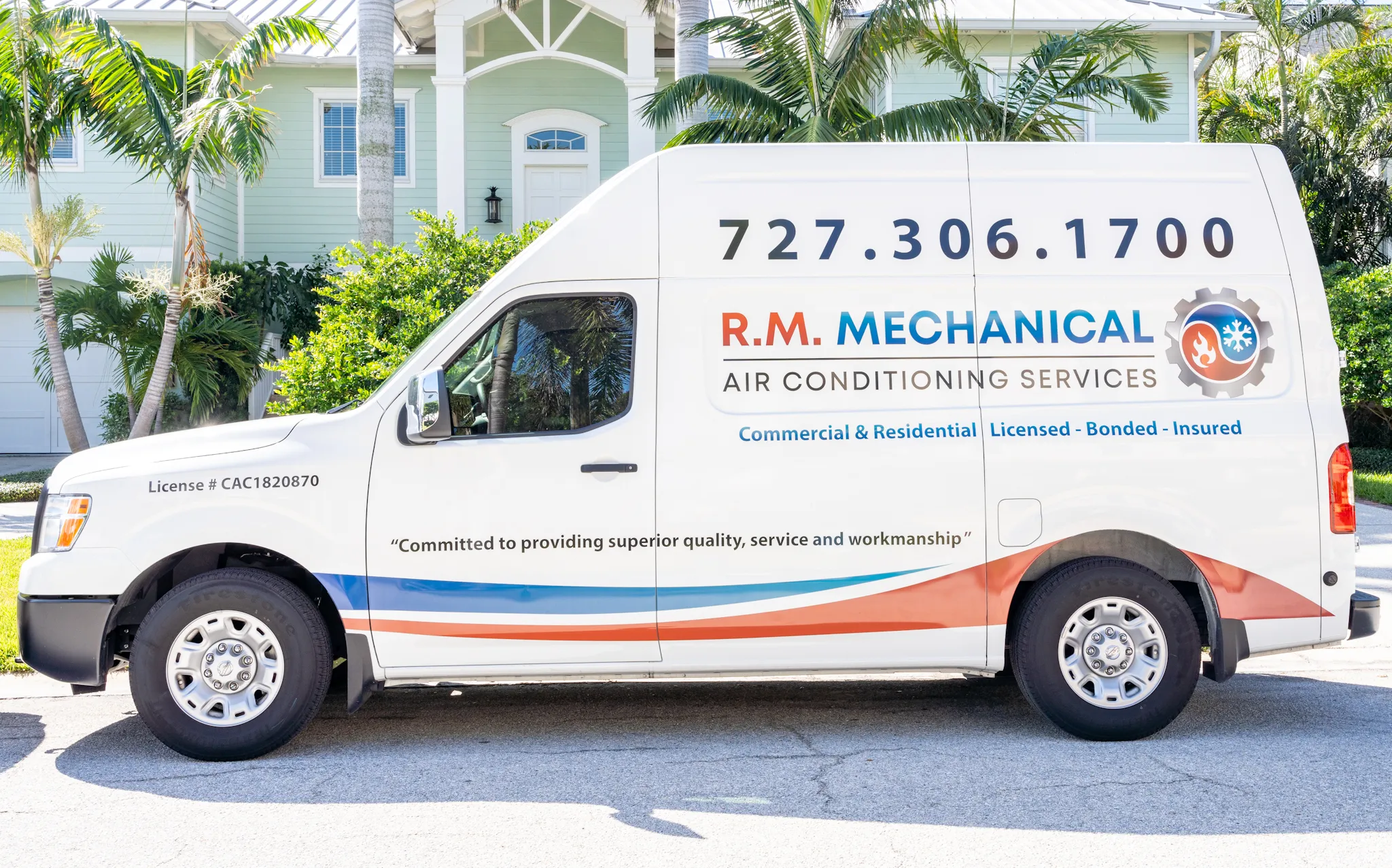
Ours is CAC1820870, held by Robert Moran, who runs the company and is on job sites rather than behind a desk. If you want to know more about that, here is who you would be dealing with.
What certification does and does not mean
Manufacturer certification means a company has met a maker's training and standards requirements for that maker's equipment. It is worth something real: certified installers get factory technical support, current installation specifications, and warranty processing that goes smoothly instead of turning into a fight nine months later when a coil fails.
It is not a quality guarantee, and the language around it gets stretched constantly.
We are factory-certified on Carrier, Goodman, Rheem, LG, Midea, Trane, Daikin, Mitsubishi and Lennox, and you can see the brands we work on laid out in full. That is the list. What matters when you are evaluating anyone, including us, is whether the certification covers the specific equipment being quoted. A contractor certified on one brand who quotes you a different one is quoting outside their support structure, and you find out at warranty time.
Ask about the permit explicitly
Equipment replacement in Florida requires a mechanical permit and a subsequent inspection. Not a formality and not optional. The inspection is an independent party confirming the work meets code, which is the only check in the whole process that does not depend on trusting your contractor.
A quote that never mentions permitting is doing one of two things: hiding a cost that will surface later, or planning to skip the step entirely. Unpermitted work creates problems that arrive years after the crew leaves. Title issues at resale. Manufacturer warranty claims denied because the installation was never inspected. No recourse at all if something was done wrong, because officially nothing was done.
Get it in writing that the permit and inspection are included.
Insist on a load calculation
Ask directly: will you perform a Manual J load calculation, or are you sizing from square footage?
Sizing by square footage, or by simply matching whatever is out there now, is the single most common cause of a Florida house that gets cold but stays clammy. An oversized system satisfies the thermostat in a short burst and shuts down before it has run long enough to pull meaningful moisture out of the air. The wall reads 74. The house feels damp anyway, so you drop the setpoint to 71 and pay more for a house that still feels wrong.
A real load calculation accounts for window area and orientation, insulation levels, ceiling heights, air leakage, and the condition of the ducts. It takes hours of actual work. That is precisely why the cheapest quote in the stack skipped it, and why the existing unit's tonnage is not a safe default, since the unit that is out there now may well have been sized wrong when it was installed. Our installation process starts there for that reason.
What a real quote contains
- Specific model numbers for both the condenser and the air handler, not a tonnage and a brand name
- The efficiency rating in SEER2, with confirmation it meets Florida's regional minimum. The Southeast region requires 14.3 SEER2 for systems under 45,000 BTU and 13.8 SEER2 from 45,000 to 65,000 BTU, in effect since January 1, 2023, and a quote that cannot tell you where it lands against that number has not been thought through
- Which refrigerant the system uses. R-410A is being phased down and new residential equipment is moving to R-454B or R-32 depending on brand, so this affects parts and service for years
- Permit and inspection, stated as included
- Electrical work, duct modification, or pad and platform work, itemized rather than assumed
- Labor warranty terms, listed separately from the manufacturer's parts warranty. They are different things with different durations
- Who registers the equipment for warranty coverage, and by when
Warning signs
- A price quoted over the phone. Sizing cannot be done remotely. Anyone willing to name a number without seeing the house is guessing, and the guess gets corrected in your favor exactly never
- Pressure to sign today. Real seasonal promotions exist. Manufactured urgency is a sales technique, and a contractor who needs your decision before you can think about it is telling you what the conversation is really about
- A quote matching the existing size with no discussion of why
- Large deposits collected before any work begins
- Reluctance to hand over the license number
- Silence on ductwork. If your ducts leak, a new high-efficiency system will not deliver what it is rated for, and you will have bought performance that never reaches the rooms. A contractor who does not raise it either did not look or does not want to complicate the sale. Duct testing is measurable, not a matter of opinion
On the cheapest quote
Sometimes it genuinely is the best value, and we would rather say so than pretend low price is always a red flag. More often it is cheaper because something was removed: the permit, the load calculation, the duct work, a properly matched system swapped for whatever was sitting in the warehouse.
Line the quotes up side by side and find the differences item by item. Then call the low bidder and ask what they left out. A good contractor will tell you plainly, and that answer is frequently the most useful thing you learn all week.
All pricing here is quoted in writing before any work starts. If you want a second opinion on a bid you already have, ask us for one, and it also helps to read up on choosing the right system before anyone walks through your door.