For almost every house in Tampa Bay, the answer is no. Geothermal is an elegant technology and it works, but the economics that make it compelling in Minnesota or Vermont barely exist in a climate where heating is an afterthought and a modern air-source heat pump already runs at high efficiency. We would rather say that plainly at the top of the page than walk you through eight paragraphs of enthusiasm before admitting it.
There are exceptions. They are narrow, and they are worth knowing.
What the system is
A geothermal heat pump, sometimes called a ground-source heat pump, moves heat between your house and the earth rather than between your house and the outdoor air. Dig down a few feet and Florida soil holds a steady temperature all year, somewhere in the seventies, while the air above it swings from the forties in January to the mid-nineties in July. Rejecting your home's heat into stable ground instead of into 95-degree afternoon air is thermodynamically easier. The compressor does less work for the same cooling, and it does that work every hour of every August day.
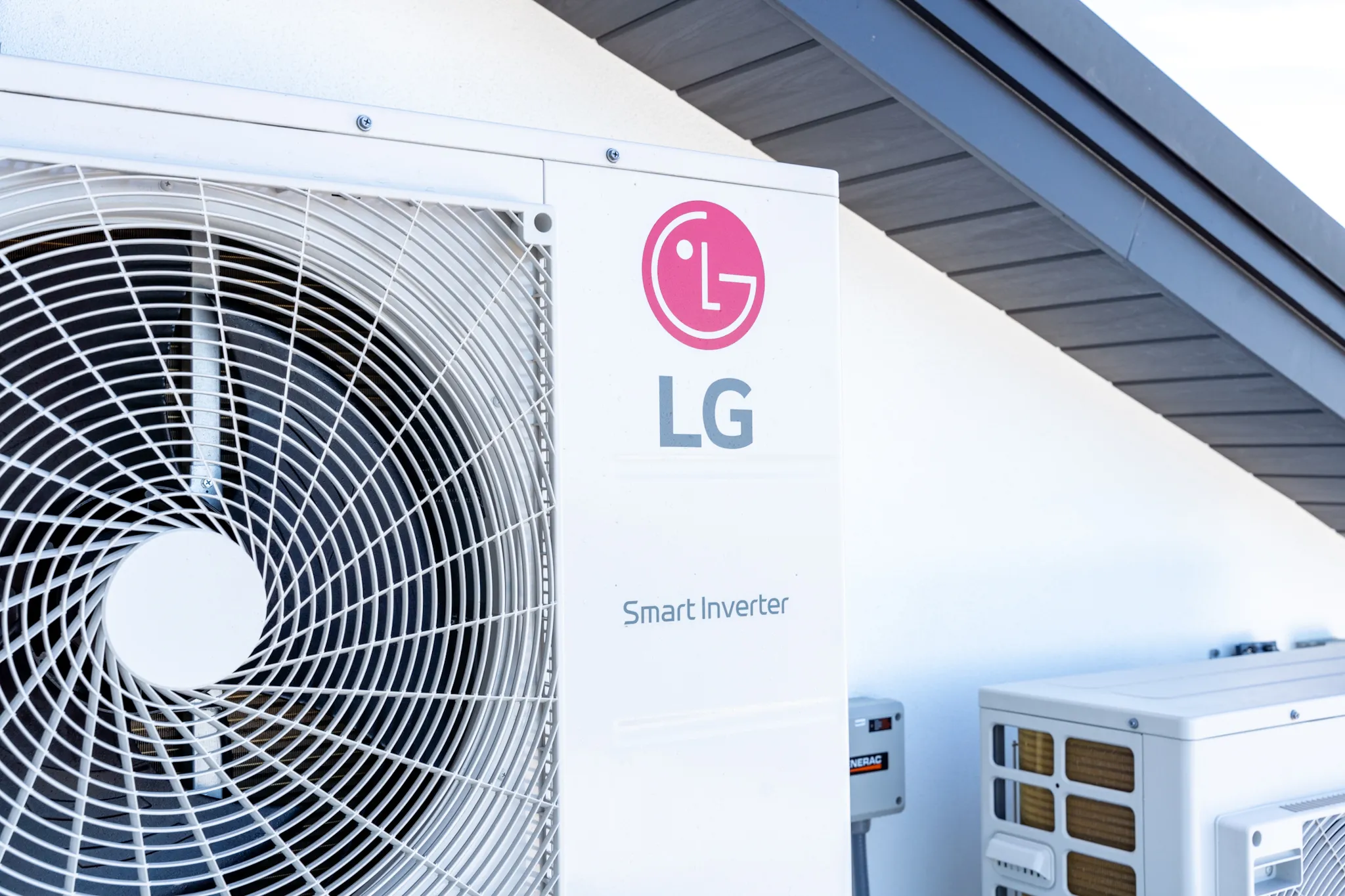
The indoor half looks familiar. There is an air handler, ductwork, a thermostat, a refrigerant circuit. What replaces the outdoor condensing unit is a loop field: a sealed circuit of buried polyethylene pipe with water and antifreeze circulating through it, plus a pump to move that fluid. There is no equipment outside making noise, and nothing sitting in the salt air corroding, which is a real advantage in coastal neighborhoods.
Why the Florida math does not work
Geothermal earns its cost in places punished by both extremes. Up north the payoff comes largely from heating, where a ground loop lets a heat pump keep working efficiently on nights an air-source unit would fall back to expensive electric strip heat. We have almost none of that. Tampa Bay sees a handful of nights near freezing in a normal winter, and a decent air-source heat pump handles them without breaking stride.
Cut the heating benefit out of the equation and you are left with the cooling side alone to justify the entire loop field. That loop field is the expensive part, and it is expensive because it involves excavation or drilling, not manufacturing.
Meanwhile the competition got much better. Florida sits in the DOE Southeast region, where minimum efficiency has been 14.3 SEER2 for systems under 45,000 BTU and 13.8 SEER2 for systems between 45,000 and 65,000 BTU since January 1, 2023, and high-tier variable-speed equipment runs far above those floors. A well-installed, correctly sized, high-SEER2 air-source heat pump captures a large share of what geothermal would deliver here, for a fraction of the installed cost and with a service network on every street.
On cost, and on numbers you find online
We will not print an installed price or a payback period on this page, and you should be skeptical of any page that does. Loop cost depends on your lot, your soil, your water table, how far the drilling rig has to travel and what it hits when it gets there. Two houses on the same street can quote very differently. Anyone giving you a national average figure for a job that is this site-specific is selling, not estimating.
What is safe to say directionally: the installation is a large multiple of a conventional changeout, most of that difference sits in the ground rather than in the equipment, operating cost is lower, and the buried loop itself has a very long service life because nothing about it moves or weathers.
Be careful with older articles on this topic, because many of them quote incentives that no longer exist. Utility programs are administered locally and change on their own schedule, which is worth checking before you assume either way.
What your lot allows
Loop design is not a menu choice. Your property decides it.
- Horizontal loops are trenched shallow across a wide area. They are the least expensive way to get the pipe in the ground, and they need far more open land than a typical subdivision lot has once you account for the septic field, the driveway and the trees you want to keep.
- Vertical loops use boreholes drilled deep, so they fit small lots. Drilling is the costly part.
- Pond loops. Cheapest of all, if you happen to own suitable water of adequate depth. Almost nobody does.
Florida geology complicates all three. The water table sits high across much of the region, and the limestone underneath is inconsistent, karstic in places, and full of surprises for a drilling crew. That variability is exactly why the answer to "what will it cost" is a site visit, not a number.
Who should consider it
A short list. Owners of large rural acreage in eastern Hillsborough or northern Pasco, where a horizontal loop is physically easy and the land is already there. People building new, since trenching before the landscaping and driveway exist removes a large chunk of the difficulty. Owners who intend to stay in the house for decades and are not making the decision on payback alone. Households on well water with an open-loop option and the water chemistry to support it.
Coastal homeowners have one further argument worth weighing. In the first mile or so from salt water, which corrosion engineers typically class as C4 or higher on the ISO 9223 scale, outdoor condensers take a beating, and having no outdoor unit at all sidesteps that entirely. Whether that is worth the loop field is a personal call, but it is a legitimate benefit rather than a brochure line.
What we usually recommend instead
For the great majority of Tampa Bay homes, the money that would go into a loop field buys more comfort somewhere else. Correct sizing beats efficiency tier. Sealed and properly insulated ducts stop you paying to cool an attic. Attic insulation and solar control on west glass reduce the load the equipment has to meet in the first place, and reducing load is always cheaper than buying capacity.
Do that work, then put a good variable-speed heat pump on the end of it. You will spend far less and, in this climate, notice very little difference in the result.
If your property is one of the exceptions, we will tell you and we will lay out the real considerations for your lot. If it is not, we will say that too. Talk to us about system installation, look at efficiency improvements to the system you already own, or get in touch for a straight answer about your address.