A 4-point inspection is a photography assignment, not a tune-up. On the HVAC line, the inspector documents four things: that central heat and air exist, how old the equipment appears to be, what condition it is in, and whether it runs when switched on. Nobody attaches gauges. Nobody tests a capacitor under load. What reaches the underwriter is photographs and dates, and that underwriter will never stand in your garage.
We are a licensed HVAC contractor, not an insurance agency, so this is written from our side of the file. The AC line on that form is our trade, and a homeowner controls more of it than most people assume.
What the inspector records
Four items, and each is narrower than people expect.
- Presence. Central heat and central air, confirmed to exist.
- Age. Read from the data plate when the label is legible, estimated from the equipment's style when it is not. An estimate almost always lands older than the truth, and the difference is never in your favor.
- Condition. Rust on the cabinet, corrosion on the coil, water staining around the air handler, the state of the drain line. This is a visual pass, exactly as thorough as what a camera can see.
- Function. It runs and it moves cold air, observed for minutes rather than measured over a season.
That is the whole HVAC scope. Dating and photographing is the job, and the photographs carry most of the weight.
Why carriers care how old the system is
To an underwriter, an aging air conditioner is not a comfort problem. It is a moisture problem waiting for a date. Failing systems in Florida stop removing humidity before they stop cooling, and sustained indoor humidity feeds mold, warps trim and stains drywall. Condensate is the sharper risk: most Florida air handlers sit in an attic or an interior closet, and a clogged drain line behind a failed float switch puts water through a ceiling. Overflows of that kind are a real claims category, which is why the water-adjacent parts of the system get photographed so deliberately.
Age is the proxy carriers reach for because age is the one fact a photograph can establish. Carriers differ on where they draw the line. Agents differ on how they read the same report, and two households on the same street can get different answers about equipment of the same vintage. What does not vary is the direction: older equipment with no service record reads as deferred maintenance, and deferred maintenance reads as risk.
What you control before the photos are taken
Know the real age. Manufacture dates are encoded in the serial number on the outdoor unit's data plate, and reading yours beats guessing in either direction. Equipment its owner calls "about ten years old" photographs worse than equipment documented at nine. Our guide to how long an air conditioner lasts in Florida covers reading the plate and what the age bands mean in this climate.
Fix the water path. Two inexpensive items, a clear drain line and a float switch that actually trips, address the exact failure the inspection is probing for. If old water staining surrounds the air handler, resolve the cause before the photo exists, because a stain with no explanation is the worst possible exhibit. The mechanics are laid out in condensate problems explained.
Build the paper trail. Dated service records from a licensed contractor answer the deferred-maintenance question before anyone asks it. Scheduled maintenance earns its keep twice here: the system photographs better because it is cleaner and drier, and the invoice itself becomes part of the file.
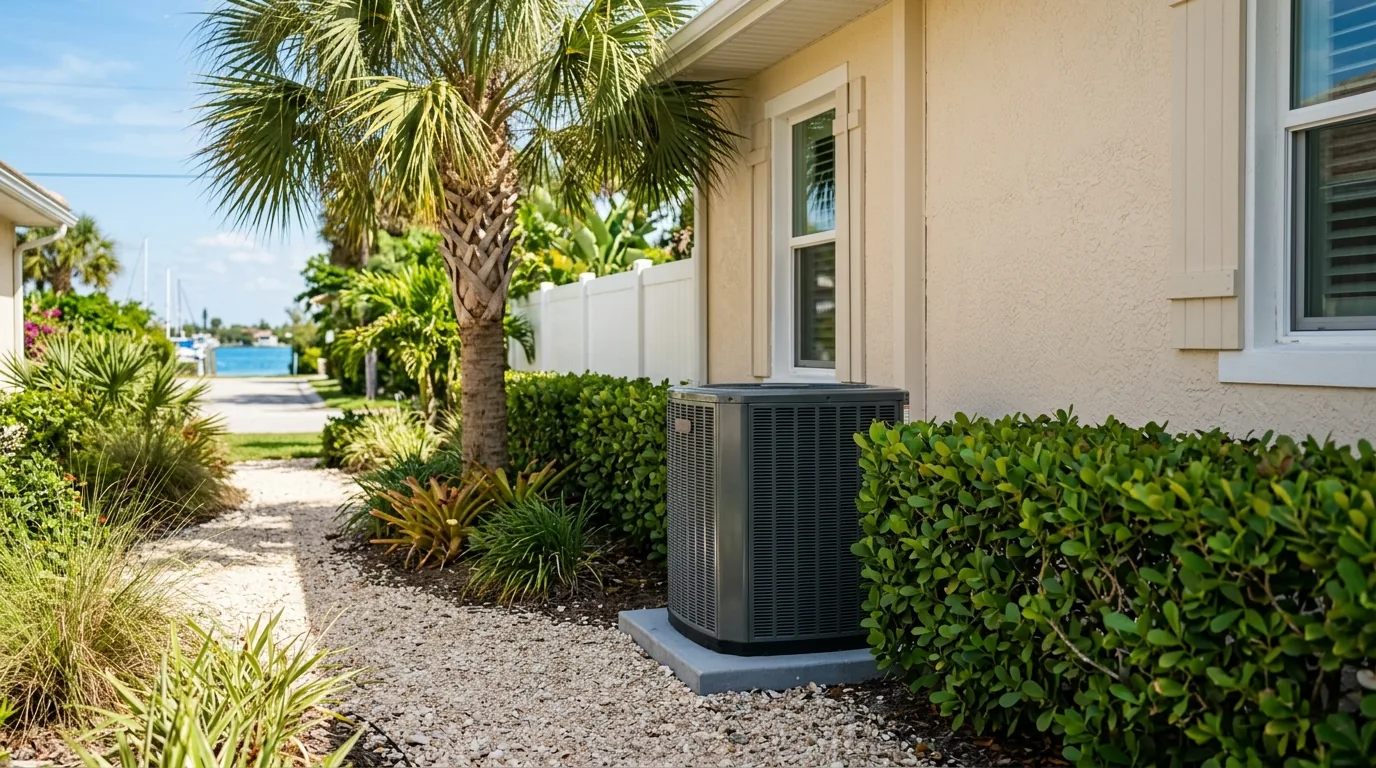
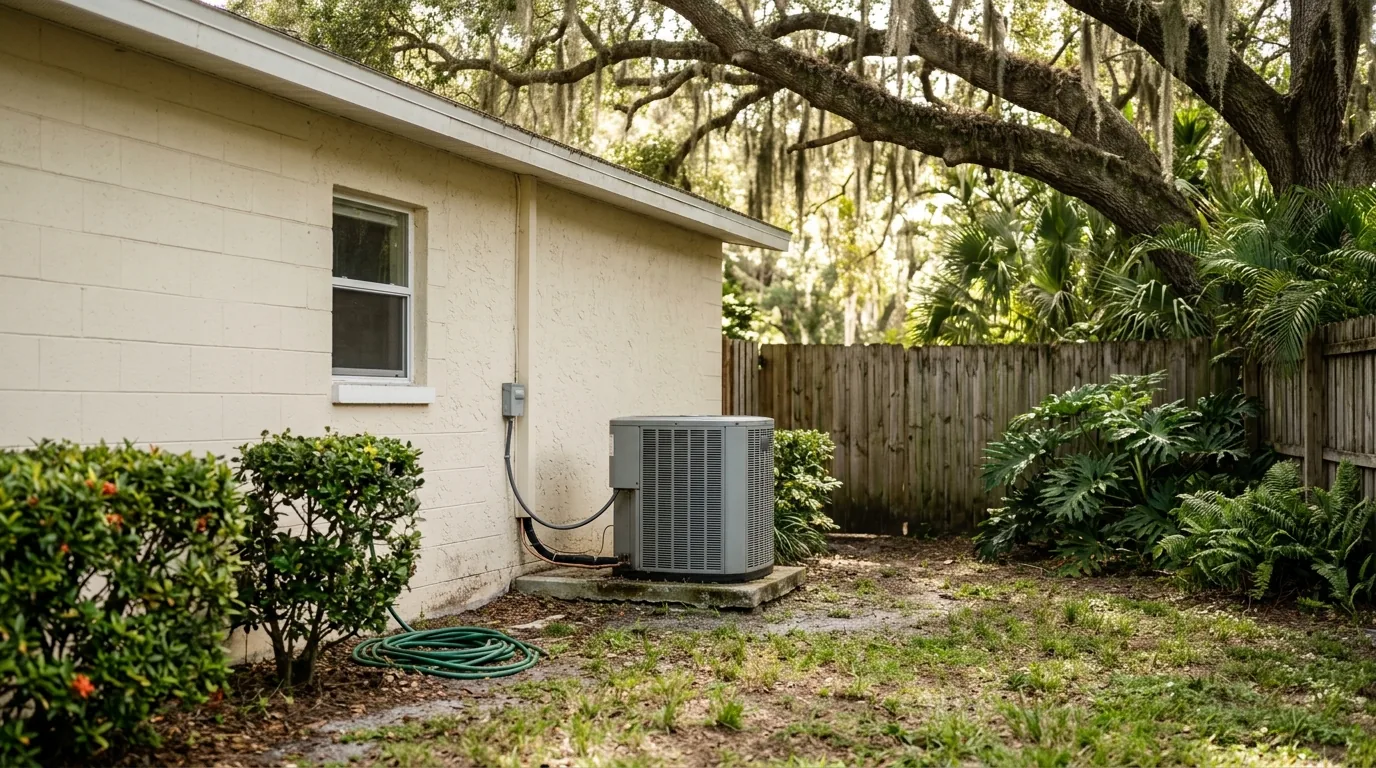
Clear the access. A 4-point is a snapshot taken by someone with a camera and a checklist, working fast. An air handler crowded behind stored boxes in a hall closet photographs as neglected whether or not it is, and clearing a path to it costs nothing. Same outside: cut back the hedge that grew into the condenser over the spring, because vegetation packed against the fins reads as deferred maintenance in a photograph and genuinely does shorten equipment life besides.
What a contractor cannot promise you
Acceptance. Carriers set their own appetites, agents interpret their own carriers, and no HVAC company can tell you what any particular insurer will do with a report. Anyone promising your policy will renew because they serviced your AC is selling past their license.
Our end of it is narrower and more useful: put the system in a condition worth photographing, document its age accurately, and hand you paperwork that says so.
When age tips the decision
At some point the AC's age stops being a line item and becomes the subject of the renewal conversation. That changes the math. Repair-or-replace is no longer a purely mechanical question, because the same aging equipment is now costing you on two fronts at once. That is the moment to price a replacement against another year of nursing the old system, with the insurance file on the table next to the repair quotes.
Selling runs on the same logic, since the 4-point and the buyer's inspection land on the same equipment within days of each other. We laid that overlap out in what to check in the HVAC system when buying or selling. Either way the underlying move is identical. Know your system's real age and condition before someone else's photographs establish them for you.