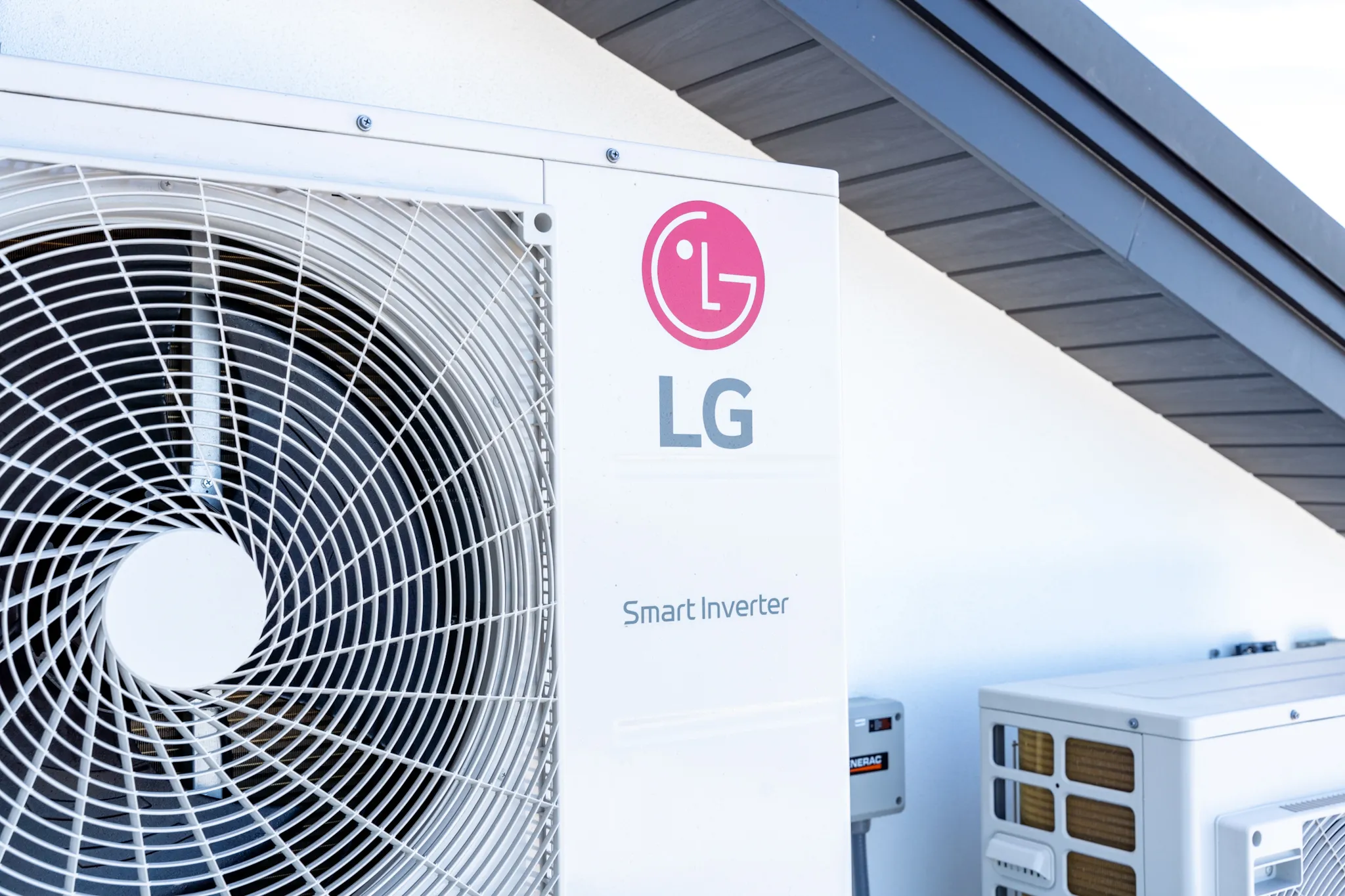
By the middle of October a Tampa Bay air conditioner has been running hard since March, which is somewhere in the neighborhood of five thousand hours of compressor time in a single season. Northern equipment does not see that in two years. Fall is not really about getting ready for winter here, because our winter barely qualifies. Fall is about auditing the damage the summer just did, while the weather is mild enough that finding a fault costs you nothing worse than an appointment.
That reframing matters. A spring checklist asks whether the system is ready. A fall checklist asks what it has been through.
Storm damage first, and it will not announce itself
Hurricane season officially runs to November 30, but by autumn the season's damage has usually already landed. The version people catch is the obvious one: a downed limb across the condenser, or a unit visibly shifted on its pad. The version that costs money is quieter than that.
Flooding is the clearest example. A condenser that stood in water for an hour and then dried out will often start and run normally afterward, which is exactly why owners assume it survived. It did not. Salt or brackish water leaves conductive residue and chloride deposits inside contactors, on circuit boards and along terminal strips, and the failure that follows is progressive over months, not immediate. Same with a nearby lightning strike. A surge rarely kills a control board outright. It degrades it, and the symptom is a system that works fine for three weeks and then throws an intermittent fault nobody can reproduce on a service call.
Walk the outdoor unit and look for these specifically:
- A visible waterline, silt, or grass debris pressed into the lower coil fins, which tells you how high the water got.
- Fins bent flat over any portion of the coil face. Hail and wind-driven debris flatten them, and a flattened section stops rejecting heat entirely. Even a hand-sized patch measurably raises head pressure, and head pressure is what compressors die of.
- Movement. Check the pad is level and the unit is still anchored to it.
- Strain on the refrigerant line set or the electrical whip where a shifted unit pulled against them.
If your street flooded and the outdoor unit went under at all, have it assessed instead of assuming it is fine. Our hurricane season checklist covers the before side of that.
What eight months of continuous runtime does
Three things wear in a predictable order over a Florida cooling season, and autumn is when all three become visible at once.
The evaporator coil has been wet since March. A coil that stays wet for eight months grows a biofilm, and dust that would have blown past a dry coil sticks to a damp one instead, building an insulating mat between the refrigerant and the air you are trying to cool. You do not notice the loss because it arrives at maybe two percent a month. You notice it in the electric bill, and by then it has been happening all summer.
The condensate system has been carrying that water away the entire time. Algae and biological slime grow in a warm, dark, constantly wet PVC line, and by October the trap and the first few feet past it are where a partial blockage is forming. A partial blockage is the one worth catching, because it produces no symptom at all until it becomes total.
Then the capacitor. A run capacitor is an electrolytic component that degrades with heat and with cycle count, and it has had a full season of both. Capacitors do not fail cleanly; they lose microfarads gradually, and a weak one makes the compressor draw higher starting current every single cycle for months before it finally will not start at all. Measuring it takes a technician about ninety seconds.
Coastal homes add corrosion to that list. After a summer of salt-laden air, the aluminum fins on a condenser within roughly a mile of open water will show white powdery oxidation, and this is the moment to judge how much life the coil has left. See salt air and your AC.
Test the heat now, because you will need it for about nine days
Tampa Bay gets a handful of genuinely cold nights a year, and they tend to arrive without much warning in late December or January. Nearly every home here runs a heat pump, which means the same outdoor unit that cooled all summer reverses to heat. That reversing valve has sat in one position for eight months.
Pick a mild afternoon and run the heat for fifteen minutes. What you want is warm air at the registers and the outdoor unit running. Cool air at the registers with the outdoor unit sitting still points at a reversing valve that did not shift or a defrost board fault, and that is a real diagnosis, not something that will sort itself out. Finding it in November costs you a routine appointment. Finding it on the coldest night of January puts you in the queue behind everyone else who also just discovered it.
One smell is normal. Dust burning off the electric strip heaters on the first run of the season is common and clears in a few minutes. A burning smell that persists past that, or any smell of hot plastic, means shut the system off. See heat pumps.
The shoulder-season humidity trap
October and November produce the strangest complaint we get all year: the house feels damp even though the temperature is fine.
Blame the runtime. Outdoor temperatures drop into the low eighties while dew points stay in the seventies, so the thermostat is satisfied quickly but the air is still loaded with moisture. Less runtime means less dehumidification, and a house that felt crisp in July feels clammy in October at the same setpoint. Set the fan to Auto rather than On, since a fan running between cycles re-evaporates water off the wet coil and puts it straight back into the house. If indoor humidity sits above 60 percent through the fall, that is worth solving rather than living with, and indoor air quality work is where that conversation starts.
What the autumn service visit should cover
For coastal properties this is the more valuable of the two annual visits, because it lands right after the season of peak salt exposure and peak runtime. Ask that it include coil cleaning on both sides, a drain line clearing rather than just an inspection, capacitor and contactor measurement under load, a corrosion assessment with a straight estimate of remaining coil life, and a functional test of the heating side.
Inland homes running one visit a year are better off booking it in spring instead, ahead of the load instead of behind it. Either schedule keeps your maintenance documentation current, which is what manufacturers ask for when a compressor claim gets filed.
We handle fall service across Hillsborough, Pinellas, Pasco and Hernando counties.