Most air conditioning breakdowns in Tampa Bay trace back to about six failures, and two of them you can clear yourself in the time it takes to find a flashlight. Knowing which group you are in matters. It saves a service call, and more usefully it stops you from turning a fifteen-dollar part into a compressor replacement by running a system that is telling you to shut it off. What follows works through the symptoms in the order homeowners describe them on the phone, then draws a hard line around the work that belongs to a licensed technician and nobody else.
The system runs but the house keeps getting warmer
Start with the filter. A blocked filter chokes airflow across the evaporator coil badly enough that the coil temperature drops below freezing, and once ice forms on the coil the system moves almost no air at all. You will feel weak air from the registers and often see frost on the copper line running into the air handler. If you find ice, switch the thermostat to fan-only and leave it there until everything has thawed, which takes a couple of hours. Restarting on cool while the coil is still frozen accomplishes nothing and can send liquid refrigerant back to the compressor.
Then walk outside.
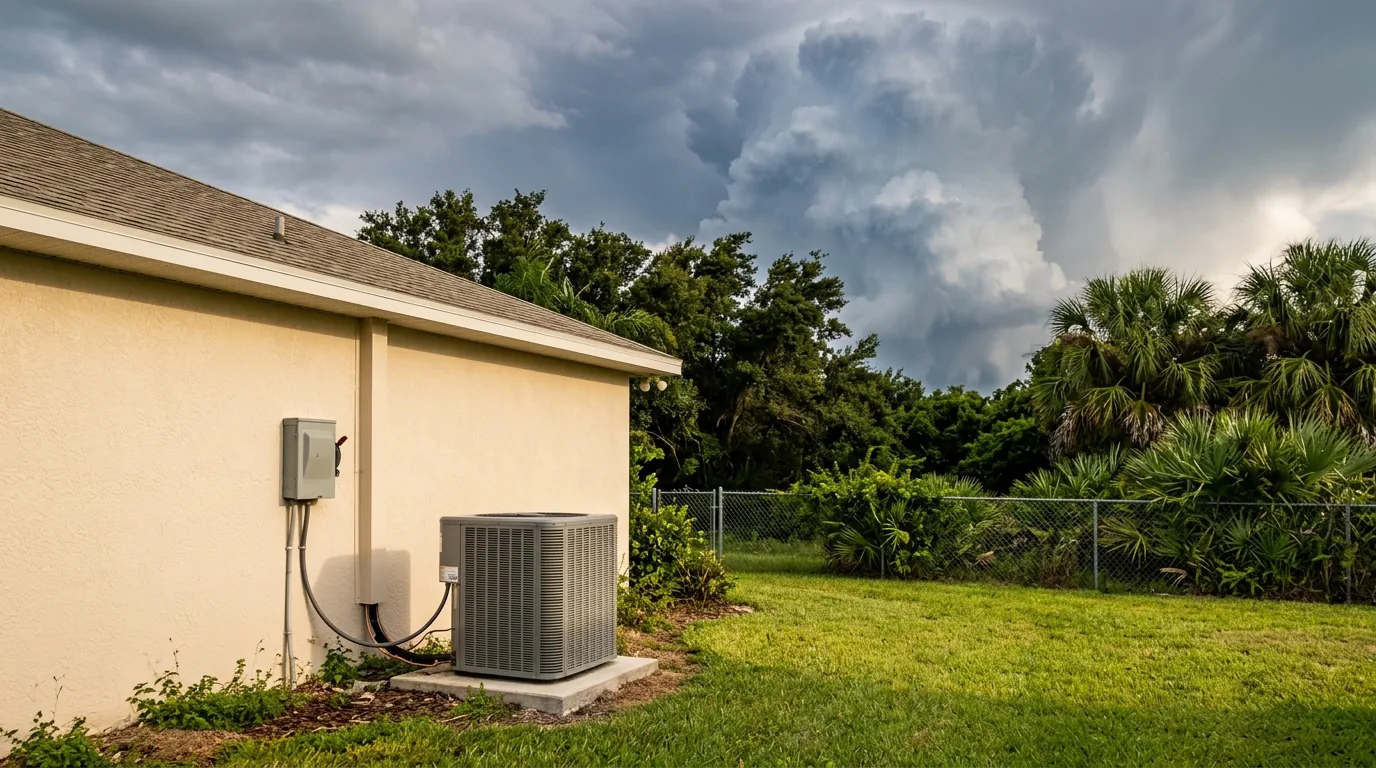
The condenser fan should be spinning whenever the system calls for cooling. Grass clippings, oak leaves and a hedge planted eighteen inches from the cabinet all do the same thing: they stop the unit from dumping heat outdoors, and a condenser that cannot reject heat cannot cool a house no matter how hard the compressor works. Rinse the coil fins gently with a garden hose from the inside out, and cut back anything growing within two feet of the cabinet.
Check the breakers last, because there are usually two. One feeds the air handler and one feeds the condenser, and a house where the indoor fan blows warm air is often a house where only the outdoor breaker has tripped. Reset it once. If it trips again, stop and call, because a breaker that keeps tripping is reporting a real electrical fault.
Past that point, the realistic causes are a weak capacitor, a refrigerant leak, or a failing compressor. All three need a technician with gauges.
Nothing happens at all when the thermostat calls
In Florida the single most common cause of a totally dead system is a blocked condensate drain. Your air conditioner pulls gallons of water out of the air on an August afternoon, all of it draining through a PVC line that runs to a bathroom sink drain or out through an exterior wall. Algae grows in that line. When it clogs, water backs up into the drain pan, a float switch senses the level and cuts power to the system on purpose to keep water out of your ceiling.
It looks like catastrophic failure. It is usually a fifteen-minute fix with a wet vacuum on the outdoor end of the drain line.
Dead thermostat batteries produce the same symptom on some models, and they are worth ruling out first because it costs nothing. Beyond those, listen at the outdoor unit. A low hum with a fan that will not turn is the textbook description of a failed run capacitor, and it is one of the least expensive repairs in the trade, provided you do not run the system for two weeks in that state and cook the compressor windings.
Decoding the noises
Sound is diagnostic. Pay attention to what changed rather than to absolute volume, since every system has a baseline.
- Humming with no fan movement. Capacitor, almost always.
- Repeating clicks. A contactor or relay that is trying to pull in and failing. It sometimes sounds like a card in bicycle spokes, and it means the system is attempting a start it cannot complete.
- Screeching or grinding. A motor bearing. Shut the system down at the thermostat and call, because every additional hour of running turns a motor replacement into something larger and more expensive.
- Rattling. Debris in the condenser cabinet, or a panel screw that vibrated loose.
- Hissing or bubbling. Possible refrigerant leak, not a DIY item under any circumstances.
Some rooms are fine and one room never is
Rarely the equipment. Ductwork explains most of it: a flex run crushed by someone storing boxes in the attic, a duct that pulled loose from its boot years ago and has been conditioning the attic ever since, or a system nobody ever balanced after installation. A disconnected duct is common enough that it is worth a look with a flashlight before anything else gets diagnosed.
Closing vents in unused rooms makes all of this worse, not better. It raises static pressure across the whole system, which reduces total airflow and strains the blower, and the rooms you wanted to fix get less air than before.
West-facing rooms that run hot from three in the afternoon until sunset are a load problem, not a fault. That distinction matters because the fix is different: zoning, a dedicated mini-split, or window film, rather than a larger central system that will dehumidify worse than the one you have.
Cool but clammy
This is the complaint we hear most in this climate, and it is a run-time problem, not a temperature problem. A system that satisfies the thermostat in eight minutes never runs long enough to wring water out of the air, so you get a cold house at 65% relative humidity that feels worse than a warmer, drier one.
Check the fan setting first. On ON, the blower keeps running between cooling cycles and re-evaporates the moisture sitting on the wet coil straight back into your house. Switch it to AUTO. It costs nothing, and in a lot of homes it is the entire fix. Oversizing and excessive blower speed cause the same symptom and need a technician to measure and correct.
What to leave completely alone
Refrigerant, the compressor, and the electrical panel. Refrigerant handling requires EPA certification and is not optional. Capacitors store enough charge to hurt you well after the disconnect is pulled. And a mistake at the panel is the kind that ends in a hospital rather than a service call.
Costs get quoted before any work begins, so you always know what you are agreeing to. If you want the version of this where most of it never happens, see what maintenance prevents or reach out through emergency service when the timing is bad.