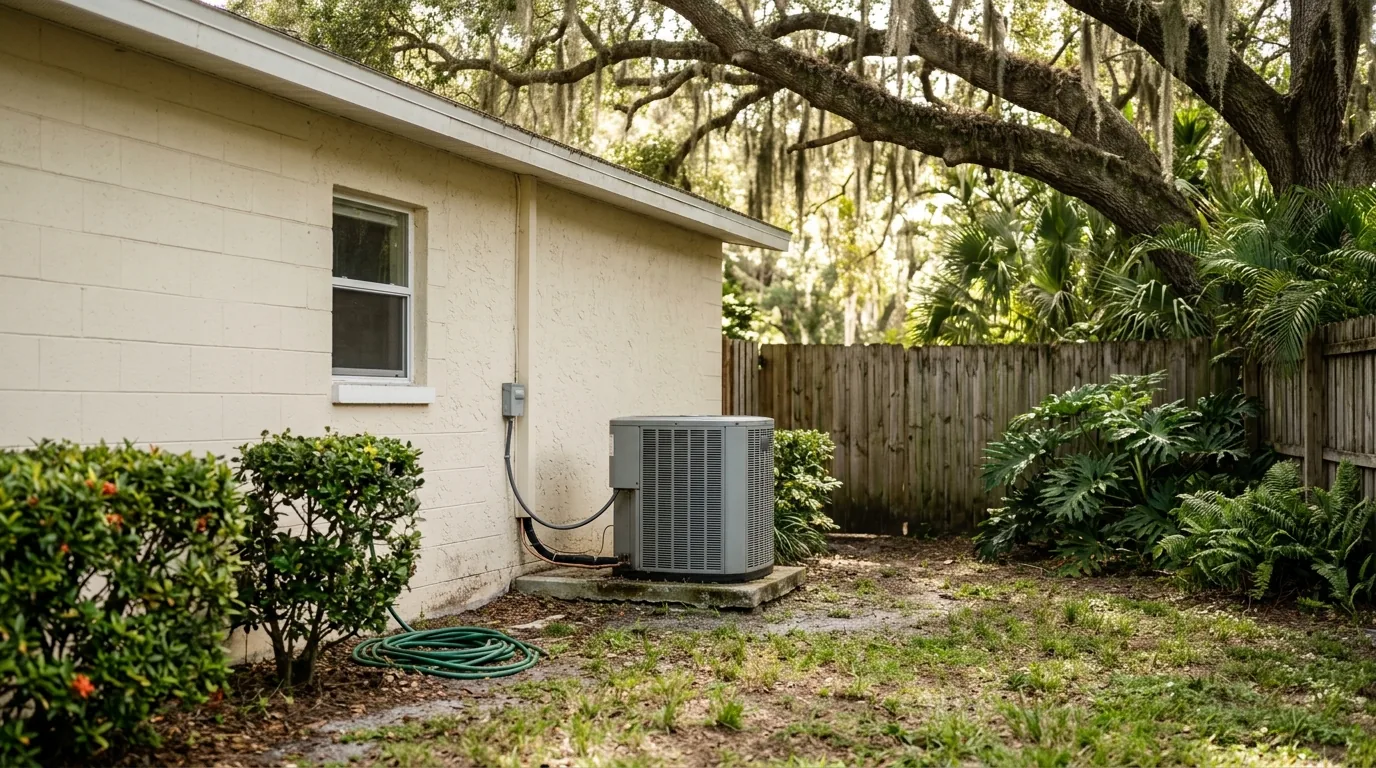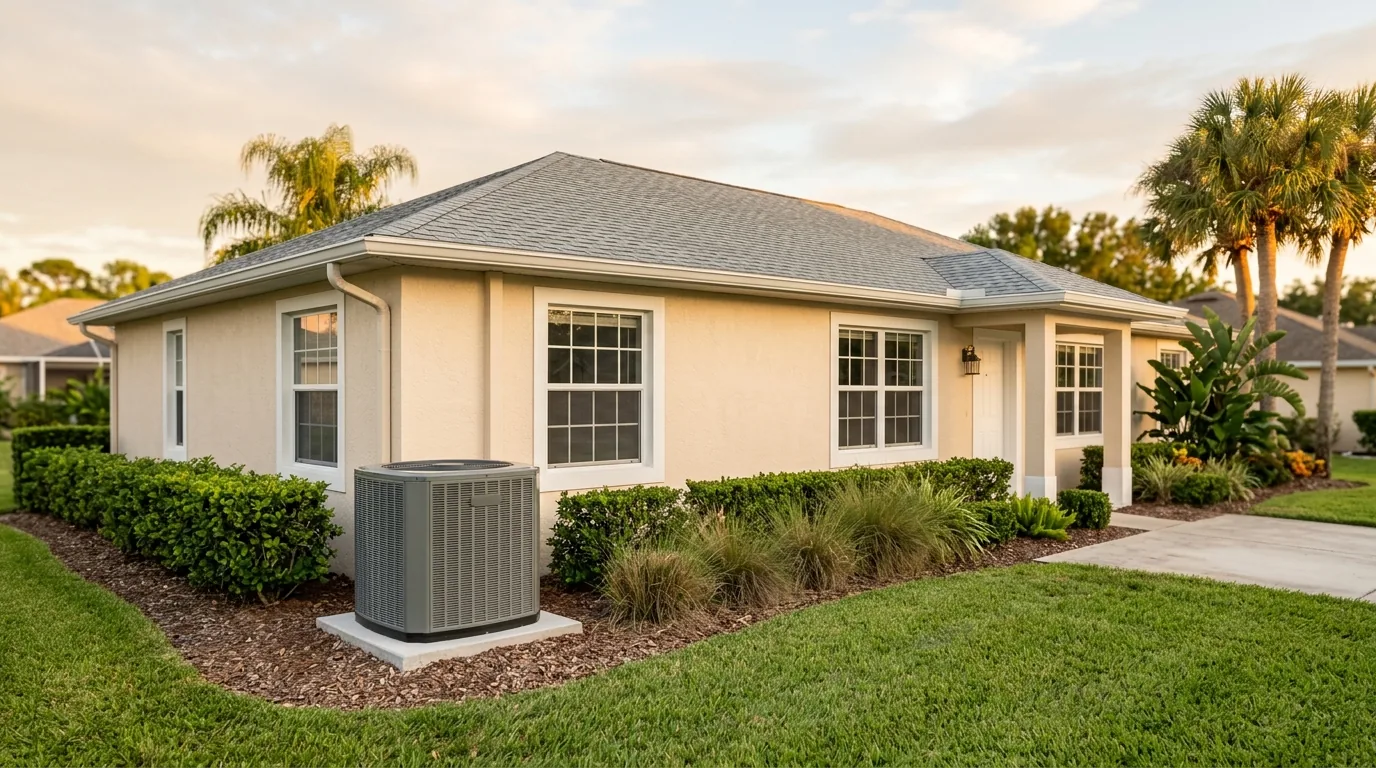
Less changed than the sales pitches suggest. Four things are different about buying an air conditioner in 2026: the refrigerant in the box, the incentives, the price, and the wait. The physics of cooling a Florida house did not change, and neither did the work that decides whether a new system performs. Take the four in order, each with its consequence.
New equipment ships with R-454B or R-32
Manufacturers stopped building new residential systems on R-410A at the start of 2025. That does not strand the system you already own: R-410A is still legal to buy for service, and equipment built before the cutoff can still be installed while supplies last. What changed is what is available new, not whether your current system can be repaired. What ships now runs R-454B on most ducted brands, or R-32 on Daikin, Goodman and LG. Both carry the mildly flammable A2L classification, which changes technician training and equipment design far more than it changes anything you will notice living with the system.
For a buyer, the consequence is one question: which refrigerant, on the proposal, in writing.
Mixing generations is where this gets expensive. An R-454B condenser is not a drop-in partner for an R-410A indoor coil, so a quote that replaces the outdoor unit alone on an older system deserves a direct question about what happens to the coil inside. Sometimes both pieces have to move together, and a proposal that quietly skips past this is one you want clarified before signing, not discovered during installation.
For an owner, the consequence is nothing. An existing R-410A system remains legal to run and legal to service, and a working one is not a problem to be solved. Anyone waving the refrigerant transition at a healthy system as a reason to replace it is selling you something, not advising you. What the refrigerant change means covers the details, including the A2L question worth asking your contractor.
Rebates are local
Whatever incentive money exists on a 2026 replacement comes from your electric utility, which administers its own programs on its own schedule, opening, closing and changing thresholds without much announcement. Call and ask what is active for a residential replacement before you assume anything, in either direction. Where incentive money stands now walks through what remains.
Prices rose and some lead times stretched
New-refrigerant equipment costs more than the generation it replaced. Not only the equipment, either: A2L-rated fittings, sensors, leak detection gear and technician training all carry cost, and the industry passed it down the line. Lead times on some equipment run longer than they used to, especially on less common capacities and configurations. Odd tonnages wait longest.
Neither fact is a reason to panic. Both are reasons to decide early.
A homeowner who plans a replacement in October compares equipment, checks the rebate situation, and schedules the work for a slow week. A homeowner whose system dies on an August Friday takes whatever is in the supply house that afternoon. Same house, same budget, different product.
What did not change still decides the outcome
Three things determined whether a new system delivered its rated performance in 2019, and the refrigerant transition touched none of them.
Sizing by load calculation, not by copying the old nameplate. A matched indoor and outdoor pair, because the SEER2 rating belongs to the combination rather than to the condenser alone. And commissioning: verifying charge, airflow and temperature split before the truck leaves, since a lab rating means nothing if the installed charge is wrong. Skip any of the three and the efficiency you paid for stays in the brochure.
That is the way to read a low bid. A quote that skips the load calculation, mixes equipment generations, or leaves without measuring anything is not the same product at a better price. It is a different product wearing the same model number, and the gap shows up on your power bill for fifteen years.
Buy on your schedule, not the equipment's
Worst time to buy an air conditioner? The week the old one dies in August. Every pressure runs against you at once: the house is hot, the family is unhappy, comparison shopping feels impossible, and the available equipment is whatever survived the peak-season rush at the supply house. In a year of higher prices and longer waits, that squeeze got tighter, not looser.
So take the decision back. If your system is past 12 years and this summer produced its second service call, price the replacement now, while the old unit still runs and you can still say no. A written estimate carries no obligation, and it converts a future August emergency into a scheduled job with the equipment you actually chose. The 2026 changes reward exactly one buyer: the one who was not in a hurry.