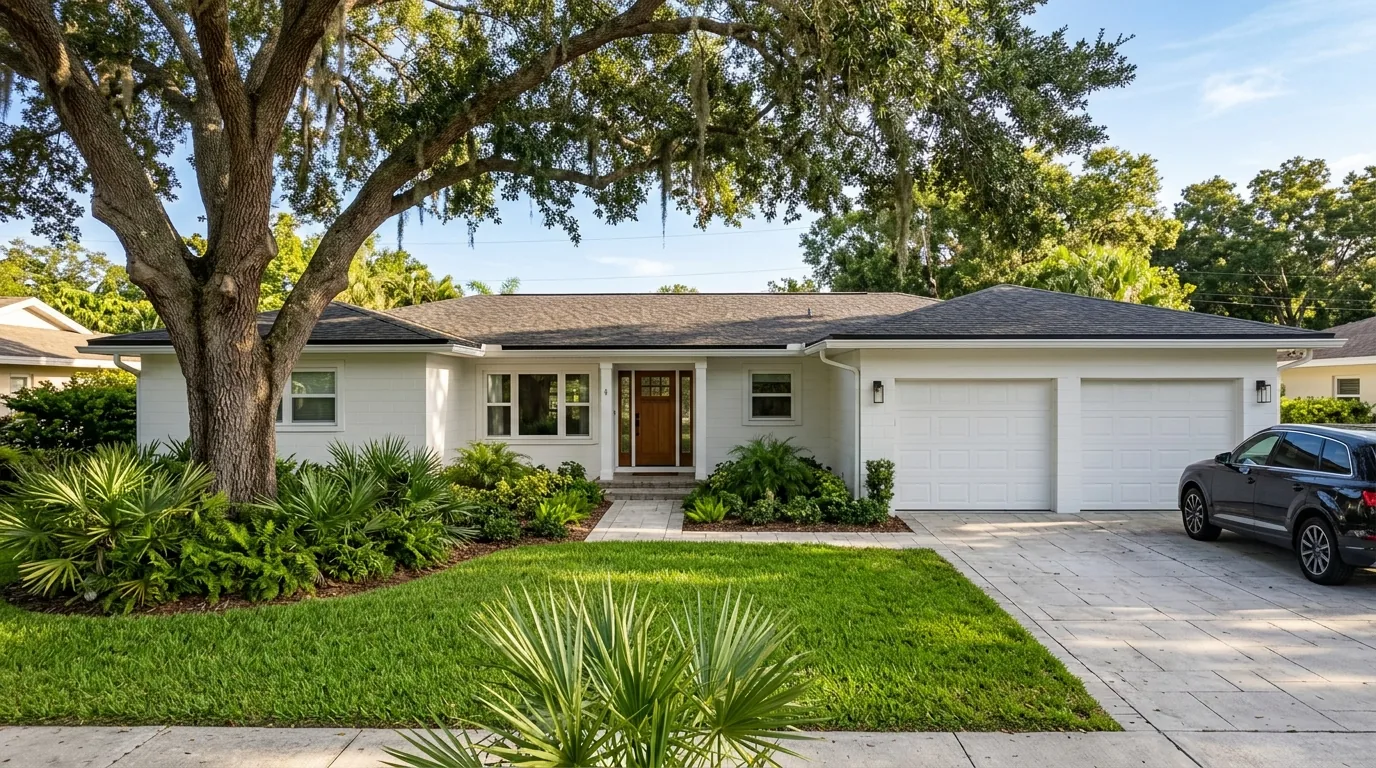
Brandon, Valrico, Bloomingdale, Fish Hawk and Riverview sit far enough inland that salt is not a factor. That removes the single biggest threat to equipment life on the coast.
It introduces a different one.
No sea breeze means longer run times
Water moderates afternoon temperatures along the coast, and that moderation weakens as you move east. By the time you reach Valrico and Fish Hawk it is largely gone. Afternoon peaks run higher and hold longer, so equipment out here works closer to full capacity for more of the day, more days of the year.
Worth stating the trade plainly, because it changes where your money should go. Coastal equipment usually dies of corrosion while it still has plenty of mechanical life in it. Inland equipment wears out. On the coast you buy coil protection; out here you buy load reduction, and equipment built to run for hours at a stretch without complaining about it.
That wear pattern shows up in a specific way, and it is worth knowing what to listen for. Components that cycle take the punishment first: the contactor, whose contacts pit and eventually weld from repeated making and breaking under load, and the run capacitor, which degrades with heat and hours until it can no longer start the compressor cleanly. Both are inexpensive parts. Both strand a household on the hottest afternoon of the year when they let go, and both are visible on a maintenance visit months before they fail, because a capacitor reads below its rated value long before it reads zero. That is most of what an annual check buys you out here.
Two-story houses and the upstairs problem
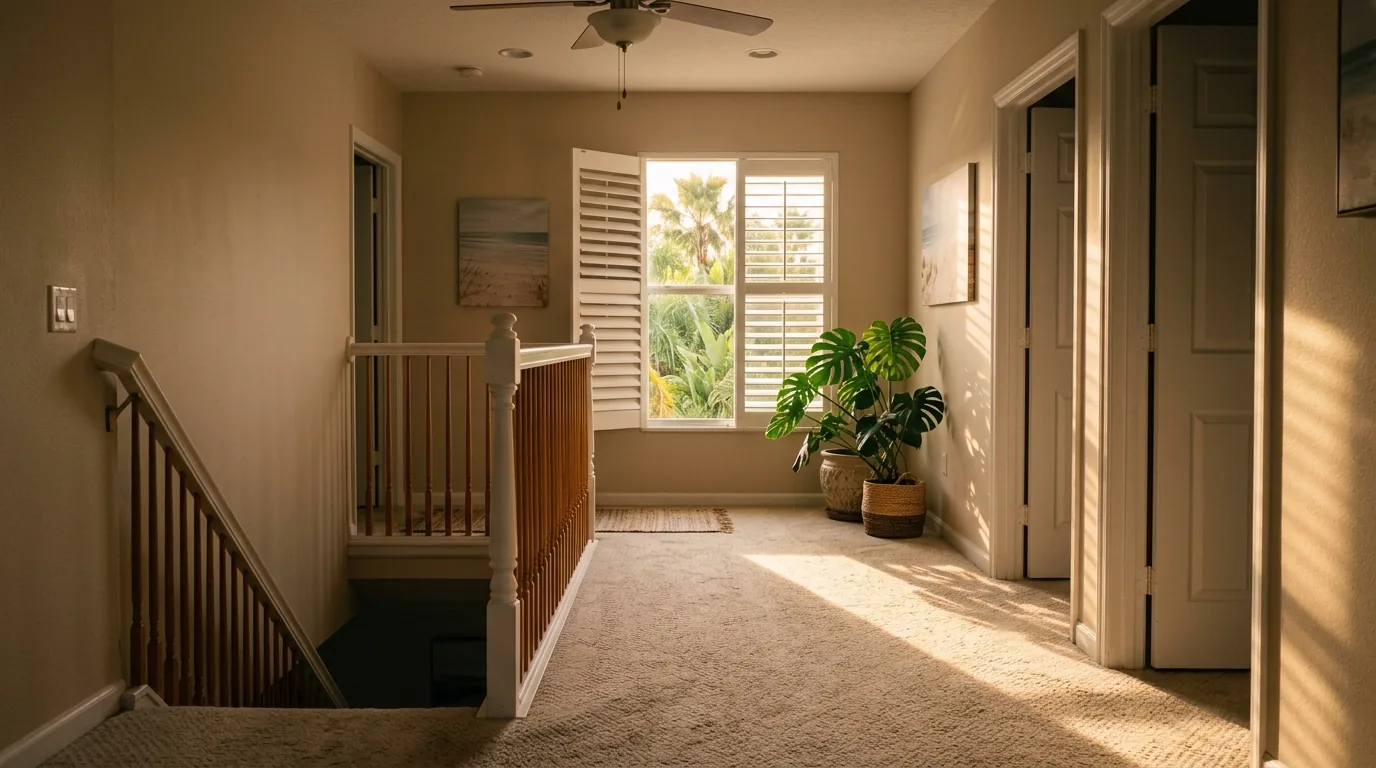
Much of the newer construction here is two story, which brings the most common comfort complaint in this area: the upper floor never matches the thermostat.
Physics is not negotiable here. Heat rises and the upper floor takes direct roof load. Whether that becomes a problem depends entirely on how the system was designed, and two systems or one properly zoned system handle it without difficulty. One unzoned system with a downstairs thermostat does not.
Before assuming you need new equipment, have the dampers balanced and the upstairs return capacity checked. That resolves a meaningful share of these calls for a fraction of the cost of retrofitting zoning, which is the right answer when balancing is not enough. The reason balancing works more often than people expect is that most builders set the dampers once, at handover, in whatever weather happened to be outside that week. Nobody returns in August to see whether the upstairs is coping. Two hours with a technician who actually measures airflow at each register frequently recovers several degrees upstairs without anyone buying anything.
What you can check before anyone comes out
Three of these take ten minutes and two of them are the actual answer more often than people expect.
- The filter. Obvious, ignored, and still the leading cause of poor airflow in this housing stock. Systems running eight months a year load a filter faster than the box on the shelf assumes.
- Closed bedroom doors upstairs. Hold a sheet of paper at the gap under a shut door with the system running. If it sucks flat against the gap, that room is pressurized with nowhere for supply air to escape, and it will sit warm all afternoon no matter what the thermostat says. Undercutting the door or fitting a transfer grille fixes it for less than anything else on this page.
- Supply registers that somebody closed years ago to push air somewhere else. Closing registers does not redirect air the way people assume. It raises duct pressure and increases leakage.
- The outdoor unit's clearance. Shrubs grown in against the coil, or a fence built closer than the manufacturer allows, recirculate hot discharge air back through the condenser and cost real capacity on the worst afternoons.
The attic is the biggest lever out here
With no salt to fight, the highest-return work in eastern Hillsborough is reducing the load rather than protecting the equipment. In rough order of payback:
- Seal the ducts. Runs through a 130-degree attic lose conditioned air directly, and leaks on the return side pull that superheated air back into the system so the equipment ends up fighting itself. This is measurable, and it is usually the largest single loss in the house.
- Insulate the attic properly. Many houses here sit below current practice, and it is comparatively inexpensive work with a long payback horizon.
- Deal with west-facing glass. Afternoon sun through west windows is frequently the largest single load in the building. Exterior shading beats interior blinds, because it stops the heat before it is inside.
- Improve the return path, especially upstairs.
Do those first and the load frequently drops enough that a replacement can be a size smaller, which costs less to buy and less to run for the next fifteen years. Do them afterwards and you have already paid for capacity you no longer need.
Why variable speed suits this area
Sustained afternoon load is exactly the condition where two-stage and variable-speed equipment earns its premium.
A single-stage unit runs flat out or not at all. A modulating unit runs for long stretches at partial output, which holds temperature more steadily and removes considerably more moisture along the way.
Humidity still matters here even without the coastal influence. Sit in a house at 78 degrees and 45% relative humidity and it feels comfortable; sit in the same house at 74 and 60% and it does not, and the second one is costing more to run while feeling worse. See what the tier difference actually buys.
How often service is warranted
Once a year covers most houses out here, and the reason is the absence of salt. A coastal condenser needs a mid-season rinse because corrosion runs continuously through the wet months. An inland condenser collects dust and grass clippings, which is a cleaning problem, not a damage problem, and a single visit ahead of the cooling season handles it.
Spring is the right month for that visit, not July.
What the annual check is really buying is electrical: capacitor value against its rating, contactor condition, amp draw on the compressor and blower compared with what the nameplate expects. Rising amp draw at steady weather means something is dragging, and catching that in April is a repair rather than an emergency in August. Add a filter changed every 30 to 60 days and a drain line cleared once a year, and that is the whole inland program. Nothing else earns its keep. Anyone selling you a coastal maintenance package in Fish Hawk is selling you a rinse that removes pollen.
The rural eastern edge
Further east, through Plant City, Dover, Thonotosassa, Lithia and Wimauma, properties get larger and older and two more considerations appear.
Some are on well water rather than municipal supply, which occasionally matters for equipment that uses it. And larger lots make a ductless or multi-zone approach practical for workshops, outbuildings and detached spaces a central system was never intended to reach.
Plant City runs its own building department. The rest of unincorporated eastern Hillsborough permits through the county. Either way a changeout needs a mechanical permit and an inspection afterward, which looks at disconnect and clearances, equipment mounting, and where the condensate terminates. It is a short visit on a straightforward job, and the contractor arranges all of it.
The short version
You are not fighting salt out here, so do not pay for coastal specification you will never benefit from. You are fighting sustained afternoon load, which means the money belongs in the envelope, the ductwork, and equipment that runs well for long periods.
See Brandon, Valrico, Fish Hawk, Riverview, efficiency work, and duct sealing.