Florida does not have an allergy season so much as an allergy year. Oak pollen coats every car in the driveway from late January into March, grass pollen carries straight through summer, and mold spore counts stay high more or less permanently because the humidity never really breaks. Your air conditioner sits in the middle of all of it. Depending on how it is set up and maintained, that system is either the biggest thing working in your favor indoors or the biggest thing working against you.
Nothing here treats an allergy. What a well-run system does is reduce the amount of airborne particulate circulating through your house and hold conditions where dust mites and mold struggle, which is worth doing regardless of what a doctor tells you about the rest.
Humidity is the lever that moves the most
Dust mites and mold both depend on moisture, and neither needs standing water to thrive. Mites absorb humidity directly out of the air, so populations decline below roughly 50 percent relative humidity and expand above it. Mold cannot get established on drywall paper, wood or upholstery below about 60 percent. In this climate a house drifts above 60 percent by default unless the air conditioning is actively pulling water out of the air, which means the indoor conditions that suppress both organisms only happen on purpose.
An oversized system is the enemy here. It cools the air fast, satisfies the thermostat, and shuts down before the coil has been cold and wet long enough to condense meaningful water out of the airstream. The thermostat reads 74 and the house still feels damp, because it is damp, and the sheets in a back bedroom feel slightly heavy at bedtime.
Buy a hygrometer. It costs almost nothing and it turns a vague complaint into a number you can act on. Correcting a humidity problem is indoor air quality work rather than a filter change, and it is worth diagnosing before you spend on anything else.
Filter choice, and the mistake almost everyone makes
A MERV 11 to 13 filter captures pollen, mold spores and most pet dander on the way past. Anything below MERV 8 is protecting your equipment from dust rather than doing anything meaningful for the air you breathe, which is fine as a purpose but it is not the purpose most people think they are buying.
The mistake is going higher than the system was built to handle. A dense filter in a system without the static pressure budget for it restricts airflow across the coil, which reduces cooling capacity, reduces dehumidification, and in bad cases freezes the coil solid. You end up with less filtration than you had, because a system that cannot move air cannot filter it either. Higher MERV is not automatically better filtration; it is better filtration only when the equipment can push air through it.
Match the filter to what the blower can handle, and if you want higher filtration than a one-inch slot allows, the answer is a deeper media cabinet with more surface area, not a denser one-inch panel.
Change it every 30 to 60 days here. Our systems run far more hours than the packaging assumes.
Where the allergens are living
A neglected system does not filter particulate out of your house, it redistributes it on a loop. Knowing the usual reservoirs helps you aim your money at the right one:
- The evaporator coil. Wet by design for months at a stretch, and it grows biofilm when nobody cleans it. A dirty coil also loses capacity, so this one costs you twice.
- The drain pan and condensate line, which becomes a standing water problem the moment it clogs.
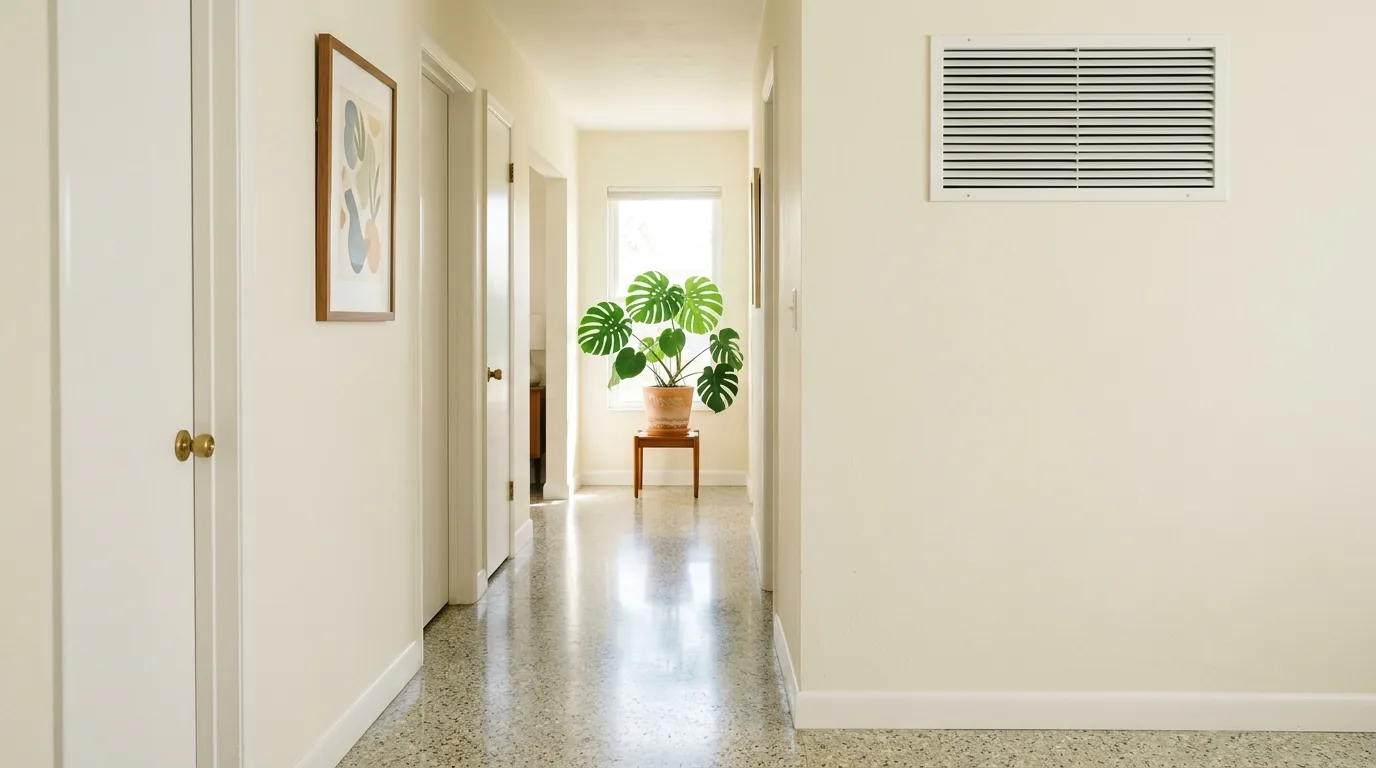
- Leaky return ducts. A return is under negative pressure, so every gap in it pulls attic air, insulation fibers, dust, and anything else up there directly into the airstream, entirely bypassing the filter you carefully selected.
- Flex duct with a torn inner liner, which sheds fiberglass into the supply air.
- Return grilles pulling from a closet or a garage wall cavity, which is a wiring shortcut we still find in older houses.
Return-side leakage is the one homeowners never suspect and it is common across older Tampa Bay housing stock. The tell is simple. If your filter is clean but dust reappears on flat surfaces within two or three days of cleaning, air is getting into the system somewhere downstream of that filter. That is a duct problem, and no filter upgrade will fix it because the dirty air never passes through the filter at all.
Duct cleaning: when it helps and when it does not
Routine duct cleaning has not been shown to help a typical home, and we will tell you that even though it is a service we could easily sell you. Ducts in reasonable condition accumulate a modest amount of settled dust that stays settled, and disturbing it with a brush sometimes puts more into the air than it removes.
There are real exceptions. Visible mold growth inside the ducts, rodent or insect infestation, and post-renovation drywall dust are all legitimate reasons. Those are conditions, not a schedule. If someone knocks on your door offering a whole-house duct cleaning for a suspiciously round number, the answer is no.
UV lights and add-on purifiers
Coil-mounted UV does one useful thing well: it keeps the evaporator coil surface clear of biological growth, which genuinely matters in a climate where that coil stays wet for eight months of the year. Contact time is the whole mechanism, and a fixed lamp aimed at a fixed coil gets plenty of it.
In-duct UV aimed at moving air is a much weaker proposition. Air passes the lamp in a fraction of a second, and the dose it receives is correspondingly small. Manufacturers make claims about this. Read them skeptically.
Neither product substitutes for controlling humidity and sealing the return side. Fix the causes first, then decide whether an add-on is buying you anything on top of that.
What to do, in order
- Get indoor relative humidity into the 45 to 50 percent range and verify it with a meter
- Use the highest MERV rating your system tolerates without choking, and change it on schedule
- Seal return-side leaks so the air you filtered stays filtered all the way to the register
- Keep the coil and the condensate drain clean with regular service, because both of them foul quietly and neither announces itself until capacity drops
- Run the fan on AUTO rather than ON
That last one surprises people, so it is worth explaining. A blower running continuously pushes air across a wet coil between cooling cycles and evaporates the moisture you just paid to remove straight back into the house. Switching to AUTO costs nothing and helps immediately.
Related: air quality services, choosing and changing filters, and the fuller air quality guide.