Start with the reframe that matters: a breaker that trips is not failing. It is a switch built to open the circuit before the wiring in your walls overheats, and when your air conditioner keeps knocking it out, the breaker is reporting a problem, not causing one. What you need is a triage order, and a clear line for where homeowner checks end.
One rule before anything else. Reset it once.
Tripping on a brutal afternoon can be a nuisance event, a momentary overload the system will not repeat. Trip number two is a message. Resetting a breaker again and again while something downstream is shorted forces current through the fault each time, and that is exactly how a fixable failure, a worn capacitor or a chafed wire, becomes a dead compressor. Compressors are the most expensive component in the system. Do not gamble one against the inconvenience of a warm evening.
Know which breaker you are looking at
Central air conditioning runs on two circuits: one for the air handler indoors, one for the condenser outside. Which one trips narrows the search immediately. An air handler breaker points at the blower or, on a heat pump, the electric backup strips. The condenser breaker points outside, at the compressor, the fan motor, and the capacitor that starts them both.
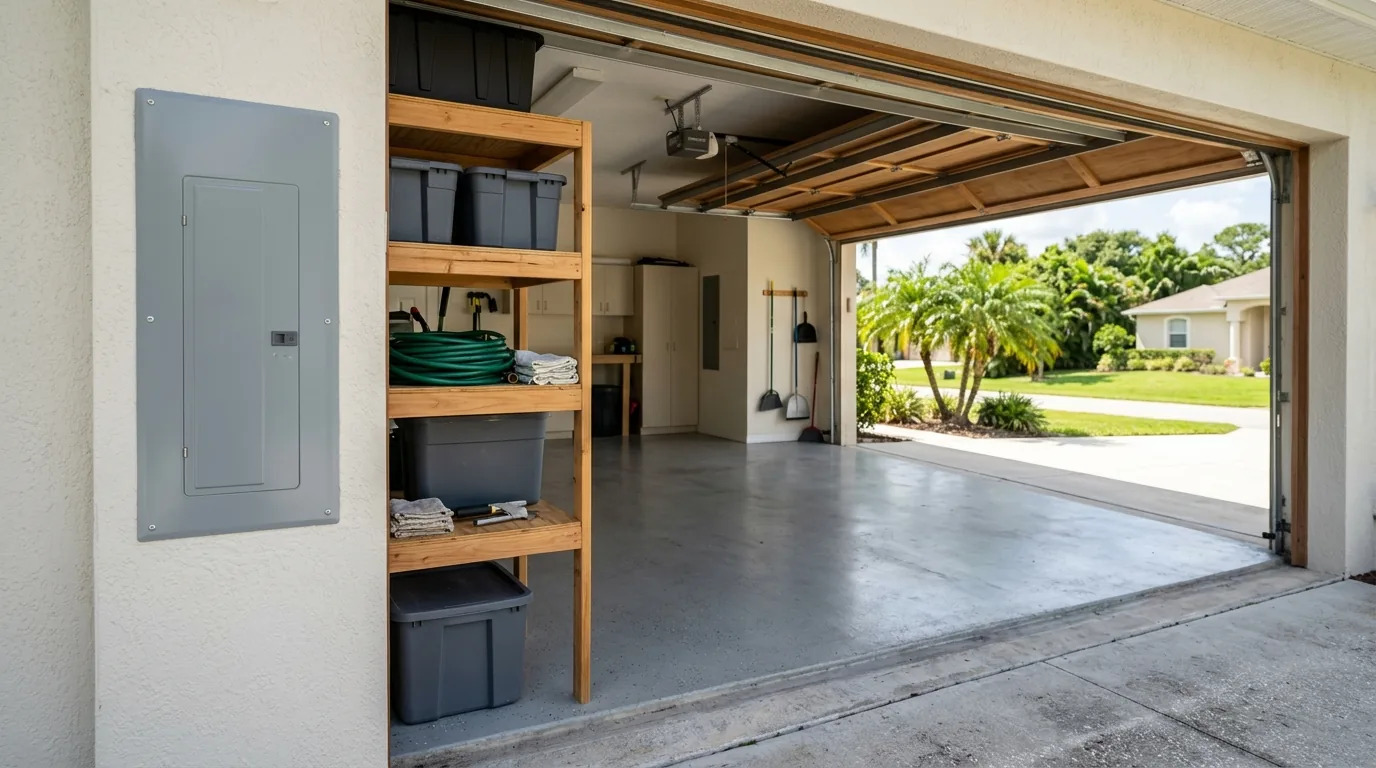
Go look before you touch anything. Panel labeling in Florida houses ranges from careful to fictional, so trace which breaker is actually off rather than trusting a faded label somebody wrote in 1987. If both circuits are dead and nothing else in the house lost power, that is a different conversation, and it usually belongs to an electrician rather than to us.
The two causes you can check yourself
Both make the system work harder than it was built to, and hard-working motors draw more current.
Neither requires a tool you do not already own, and between them they account for a real share of the summer trips we get called out for. Worth ruling out before anyone charges you to look.
- A clogged filter. Starved airflow makes the blower strain and can ice the evaporator coil, pushing the whole system toward overload. Pull the filter and hold it to a light. If you cannot see through it, replace it before you reset anything.
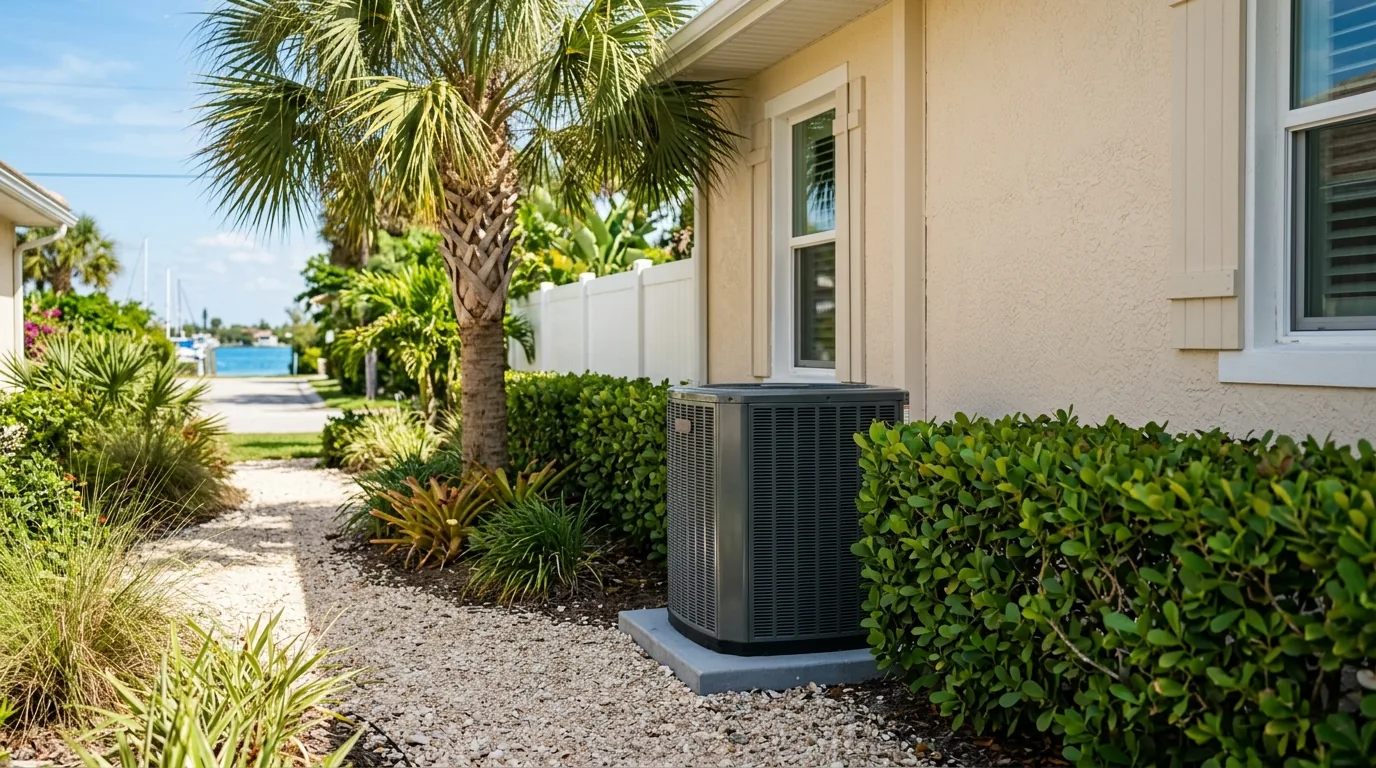
- A dirty condenser coil. The outdoor coil rejects the heat your house gave up, and a coat of grass clippings, oak pollen and dryer lint means the compressor runs hotter and longer to move the same heat, with its current draw climbing to match. Kill the power at the disconnect, then rinse the fins gently with a garden hose. Never a pressure washer.
Fresh filter, clean coil, one reset. That is the whole of what a homeowner should attempt here, and if it holds you are done. Trips again? Stop.
The causes that need a technician
Most common of these is a weakening run capacitor. Without its starting push, the compressor motor cannot spin up, so the motor cannot turn, so it sits there pulling several times its normal current until the breaker opens. Technicians call that locked-rotor current. A hum outside followed by a trip is the classic signature, and on a system that has been through a few Florida summers it is the first thing worth testing.
Refrigerant problems trip breakers too, because a low charge lets the compressor overheat until its internal protection and your panel take turns shutting it down. Then there is the genuine short: insulation worn through, or a motor winding gone to ground. That one trips instantly, every time, the moment the unit tries to start. No exceptions and no pattern to puzzle over. Instant tripping is the strongest signal on this page to leave the breaker off and book an AC repair visit.
Sometimes the panel is the problem, not the AC
Breakers age. One that has cycled and heat-soaked through thirty Florida summers can weaken until it trips below its rated load, and an aging condenser breaker with nothing wrong downstream is a real finding, not a rare one. Two panel brands deserve naming, Federal Pacific Stab-Lok and Zinsco, both with documented failure patterns serious enough that we flag them every time we see them. Our guide to HVAC and older electrical panels covers both, and explains why panel work belongs to a licensed electrician rather than to us or to you.
August is when marginal equipment tips over
Peak-season load is the stress test. It explains why a system that behaved all spring starts tripping the week the heat index stops dropping at night. A capacitor at seventy percent of its rating, a coil half-blanketed in debris, a breaker gone soft: all of them limp through April fine. Then comes a 95-degree afternoon with the system running ten hours straight, and the margin is gone. Breaker-trip calls cluster in late July and August for that reason, so a trip during the hottest week of the year should not be waved off as the grid acting up.
When the house is climbing past 85 degrees with the system locked out, waiting until Monday stops being reasonable. Our emergency AC repair service exists for exactly this call.
The short version: reset once, check the filter and the coil, and let repeated trips stand as the diagnosis they are.