A Florida house without air conditioning in August gets uncomfortable within about two hours and becomes unsafe within a day for anyone elderly, very young, or managing a heart condition. That timeline is the reason this article exists. The right sequence is: slow the heat gain, spend two minutes on checks that resolve a real share of after-hours calls, decide whether this is an emergency or a Monday problem, and make the call efficient when you do make it.
Start with the house, not the equipment. Every degree you keep out is a degree you do not have to wait for someone to remove.
Slow the heat gain first
Sun through glass is the largest single heat source in most Tampa Bay homes, and it is the one you can shut off immediately. Close every blind and curtain on a wall the sun is hitting, west-facing first as the afternoon goes on. Then get ceiling fans running in rooms people are using. Fans do not lower air temperature at all, but the airflow across skin accelerates evaporation and makes the same 88 degrees feel considerably more tolerable.
- Skip the oven and the dryer entirely. Both dump serious heat into a house that has no way to remove it.
- Shut interior doors to rooms nobody is using. Concentrating what little cooling you have in two rooms beats spreading it thin across the whole floor plan.
- Open up after dark, close before sunrise. Once outdoor temperature drops below indoor, cross-ventilation helps, and if you get the windows shut again before the sun comes up you keep the overnight gain you earned.
The two-minute checks worth doing
These cost nothing and they resolve a meaningful number of the calls we take between 8pm and midnight. Check the breakers first, and check both of them, because the air handler and the condenser almost always sit on separate circuits and homeowners routinely find one and stop looking.
Pull the filter next. If it is loaded, replace it, and while you are there put a hand on the copper refrigerant lines. Ice on the line set means restricted airflow has driven the coil below freezing, and the fix is to switch the thermostat to fan-only and let it thaw for a few hours before running cooling again. Trying to force it through the ice will not work and can slug liquid refrigerant back into the compressor.
Then look for standing water near the air handler. Water on the floor or in the drain pan usually means a blocked condensate line tripped the float switch, which shuts the system down deliberately to stop it flooding your ceiling. That switch doing its job looks exactly like a dead system.
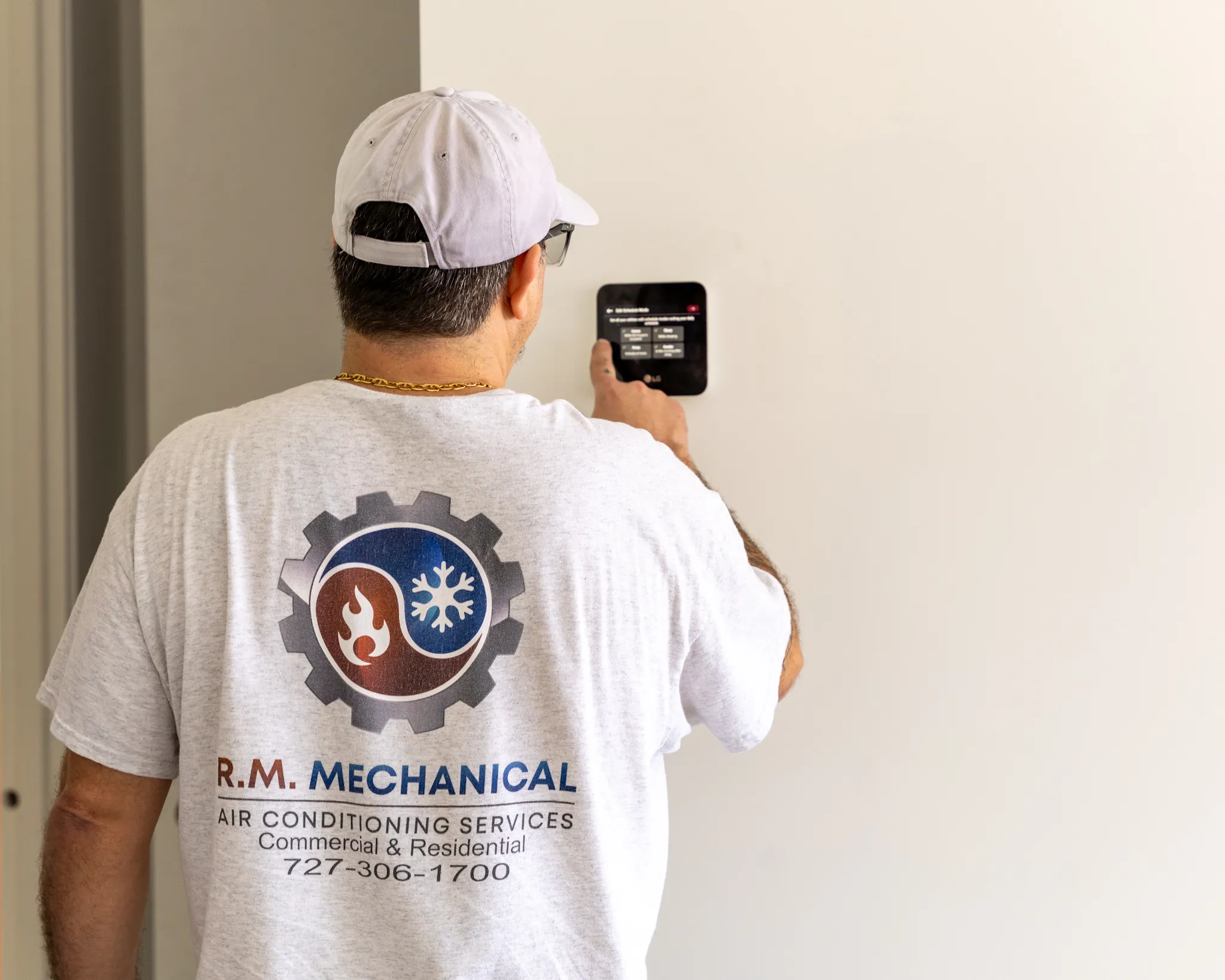
Last, the thermostat. Batteries, setting, and whether someone changed the schedule. A surprising number of "the AC died" calls turn out to be a thermostat with dead batteries and a blank screen, or a smart thermostat that lost its wifi connection and reverted to a program nobody remembers setting. Check that the display is lit and the mode reads cool rather than off or heat, then set the target several degrees below room temperature and listen for the system to respond. Our troubleshooting guide covers each of these in more depth, and this one handles the thermostat specifically.
What is an emergency
Not everything that stops working at 9pm needs a 9pm response, and knowing the difference saves you the after-hours premium. Four situations warrant an immediate call regardless of the hour:
- Any burning smell, hot plastic smell, or visible smoke. Kill the breaker before you call.
- Water actively running into ceilings, walls, or across flooring.
- Total failure with a vulnerable person in the house, meaning an infant, an adult over 65, or anyone with a cardiovascular condition.
- A breaker that trips again the moment you reset it. Repeated resets on a genuine short are how electrical fires start, so reset it once and no more.
Things that can generally wait for business hours: one room running warmer than the rest, a system that still cools but slowly, a new noise with no drop in performance, or a bill that climbed without any other symptom. None of those get better overnight, but none of them get meaningfully worse either.
The part people underestimate
Indoor temperatures above 90 degrees carry real medical risk for infants, adults over 65, and anyone taking diuretics, beta blockers, or several common psychiatric medications, all of which interfere with the body's ability to shed heat. Add high indoor humidity, which Florida supplies for free, and sweating stops working as a cooling mechanism.
So watch the thermometer, not the clock. If the indoor temperature is climbing and a repair is not going to happen in the next few hours, going to a hotel or a relative's house is the correct decision and not an overreaction. No air conditioning repair is worth a heat illness, and we would rather find you elsewhere in the morning.
Making the call efficient
Have four things ready when you dial. The model and serial number off the data plate on the outdoor unit, roughly how old the system is, a precise description of what it is or is not doing, and a list of what you already checked.
That last item matters more than people think. "The outdoor fan is not spinning and the unit is humming" tells a dispatcher something entirely different from "it stopped working," and it frequently means the technician arrives with the right part already on the truck instead of scheduling a second visit. Reach us through emergency AC repair.
Preventing the next one
Most August emergencies were visible in March. A capacitor testing below spec, an evaporator coil losing capacity to dirt, a condensate drain starting to silt up: each of those is a routine item on a scheduled visit and an expensive one on a Saturday night. That is the entire argument for annual maintenance, and it is a better argument than most of what gets said about it. See also our list of common HVAC problems.