Choosing an AC System for a Tampa Bay Home
Most of the decision is not the brand on the box. It is which type of system fits your house, and whether it is sized to the house rather than guessed at.
A cooling system here runs about eight months of the year, roughly double the hours the same equipment would log in a northern state. That changes the math on every choice below. A type that is merely adequate up north gets found out here, and a sizing mistake that would be a mild annoyance elsewhere becomes a humidity problem you live with every day.
Four system types cover nearly every home we work on. Which one is right depends on the house, not on a chart. And if the question you are really weighing is whether the old system is worth keeping, the AC replacement page settles repair versus replace before type enters into it.
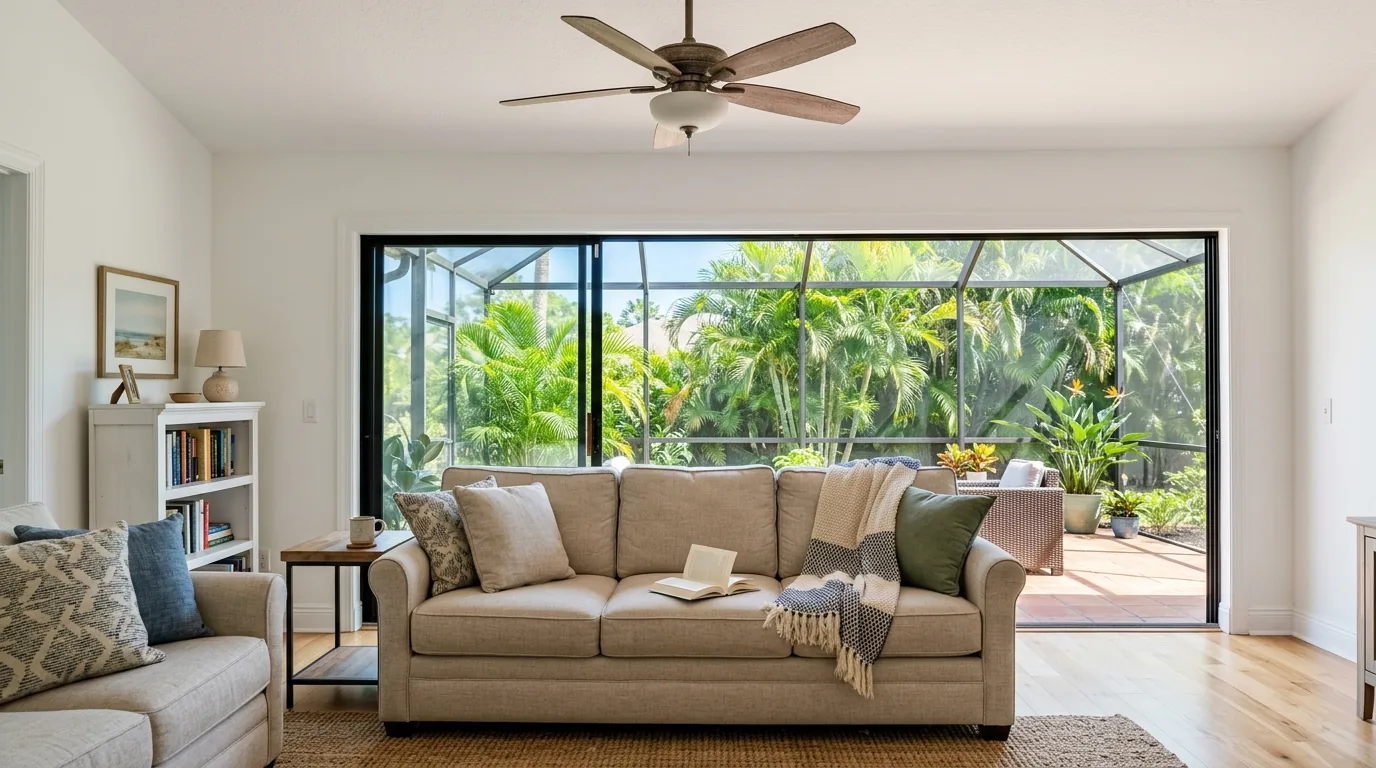
Central split systems, the Tampa Bay default
A condenser outside, an air handler inside, ducts between them. If your home has ductwork in reasonable condition, a central split system is almost always the answer, because the distribution problem is already solved. The equipment conversation then becomes about staging and sizing rather than type.
The caveat is the ducts themselves. A new high-efficiency unit breathing through leaky attic ductwork delivers neither the comfort nor the bills it was rated for. When the duct system is the real constraint, we say so before quoting equipment.
Ductless mini-splits, for the spaces ducts never reached
A mini-split puts a small air handler in the room it serves, fed by refrigerant lines instead of ducts. That makes it the right tool for garages, additions, lanai conversions and older houses that never had ductwork. It is usually installed in a day, and each head has its own thermostat.
What it is not, in most cases, is a whole-house replacement for a working central system. The heads cost real money per room, and a house that already has ducts rarely comes out ahead. We wrote up where a mini-split beats extending the system, and where it does not.
Heat pump or straight AC
Mechanically these are the same machine; a heat pump adds a reversing valve so the cycle can run backwards and heat the house in winter. In this climate the heat pump is the default, which is why almost every home here heats with one. A cooling-only condenser paired with electric strip heat costs several times more per degree on the handful of cold nights we get.
If you are replacing anyway, the price difference is modest. Take the heat pump.
Package units
A package unit puts the whole system in one cabinet outside, with ducts running directly into it. They serve manufactured homes and houses with no practical space for an indoor air handler. The trade is efficiency and service life: everything lives outdoors in the weather, which in our salt band matters. Where a split system physically fits, it is the better machine.
A word on geothermal
Geothermal is real technology and it works. For a typical Tampa Bay retrofit we still talk most people out of it. The drilling cost lands far above a high-end air-source heat pump, and because our winters are mild, the efficiency gap between ground-source and a good air-source unit is smaller here than anywhere the technology earns its keep. On new construction with the right lot it can pencil out. On an existing house it rarely does.
Sizing decides more than type does
Whatever the type, an oversized system cools the air quickly, shuts off, and never runs long enough to wring the moisture out of it. The house hits 74 degrees and still feels damp. Since removing humidity is half of what cooling means in Florida, the correctly sized unit beats the bigger one every time.
We size from a Manual J load calculation on the actual house, not from square footage or from whatever is sitting on the pad now. The details of what that involves are on the installation page, and the sizing question gets a fuller treatment in what size air conditioner a Florida home needs.
Common questions
Should I replace the whole system or just the outdoor unit?
Both, almost always. The indoor coil and outdoor unit are engineered as a matched pair, and a new condenser on an old coil gives up efficiency, capacity and usually the warranty. With the refrigerant transition now in effect, a new R-454B condenser cannot run on an older R-410A coil at all, so the mismatch question is settling itself.
Which SEER2 rating is worth paying for?
Florida law sets the floor: 14.3 SEER2 for systems under 45,000 BTU and 13.8 SEER2 above that. Stepping up a tier or two pays back here because of our run hours, but the jump to the very top tier mostly buys staging and comfort rather than bill savings. We quote the math for your usage instead of defaulting to the biggest number.
Can a mini-split cool a whole house?
It can, and in a house with no ducts it is often the right plan. In a house with a working duct system it rarely wins on cost, because you are paying for an air handler in every room you want conditioned. The strongest mini-split cases are single problem rooms and additions.
Which brands do you install?
We are factory-certified on Carrier, Goodman, Rheem, LG, Midea, Trane, Daikin, Mitsubishi and Lennox. Between them we can match any budget tier, and certification means the manufacturer warranty is registered and honored, where an unqualified install would void it.
How long does a replacement take?
A straightforward changeout is one day: the old system out in the morning, the new one commissioned by evening. Add duct repairs, an air handler relocation or an electrical panel upgrade and it becomes two. We tell you which before work starts, not after.
Related services
AC system selection and installation across Tampa Bay
R.M. Mechanical works across Hillsborough, Pinellas, Pasco and Hernando counties. Open your area for the local details that actually change the job: which building department issues the permit, what the housing stock is like, and what the climate there does to equipment.
Ask which system fits your house
Tell us about the house and what the current system is doing, and we will come back with a realistic recommendation. For a system that has already failed, call instead 727-306-1700.
Thank you! Your message is on its way.
We check messages 6am to 7pm daily and will get back to you. Need help right now? Call 727-306-1700.
Something went wrong and your message didn't go through. Please try again, or call us at 727-306-1700.